News Headline
Kabaddi beats football in popularity among Indian kids


MUMBAI: The sports viewership in India has been mainly restricted to cricket for the longest time. It is difficult for any other sport to lock horns with cricket. So the race is on for the second spot. We seem to have a winner for now. Star India’s homegrown property Pro Kabaddi League (PKL) has helped kabaddi carve its space and became the second most watched sport in the country.
With the sport gaining popularity across the country, not only adults and youth but kids are also enjoying the game. PKL season 6 is all set to commence on 7 October 2018. The league is by far the most popular non-cricket property, contributed 61 per cent of viewership share in season 4, according to Broadcast Audience Research Council (BARC) India.
Kids as an audience, contribute to 20 per cent of total TV viewership, which is the highest share across all age cuts. In 197 million TV households, there are around 211 million kids. In sports, after cricket, kids are watching kabaddi with 19 per cent viewership share from week 8 in 2017 to week 37 in 2018.

Ernst & Young partner, media and entertainment advisory services Ashish Pherwani said, “Star changed the way kabaddi was marketed in India. It created heroes, made the sport more involving for the audience and made it a faster exciting event.”
Rural India contributes to 74 per cent of the live viewership and the remaining by the urban market in the kid’s audience. Out of the 19 per cent share, kids mostly watch live telecast (55 per cent), whereas 26 per cent of the viewership comes from highlights.
PKL season five garnered 1.6 billion impressions from the live telecast on seven channels. The final match in season five garnered 25.4 million impressions compared to 13.9 million impressions in season four, which is 83 per cent growth.
Kabaddi as a sport is followed the most in AP/Telangana followed by Maharashtra/Goa and Karnataka. If we look at the region wise contribution in the two to 14 age groups, 44 per cent is shared between Andhra Pradesh, Telangana, Maharashtra and Goa. Karnataka, Madhya Pradesh and Chhattisgarh contribute to 27 per cent of the overall viewership in the same age group.
As kids contribute to 20 per cent of the total TV viewership, a larger part of it is because of co-viewing. A further split is observed between channels whose primary audience are kids and all other channels where kids are the incidental viewers. GEC and movies channel together account for over 80 per cent viewership share on non-kids channels.
PwC India partner, media, entertainment and sports sector advisory leader Raman Kalra said, “Kabaddi is popular that is true and it will continue to grow also but there is a very clear rise of football. Even though the statistics are either way but clearly football is going to grow rapidly in India. I do believe that it is going to become a prominent sport in all the segments, especially given the kind of grassroots development and academies happening in that front.”
If we talk about brands, PKL season one hardly had any sponsor and partner but with the traction it had got for the past couple of seasons, it has managed to cross 100-mark in season five including individual team sponsors and partners. In 2017, Vivo signed a Rs 3 billion ($45 million) deal for five years with the league.
PKL season 4 had a high contribution from female viewers (44 per cent). Despite this, female-specific sectors are not present on PKL. Female-targeted sectors (personal care/ personal hygiene, household products, personal healthcare) contributed 15 per cent to the total duration of advertisement. As opposed to that, male categories (durables, banking/finance/investment, auto, fuel/petroleum products, alcoholic drinks) constitute 35 per cent of the total duration.
As kids watch kabaddi more than football, if we compare the ad sector between ISL and PKL, we can see the entire education sector missing in PKL. Education sector contributed to 11 per cent of total duration at the time of ISL. “That’s a natural phenomenon, brands will follow the audience no matter the sport. As the audience profile starts going up you will always see an appropriate shift of brands,” Kalra added.
Encouraging the growth of the sport amongst the younger generation, Star Sports has undertaken a pioneering initiative, KBD Juniors, to spread awareness by facilitating grassroots level engagement. KBD Juniors season 2 has already begun and will be broadcast on Star Sports and Hotstar during season six of PKL. The tournament will have 24 schools across 12 cities and 3,500 students between the age group of 11 to 12 years battle it out to make it to the grand finale.
The events included in the data are National Kabaddi Championship, Pune League Kabaddi Spardha, Vivo PKL Season 5 from 2017 and All India national style Kabaddi, Asian Games (Kabaddi), Big C Telangana Premier Kabaddi, Kabaddi masters Dubai, Kabaddi national and Pune League Kabaddi in 2018.




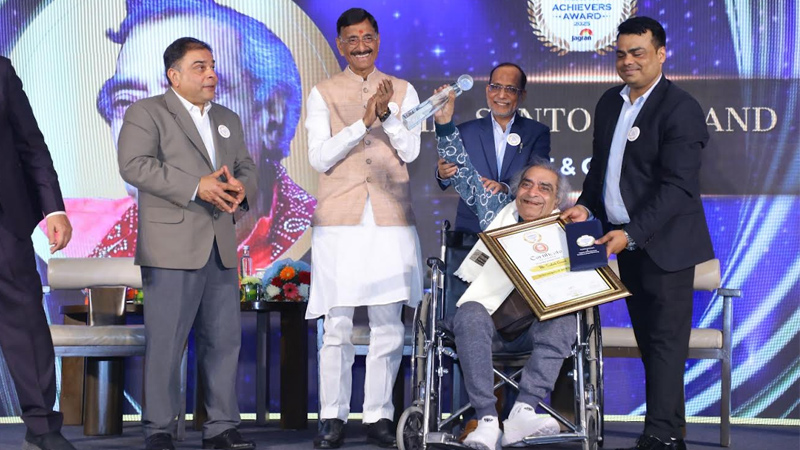
NEW DELHI: Hamdard Laboratories gathered a cross-section of India’s achievers in New Delhi on Friday, handing out the Hakeem Abdul Hameed Excellence Awards to figures who have left their mark across healthcare, education, sport, public service and the arts.
The ceremony, attended by minister of state for defence Sanjay Seth and senior officials from the ministry of Ayush, celebrated individuals whose work blends professional success with a sense of public purpose. It was as much a roll call of achievement as it was a reminder that influence is not measured only in profits or podiums, but in people reached and lives improved.
Among the headline awardees was Alakh Pandey, founder and chief executive of PhysicsWallah, recognised for turning affordable digital learning into a mass movement. On the sporting front, Arjuna Awardee and kabaddi player Sakshi Puniya was honoured for her contribution to the game and for pushing women’s participation onto bigger stages.
The cultural spotlight fell on veteran lyricist and poet Santosh Anand, whose songs have echoed across generations of Hindi cinema. At 97, Anand accepted the honour with characteristic humility, reflecting on a life shaped by perseverance and hope.
Healthcare honours spanned both modern and traditional systems. Manoj N. Nesari was recognised for strengthening Ayurveda’s place in national and global health frameworks. Padma shri Mohammed Abdul Waheed was honoured for his research-backed work in Unani medicine, while padma shri Mohsin Wali received recognition for his long-standing contribution to patient-centred care.
Education and social development also featured prominently. Padma shri Zahir Ishaq Kazi was honoured for decades of work in education, while former Meghalaya superintendent of Police T. C. Chacko was recognised for public service. Goonj founder Anshu Gupta received an award for his dignity-centred rural development initiatives, and the Hunar Shakti Foundation was honoured for empowering women and young girls through skill development.
The Lifetime Achievement Award went to former IAS officer Shailaja Chandra for her long career in public healthcare and governance, particularly in the traditional systems under Ayush.
Speaking at the event, Hamdard chairman Abdul Majeed said the awards were a tribute to those who combine excellence with empathy. “These awardees reflect Hakeem Sahib’s belief that healthcare, education and public service must ultimately serve humanity,” he said.
Minister Seth struck a forward-looking note, saying India’s young population gives the country a unique opportunity to become a global destination for learning, health and wellness by 2047.
The ceremony also featured the trailer launch of Unani Ki Kahaani, an upcoming documentary starring actor Jim Sarbh, set to premiere on Discovery on 11 February.
Instituted in memory of Unani scholar and educationist Hakeem Abdul Hameed, the awards have grown into a national platform that celebrates those building a more inclusive and resilient India. For one evening at least, the spotlight was not just on success, but on service with substance.