International
James Bond car auctioned for $389,000
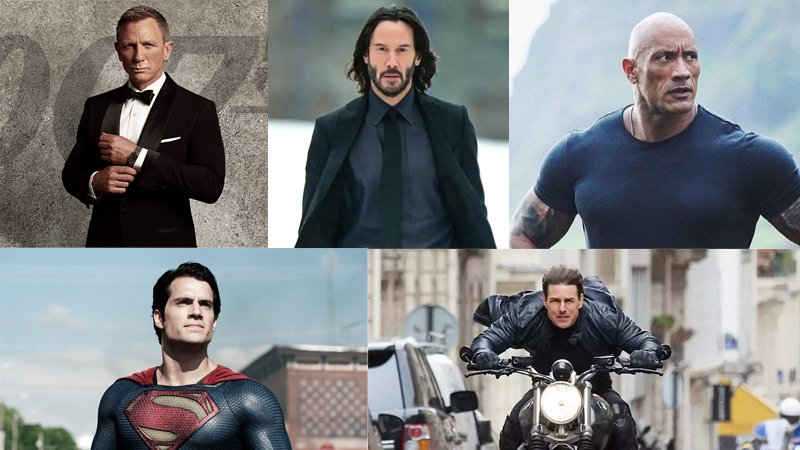
MUMBAI: The 2008 Aston Martin car used by Daniel Craig in the Bond film Quantum of Solace has been sold in an auction of Bond movie memorabilia for 241,300 pounds (around $389,000), it is understood.
The cost of the 2008 Aston Martin 6 litre V12 DBS 2 door coupe, which went to an anonymous buyer, was 1.5 times higher. The trading took place in the presence of 600 VIP guests. Many items of the auction were presented by the stars of the film.
Actress Judi Dench, who plays M, presented one of the most piquant lots, a pair of blue trunks worn by Daniel Craig in Casino Royal. “All I can tell you, they are unwashed,” the actress said in a lighter vein.
The trunks were sold for 44,500 pounds and will be given to a charity fund Women For Women.
The second most expensive item in the auction was an Omega watch made of titanium and used by Craig in the soon to-be releaseed film Skyfall. The watch was expected to be sold for some 8,000 pounds but was sold for 157,300 pounds.
Former Bond, Roger Moore presented a musical score of the soundtrack for the same film signed by the British singer Adele, performer of the title track. The lot was sold for 13,800 pounds.
The total cost of the 1 pieces that were auctioned was 752,100 pounds. All proceeds will go to various charitable organisations.
The auction was held to mark the 50th anniversary of the first James Bond movie.

International
Utopai Studios unveils 4K three-minute video generation for PAI platform
New Story Agent and editing tools aim to streamline AI-led filmmaking workflows
MUMBAI: Utopai Studios has announced a major upgrade to its PAI storytelling AI platform, introducing what it claims is an industry-first capability to generate three-minute videos in 4K resolution, alongside enhancements to its Story Agent feature.
The update, rolling out from April 15, expands the platform’s capabilities across the filmmaking process, from early concept development to post-production. The company said the new features are designed to help filmmakers maintain continuity across characters, scenes and visual styles, a key challenge in AI-driven storytelling.
At the heart of the release is a next-generation model that enables more structured narrative development, allowing creators to move more seamlessly from idea to execution. With tools such as multi-shot sequencing and multi-turn editing, the platform aims to give both studios and independent creators greater control over complex storytelling workflows.
Commenting on the launch, Utopai Studios co-founder and CTO Jie Yang said, “The next phase of AI in media will not be defined by isolated tools, but by systems that can carry story, continuity and collaboration across the full creative process.” He added that the update is a step towards enabling more practical, end-to-end narrative development at a professional level.
Echoing this, Utopai Studios co-founder and chief scientific officer Zijian He said, “Generative video is opening the door to a new production model, where creative ambition is less constrained by traditional cost and complexity.” He noted that the platform combines multimodal models with iterative editing to give creators more speed, control and consistency.
The company said PAI is already being used in professional film and television productions, particularly in Hollywood, for tasks such as pre-visualisation, scene design and post-production refinements. The latest update adds features including improved voice options, character consistency, unlimited editing and more flexible asset management.
Utopai also emphasised that its models are not trained on copyrighted material, positioning the platform as a cleaner alternative for creators and rights holders navigating the evolving AI landscape.
As AI continues to reshape content creation, Utopai’s latest push signals a shift from standalone tools to integrated systems, aiming to make high-quality filmmaking faster, more flexible and increasingly accessible.