International
Jack Reacher mktg altered in view of school shooting
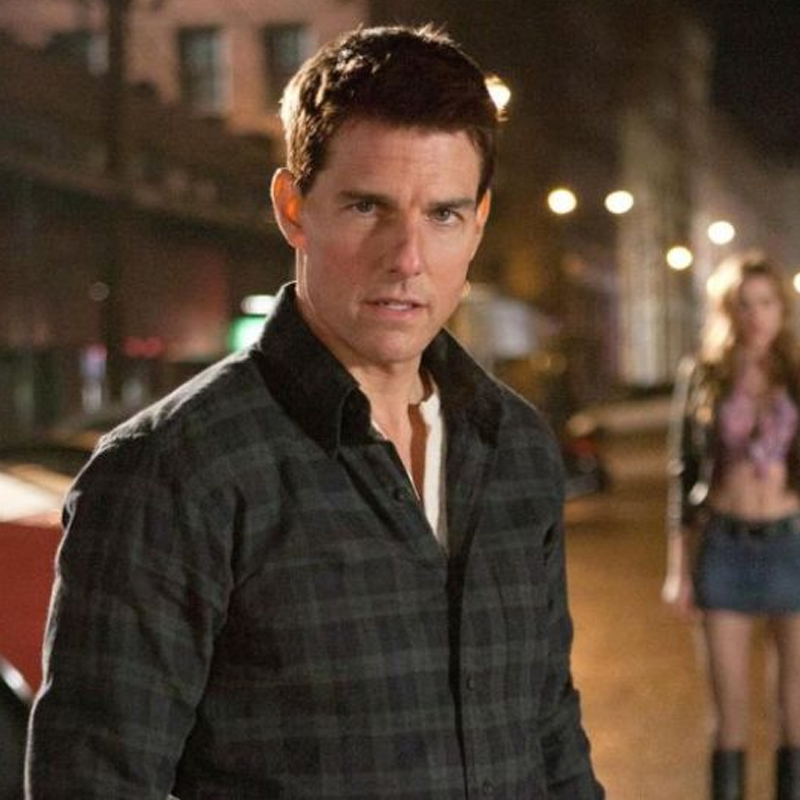
MUMBAI: Film Studio Paramount has decided to make changes in the marketing materials for Jack Reacher, the gritty crime-action, Tom Cruise starrer based on Lee Child‘s character by the same name. Cruise plays a hard-boiled former military cop trying to prove that an alleged sniper was framed in the film that opens Friday.
Though the studio hasn‘t officially said what the changes are, but buzz is that a scene of Cruise‘s character firing off a semi-automatic weapon is being cut from promotional spots. The reason behind this move is the recent shootings at Sandy Hook Elementary School which left 20 children between five to 11 years dead and many others scarred for life.
Apart from Cruise‘s Jack Reacher Leonardo DiCaprio starrer Django Unchained directed by Quentin Tarantino is slated to open on 25 December. The R-rated Django stars Jamie Foxx as a slave promised his freedom if he helps a bounty hunter (Christoph Waltz ) track down a plantation owner (Leonardo DiCaprio). On 17 December The Weinstein Co.
Announced it was cancelling Tuesday night‘s Django premiere in Los Angeles because of the school tragedy but it would still hold a screening for cast and crew.
"Our thoughts and prayers go out to the families of the tragedy in Newtown, Conn., and in this time of national mourning we have decided to forgo our scheduled event," the company said in a statement.
At a junket for Django on Saturday in New York, Tarantino said he is weary of defending the violence in his movies. "I just think there‘s violence in the world. Tragedies happen," the filmmaker said. "[Django} is a Western. Give me a break."
Foxx, however, said Hollywood can‘t "ignore" that violence in movies has an impact. And this summer, Harvey Weinstein, an advocate for gun control, called for a summit on violence in films after the Aurora theater shooting during a midnight screening of The Dark Knight Rises.

International
Utopai Studios unveils 4K three-minute video generation for PAI platform
New Story Agent and editing tools aim to streamline AI-led filmmaking workflows
MUMBAI: Utopai Studios has announced a major upgrade to its PAI storytelling AI platform, introducing what it claims is an industry-first capability to generate three-minute videos in 4K resolution, alongside enhancements to its Story Agent feature.
The update, rolling out from April 15, expands the platform’s capabilities across the filmmaking process, from early concept development to post-production. The company said the new features are designed to help filmmakers maintain continuity across characters, scenes and visual styles, a key challenge in AI-driven storytelling.
At the heart of the release is a next-generation model that enables more structured narrative development, allowing creators to move more seamlessly from idea to execution. With tools such as multi-shot sequencing and multi-turn editing, the platform aims to give both studios and independent creators greater control over complex storytelling workflows.
Commenting on the launch, Utopai Studios co-founder and CTO Jie Yang said, “The next phase of AI in media will not be defined by isolated tools, but by systems that can carry story, continuity and collaboration across the full creative process.” He added that the update is a step towards enabling more practical, end-to-end narrative development at a professional level.
Echoing this, Utopai Studios co-founder and chief scientific officer Zijian He said, “Generative video is opening the door to a new production model, where creative ambition is less constrained by traditional cost and complexity.” He noted that the platform combines multimodal models with iterative editing to give creators more speed, control and consistency.
The company said PAI is already being used in professional film and television productions, particularly in Hollywood, for tasks such as pre-visualisation, scene design and post-production refinements. The latest update adds features including improved voice options, character consistency, unlimited editing and more flexible asset management.
Utopai also emphasised that its models are not trained on copyrighted material, positioning the platform as a cleaner alternative for creators and rights holders navigating the evolving AI landscape.
As AI continues to reshape content creation, Utopai’s latest push signals a shift from standalone tools to integrated systems, aiming to make high-quality filmmaking faster, more flexible and increasingly accessible.