DTH
Isro sets 16 December as launch date for Insat 4A


MUMBAI: The Indian Space Research Organisation (Isro) has informed Tata-Sky Ltd, the 80:20 joint venture between the Tatas and Rupert Murdoch-controlled Star Group, that the launch of its much delayed Insat 4A satellite has been set for 16 December.
Tata-Sky CEO Vikram Kaushik confirmed to indiantelevision.com that Isro had intimated that Insat 4A, the first in a satellite series crucial to the future of Tata-Star’s T-Sky direct to home (DTH) venture, would be launched from Kourou, French Guayana, on 16 December. Tata-Sky has booked 11 Ku band transponders on Insat 4A.

This tallies with what Isro chairman M Madhavan Nair had told newspersons in Bangalore a few days ago – that Insat 4A had already been shifted to Kourou, from where it would be launched “probably in the middle of December”. Nair made his comments while inaugurating the Edusat class room in Bangalore.
The fixing of Insat 4A’s launch date also provides a window to when Tata-Sky’s DTH service T-Sky will likely become operational. According to information available with indiantelevision.com, after launch, a satellite takes anywhere between one to two months to settle into its geostationary orbital slot. What follows then is a month of signal testing after which the service can be offered to consumers. Going by this timeline, T-Sky should become operational anytime between March and June 2006.
When queried about this, Kaushik offered no comments except to state that T-Sky would make a public statement about the launch of its service at the appropriate time.
The launch of the Insat series – 4A, 4B and 4C – over the next year or so will add 36 Ku-band transponders to Isro’s capacity. This is expected to sizably increase the number of transponders for the various DTH operators.
Kalanithi Maran’s Sun Direct, meanwhile, has booked four-six transponders in the initial phase on 4B or 4C.
DTH providers can beam a maximum of 12 channels per transponder, depending on their compression technology. The availability of transponder space would limit the channel offerings from the DTH service providers. Insat 4A and 4B have a capacity of 12 Ku band and 12 C-band transponders each. Insat 4C, on the other hand, has just 12 Ku band transponders.
Dish TV and Doordarshan’s DD Direct use the NSS 6 satellite for their DTH services.





DTH
DD Free Dish e-auction revenue dips to Rs 642 crore as slot sales fall
Revenue dips as revised norms reshape bidding in 94th round
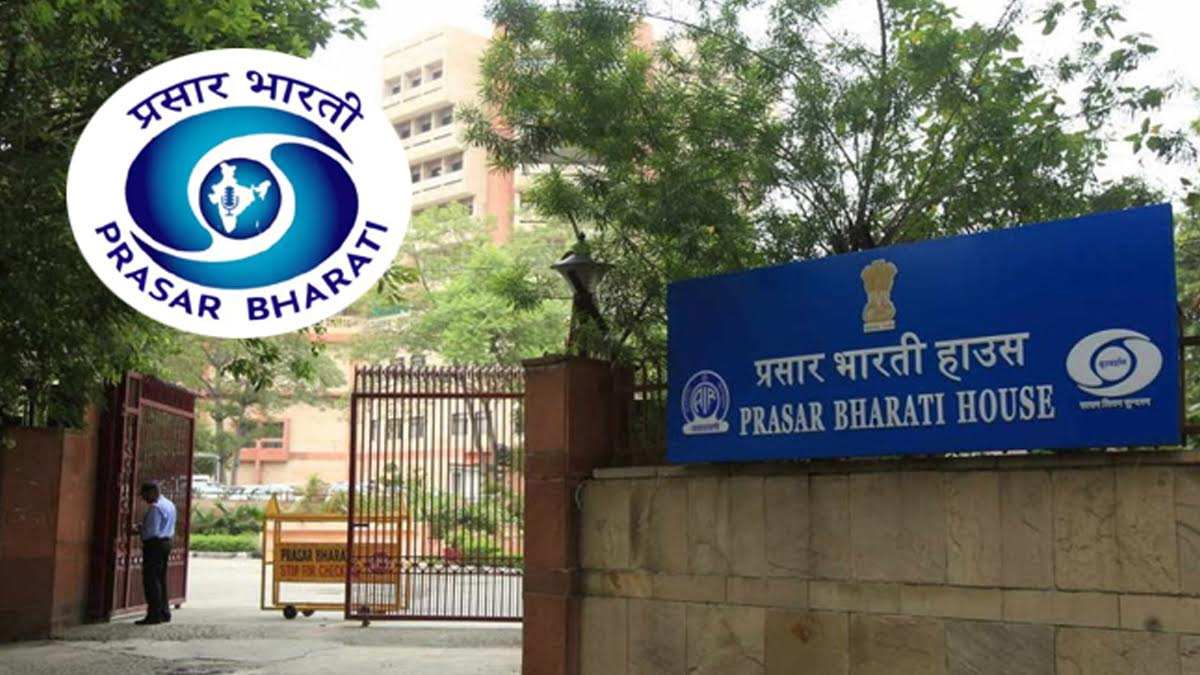
NEW DELHI: Prasar Bharati’s DD Free Dish has closed its 8th annual, and 94th overall, e-auction for MPEG-2 slots with total collections of Rs 642 crore for the period April 1, 2026 to March 31, 2027.
That is lower than last year’s Rs 780 crore haul, with 55 slots sold compared with 61 in FY25–26. The softer topline reflects both a slimmer inventory and a recalibrated auction framework.
This was the first auction conducted after amendments to the e-auction methodology, including tighter eligibility norms and a revised reserve price structure for MPEG-2 slots. The stated aim was greater transparency and more serious participation. The immediate outcome appears to be more measured bidding in certain categories.
Day one set the tone. Eight slots were sold, six in the premium Bucket A+ and two in Bucket A. The strong early action in A+, which typically houses Hindi GECs and movie channels, reaffirmed the enduring appeal of mass Hindi programming on the platform.
Among the broadcasters securing slots in the initial rounds were Zee Entertainment Enterprises, Sony Pictures Networks India, Viacom18’s Colors network, Sun Network and Shemaroo Entertainment. Their continued presence signals that, despite the pull of digital platforms, Free Dish remains a strategic must have for legacy networks chasing scale in price sensitive markets.
The final bouquet of 55 channels leans heavily towards Hindi news, movies, devotional fare, Bhojpuri and regional programming.
In Hindi news, familiar heavyweights such as Aaj Tak, ABP News, India TV, News18 India, Republic Bharat and Zee News made the cut. Entertainment and movie offerings include Colors Rishtey, Star Utsav, Dangal TV, Sony Pal, Shemaroo TV, Goldmines, B4U Movies and Zee Biskope. Devotional viewers will find Aastha, Sanskar and Sadhna Gold among the selected channels.
Regional representation includes Sun Marathi, Fakt Marathi, PTC Punjabi and GTC Punjabi.
Equally telling were the absences. Broadcasters such as Big Magic, Filamchi Bhojpuri, India News, Bharat Express, Movieplex Maithili, TV9 Marathi, Shemaroo Marathibana, Zee Chitra Mandir and Satsang did not participate. The pullback is particularly visible across Marathi, Bhojpuri, Maithili and spiritual programming. Industry observers point to the revised reserve prices, tighter eligibility norms and a reassessment of commercial viability as possible factors.
DD Free Dish continues to beam into over 40 million homes, largely in rural and semi urban India. For advertisers and broadcasters alike, it offers efficient access to Bharat markets where pay TV penetration remains uneven and OTT subscriptions are limited.
The moderation in revenue this year may be read as a pause rather than a retreat. Fewer slots, a reworked auction playbook and evolving broadcaster strategies have clearly shaped outcomes. Yet premium Hindi entertainment retains its pull, and the platform’s mass reach remains hard to ignore.
As the FY26–27 line-up settles in, the mix of winners and walkaways will define the private satellite channel landscape on DD Free Dish for the year ahead.







