GECs
Is crime genre the fuel running Sony?

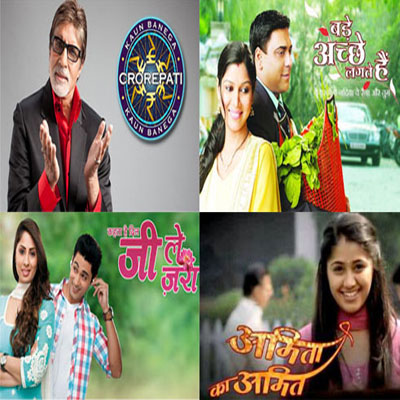
MUMBAI: Once upon a time, it ruled the roost but a look at recent TAM ratings tells another story. Why is it that a pioneer like Sony is currently languishing among the bottom three GECs? According to media experts, the answer lies in the kind of content the channel is airing.
A majority of them feel fiction is critical to a GEC, which is exactly what Sony lacks. “Without focusing on any fiction-based shows, a GEC cannot survive. In other words, daily soap operas are the bread and butter for a GEC,” says a producer who didn’t wish to be named.

Yes, Sony had hit shows like Jassi Jaisi Koi Nahin and Boogie Woogie (reality) but that’s in the past. Over the last couple of years, the channel has failed to gain traction as far as fiction is concerned.
Many may counter this saying Sony has two shows which can beat fiction-based ones by a huge margin: Crime Patrol and CID. The duo is among the channel’s longest running shows. To give statistics, CID garnered 7,048 TVTs in week 40 of TAM TV ratings while Crime Petrol registered 3,882 TVTs.
Says BPN (Brand Programming Network) CEO Suresh Balakrishna: “CID and Crime Petrol have been airing for years and it won’t be wrong to say that the shows own this genre. A viewer expects to see crime shows on Sony, they have owned that genre and nobody has got into the genre the way the channel has.”
Some experts agree that the way Star Plus is known for its fictional shows and Colors for its reality shows, viewers tend to expect crime from Sony. Others feel to focus on one particular genre, say crime, can definitely give the channel the required padding but GECs’ bread and butter is fiction shows.
“I think the biggest problem that Sony is facing is to do with its image. It has never had fiction which has done well whereas non-fiction has worked brilliantly for the channel. Ideally, they should go back to the old model of non-fiction,” suggests a city-based media planner, adding: “It is not suffering as far as distribution is concerned or marketing is. The problem lies in the content. If it changes the content mix, the channel will definitely be able to garner better GVTs. But of course, that would mean investing a lot of time, ideas and energy. But if they invest, then it may work out.”
Focusing on the content, planners state the example of Channel V which changed its strategy from being music to a fiction. Correspondingly, Sab TV till six years back had a mix bag of shows whereas now it is known for its comedy shows.
However, a soap opera director begs to differ: “Sony has done lot of experiments. And I am getting a positive feeling for Desh ki Beti…Nandini and I think it will be able to click with the audience.” Yet, he is quick to point out that the channel hasn’t done anything like Jassi in a long time and even Bade Achche Lagte Hai isn’t working anymore.
Says Sunshine Productions’ Sudhir Sharma: “Sony is known for semi-urban sensibilities shows such as Jassi and Bade Achche Lage Hai and in this space, the channel must explore. It will be good for them.”
The channel is betting big on the recently launched Kaun Banega Crorepati 7 but TAM ratings haven’t been too encouraging. Whether Sony should get its act together on fiction shows or continue to concentrate on non-fiction (crime) is something the channel will have to work out.
In the meantime, the recent revamp and maybe Boogie Woogie, which is returning to the channel after a decade-long gap, may just help Sony get its groove back…







GECs
Sahara One reports financial results, notes director exit and business realignment
Muted revenues, steady expenses and strategic adjustments shape company’s current phase

MUMBAI: In a tale where the sands seem to be slipping faster than they can be gathered, Sahara One Media and Entertainment Limited has reported another quarter of wafer-thin income and widening losses, even as a boardroom exit adds to the unease.
The company informed the Bombay Stock Exchange that its board, in a meeting held on April 4, approved its unaudited financial results for the quarter ended September 30, 2025. The numbers paint a stark picture. Total income for the quarter stood at just Rs 0.13 lakh, unchanged sequentially and sharply down from Rs 0.26 lakh a year earlier.
Losses, meanwhile, deepened. The company posted a net loss of Rs 24.16 lakh for the quarter, compared to Rs 18.81 lakh in the June quarter and Rs 39.69 lakh in the same period last year. For the six months ended September 2025, the cumulative loss stood at Rs 39.69 lakh, while the full-year loss for FY25 was reported at Rs 60.72 lakh.
Expenses continued to outweigh income by a wide margin. Total expenses for the quarter came in at Rs 24.30 lakh, led by employee benefit costs of Rs 6.51 lakh and other expenses of Rs 17.78 lakh. Earnings per share remained in the red at Rs (0.11) for the quarter.
The balance sheet reflects a company with significant assets on paper but limited operational momentum. Total assets stood at Rs 23,065.57 lakh as of September 30, 2025, broadly unchanged from March 2025. Equity share capital remained steady at Rs 2,152.50 lakh, while total equity was reported at Rs 18,004.85 lakh.
Cash and cash equivalents saw a modest uptick to Rs 6.75 lakh from Rs 4.68 lakh earlier, supported by a positive operating cash flow of Rs 180.01 lakh for the period.
Yet, beneath these numbers lies a more complex narrative. The company’s auditors flagged their inability to obtain sufficient evidence to form a conclusion on the financial statements, citing lack of access to records. They also raised concerns over the company’s ability to continue as a going concern, pointing to insufficient funds, delayed recoveries, and stalled content investments.
Adding to the governance overhang, the company disclosed that Rana Zia has resigned as whole-time director, effective October 16, 2025, citing other professional commitments. The resignation, noted and accepted by the board, also brings an end to her role across company committees.
Regulatory pressures continue to loom large. The Securities and Exchange Board of India has already initiated penal actions for non-compliance with listing norms, with trading in the company’s shares remaining suspended. There is also a risk of promoter demat accounts being frozen.
Legacy legal issues remain unresolved. A substantial deposit of Rs 694,027.88 thousand linked to the long-running OFCD dispute involving Sahara group entities is still under the purview of the Supreme Court of India. Restrictions on asset disposal continue to weigh on the company’s financial flexibility.
Operationally, challenges persist across multiple fronts. Advances worth Rs 1,92,916 thousand given for film content remain stuck, with delays in project completion and uncertain recoverability. The company’s YouTube channel, despite being operational, has generated no revenue for over three years due to compliance lapses. In a further twist, management has indicated that revenues may have been fraudulently diverted through unauthorised changes to its AdSense account, with a police complaint in the works.
There are also missed revenue opportunities. Television content rights continue to be used by a related party despite the expiry of the licence agreement, with fresh negotiations still underway.
For now, Sahara One Media and Entertainment Limited appears caught between legacy disputes and present-day operational hurdles. As losses linger and governance questions mount, the road to recovery looks less like a sprint and more like a slow trudge through shifting sands.






