iWorld
iQOO’s CGO hunt attracts over 30,000 applications in just three days!

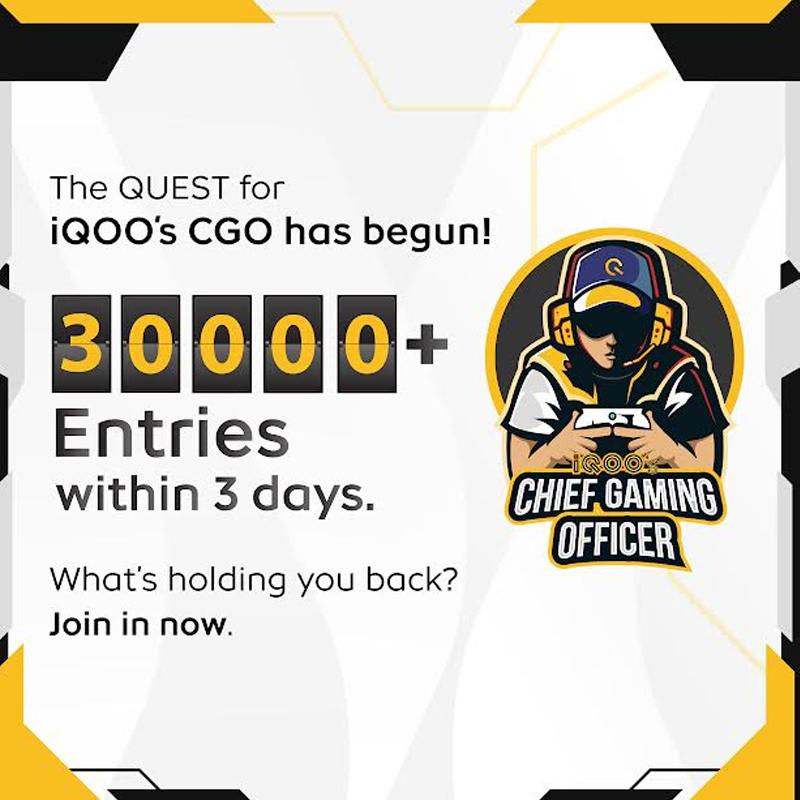
Mumbai: iQOO’s quest for its first chief gaming officer has taken over the gaming world, receiving an astounding more than 30,000 applications within just three days of the announcement. An innovative initiative, presenting an extraordinary opportunity to aspiring gamers aged under 25, has struck a chord and generated a resounding yes from the young gamers in the country.
Over 30,000 gamers have expressed their desire to be a part of the process and this level of participation unveils an entirely fresh realm brimming with gaming enthusiasts in India. Applicants from over 500 cities applied for the first role of its kind, which will work with the iQOO team to tailor the best mobile gaming experience.
iQOO CEO Nipun Marya said, “The enthusiasm and response to our search for iQOO’s first gaming officer is humbling and yet corroborates our decision to go to the huge community of young gamers in the country, for a role like this. At iQOO, our endeavour has always been to make phones that stand out for their performance and esports experience. And for the same, we envisioned this role that will further ignite the gaming community and foster a vibrant gaming ecosystem for the brand. On behalf of the brand iQOO, I would like to express my heartfelt gratitude for the overwhelming response received from everyone who has applied”.
iQOO has set out this exciting adventure, for exceptional gamers, between the age of 18-25 years, for whom gaming runs through their veins and fuels their passion. iQOO’s first chief gaming officer (CGO) will get a chance to earn a whopping Rs 10 lakhs for an incredible six-month journey.
This role offers a unique opportunity for the CGO to collaborate closely with iQOO’s leadership team, and share groundbreaking insights and ideas that will define the future of gaming. As the CGO, young gaming enthusiasts will get a once-in-a-lifetime chance to work alongside top-notch gamers across India, connecting with gaming legends, forming alliances, and pushing the boundaries of gaming excellence to new heights.






