Cable TV
IPTV still at seeding stage


MUMBAI: Even as the framework of the digital landscape is being drawn by the various industry stakeholders, the most prepared seem to be cable TV and direct-to-home (DTH) service providers.
Telecom operators who have plans to offer IPTV are grappling with last mile and technology issues at this stage.
IPTV is at the seeding stage and will take 1-2 years for a serious rollout in India, according to Bharti Tele-ventures new technologies head Sriram TV.

“Broadband has just begun. IPTV can be used as one often acquisition tools for increasing broadband penetration,” Sriram said while speaking at FICCI-Frames 2006 on TV NexGen.
Though IPTV still lacks large subscriber base across the world, the technology for its mass deployment is in place. Telecom giants like Verizon, British Telecom and SBC are in various stages of deployment.
“IPTV is the horse that we are backing,” said Microsoft TV group product manager Hemang Mehta.
Elaborating on the advantages of IPTV, Mehta said the delivery platform had the ability to offer personalised content. Unlike cable TV and direct-to-home (DTH), consumers could select devices rather than be forced to buy set-top boxes (STBs) from the service operators. “The next generation of TV sets will be enabled for IP and broadband. Consumers need not buy the STBs,” he pointed out.
On being queried by Indiantelevision.com on whether IPTV STBs were expensive, Mehta said they were available at below $100.
As for big daddy Reliance Infocomm, the bet is on mobile TV around which the digital story will ultimately converge. This was the view expressed by Reliance Entertainment president Rajesh Sawhney.
Speaking at the session, HTMT executive vice president Ashok Mansukhani said cable TV was well geared to meet the challenge from DTH and IPTV with its digital service. “Cable TV will offer the lowest cost digital platform. It also has the ability to offer over 300 channels,” he pointed out.
Zee Group vice chairman Jawahar Goel said new delivery platforms were emerging which would provide choice to consumers.







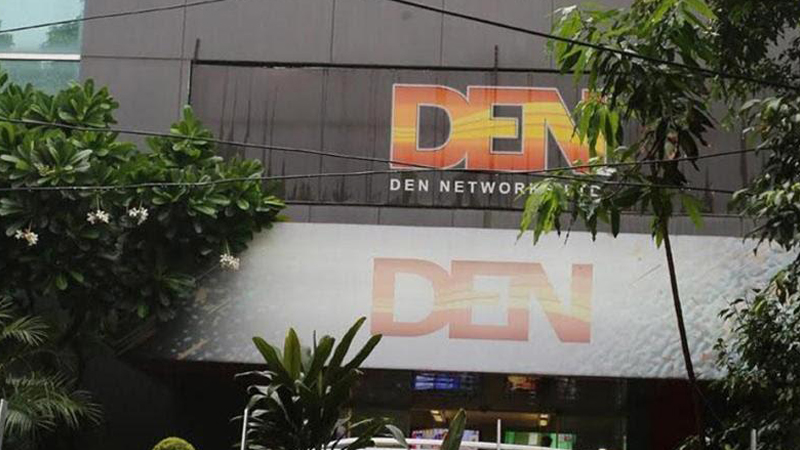
MUMBAI: When margins wobble, liquidity talks and in Q3 FY25-26, cash did most of the talking. Den Networks Limited closed the December quarter with consolidated revenue of Rs.251 crore, marginally higher than the previous quarter but down 4 per cent year-on-year, even as profitability stayed resilient on the back of strong cash reserves and disciplined cost control.
Subscription income softened to Rs.98 crore, slipping 3 per cent sequentially and 14 per cent from last year, while placement and marketing income offered some cheer, rising 15 per cent quarter-on-quarter to Rs.148 crore. Total costs climbed faster than revenue, up 7 per cent QoQ to Rs.238 crore, driven largely by higher content costs and operating expenses. As a result, EBITDA dropped sharply to Rs.13 crore from Rs.19 crore in Q2 and Rs.28 crore a year ago, pulling margins down to 5 per cent.
Yet, the bottom line refused to blink. Profit after tax stood at Rs.40 crore, up 15 per cent sequentially and only marginally lower than last year’s Rs.42 crore. A healthy Rs.57 crore in other income helped cushion operating pressure, keeping profit before tax at Rs.48 crore, broadly stable quarter-on-quarter despite the tougher cost environment.
The real headline-grabber, however, sits on the balance sheet. The company remains debt-free, with cash and cash equivalents swelling to Rs.3,279 crore as of December 31, 2025. Net worth rose to Rs.3,748 crore, while online collections accounted for 97 per cent of total receipts, underscoring strong cash discipline across operations, including subsidiaries.
In short, while Q3 showed signs of operating strain, the financial backbone remains solid. With zero gross debt, steady profits and a formidable cash war chest, the company enters the next quarter with flexibility firmly on its side proving that in uncertain markets, balance sheet strength can be the best growth strategy.







