News Headline
IPL’s surging IPL valuation slides back as gambling ban and media merger collide

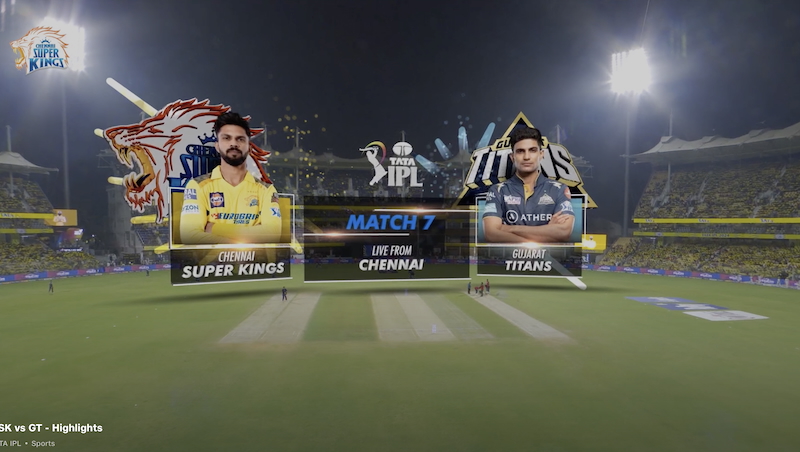
MUMBAI: The Indian Premier League, the commercial behemoth that has redefined cricket economics, is experiencing something unprecedented: contraction. After years of relentless upward momentum, the IPL’s valuation has plummeted to Rs 76,100 crore in 2025—a staggering Rs 16,400 crore collapse over two years. The league that once seemed destined to become sport’s most valuable franchise now faces an altogether different reality: the era of exponential growth has ended.
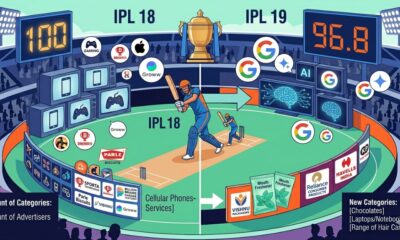
Two seismic forces have conspired to puncture cricket’s golden goose. First, India’s crackdown on real-money gaming has eviscerated the advertising market, stripping an estimated Rs 1,500–2,000 crore from annual sponsorship revenues. Second, the 2024 merger of Disney Star and Viacom18 into JioStar eliminated the competitive media rights bidding war that had inflated valuations for over a decade. Together, these shocks have shattered the financial architecture upon which the IPL’s boom was built.
Fantasy and gaming platforms were the IPL’s most profligate sponsors, lavishing Rs 1,500–2,000 crore annually across league, franchise, and broadcaster deals. Dream11’s Rs 358 crore national jersey sponsorship exemplified this era: premium pricing underpinned by what amounted to speculative betting cash. Then the Promotion and Regulation of Online Gaming Act descended like a guillotine. The gaming sponsors evaporated overnight, leaving franchises scrambling to replace lost revenue with comparatively cheaper deals from fast-moving consumer goods, banking, and electric vehicle makers.

The vacuum revealed an uncomfortable truth: gaming sponsorship wasn’t additional revenue flowing into cricket’s ecosystem. It was unsustainable froth, inflating numbers on spreadsheets rather than building durable commercial value. When it disappeared, so did the illusion of inexhaustible growth.
For years, competing broadcasters—Star Sports, Sony, Amazon, others—bid ferociously for IPL rights, each convinced that exclusive access to India’s cricket audience justified premium prices. In 2023, with two strong bidders and whispers of global tech giants entering the fray, valuations soared to Rs 92,500 crore. But the promised tech invasion never materialised. Netflix, Amazon, and Apple pivoted away from sports streaming. Disney and Viacom18 merged, eliminating one bidder entirely. The competitive tension that had driven rights auctions simply evaporated.
D&P Advisory managing partner Santosh N summarised the revised reality: media rights will no longer deliver the 40–50 per cent appreciation once confidently projected. The IPL’s “fundamentals remain strong,” he insisted, but “the pricing environment will remain under pressure.” Translation: viewers will watch, advertising inventory will sell, but sponsors will pay less.
The Women’s Premier League, still in its formative years, has already buckled. Its ecosystem value fell 5.6 per cent to Rs 1,275 crore in a single year. Unlike the IPL’s entrenched commercial machinery, the WPL lacks pricing resilience. Dream11’s sponsorship withdrawal and the gaming ban have left the BCCI scrambling to secure title sponsors before the next season—a predicament that would have been unthinkable two years ago.
Amidst the financial carnage, audience enthusiasm remains robust. The 2025 IPL season crossed a billion cumulative viewers, with digital viewership surpassing television for the first time. JioStar recorded 1.19 billion unique viewers and 514 billion minutes watched. Stadium attendance remained strong; travel searches spiked across Bengaluru, Mumbai, and Lucknow during matches. In short, Indians remain obsessed with cricket. They’re simply less willing—or able—to pay premium prices for the privilege.
The road forward demands what the boom years never required: structural innovation. Subscription bundles, regional packages, commerce integrations, and renewed competitive tension from global streaming platforms must replace the twin engines of gaming sponsorship and auction-driven bidding wars.
If they don’t materialise, the IPL faces not terminal decline but permanent diminishment: a mature, cash-generative business rather than the exponential growth machine it once promised to be. For a league built on the premise that tomorrow would always dwarf today, that’s a bitter recalibration indeed.





NEW DELHI: Hamdard Laboratories gathered a cross-section of India’s achievers in New Delhi on Friday, handing out the Hakeem Abdul Hameed Excellence Awards to figures who have left their mark across healthcare, education, sport, public service and the arts.
The ceremony, attended by minister of state for defence Sanjay Seth and senior officials from the ministry of Ayush, celebrated individuals whose work blends professional success with a sense of public purpose. It was as much a roll call of achievement as it was a reminder that influence is not measured only in profits or podiums, but in people reached and lives improved.
Among the headline awardees was Alakh Pandey, founder and chief executive of PhysicsWallah, recognised for turning affordable digital learning into a mass movement. On the sporting front, Arjuna Awardee and kabaddi player Sakshi Puniya was honoured for her contribution to the game and for pushing women’s participation onto bigger stages.
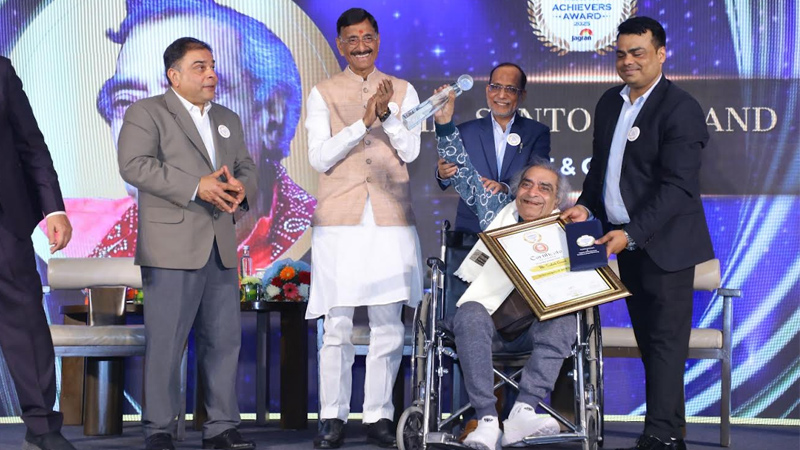
The cultural spotlight fell on veteran lyricist and poet Santosh Anand, whose songs have echoed across generations of Hindi cinema. At 97, Anand accepted the honour with characteristic humility, reflecting on a life shaped by perseverance and hope.
Healthcare honours spanned both modern and traditional systems. Manoj N. Nesari was recognised for strengthening Ayurveda’s place in national and global health frameworks. Padma shri Mohammed Abdul Waheed was honoured for his research-backed work in Unani medicine, while padma shri Mohsin Wali received recognition for his long-standing contribution to patient-centred care.
Education and social development also featured prominently. Padma shri Zahir Ishaq Kazi was honoured for decades of work in education, while former Meghalaya superintendent of Police T. C. Chacko was recognised for public service. Goonj founder Anshu Gupta received an award for his dignity-centred rural development initiatives, and the Hunar Shakti Foundation was honoured for empowering women and young girls through skill development.
The Lifetime Achievement Award went to former IAS officer Shailaja Chandra for her long career in public healthcare and governance, particularly in the traditional systems under Ayush.
Speaking at the event, Hamdard chairman Abdul Majeed said the awards were a tribute to those who combine excellence with empathy. “These awardees reflect Hakeem Sahib’s belief that healthcare, education and public service must ultimately serve humanity,” he said.
Minister Seth struck a forward-looking note, saying India’s young population gives the country a unique opportunity to become a global destination for learning, health and wellness by 2047.
The ceremony also featured the trailer launch of Unani Ki Kahaani, an upcoming documentary starring actor Jim Sarbh, set to premiere on Discovery on 11 February.
Instituted in memory of Unani scholar and educationist Hakeem Abdul Hameed, the awards have grown into a national platform that celebrates those building a more inclusive and resilient India. For one evening at least, the spotlight was not just on success, but on service with substance.







