News Headline
IPL mini-auction 2026 breaks records on overseas and uncapped buys

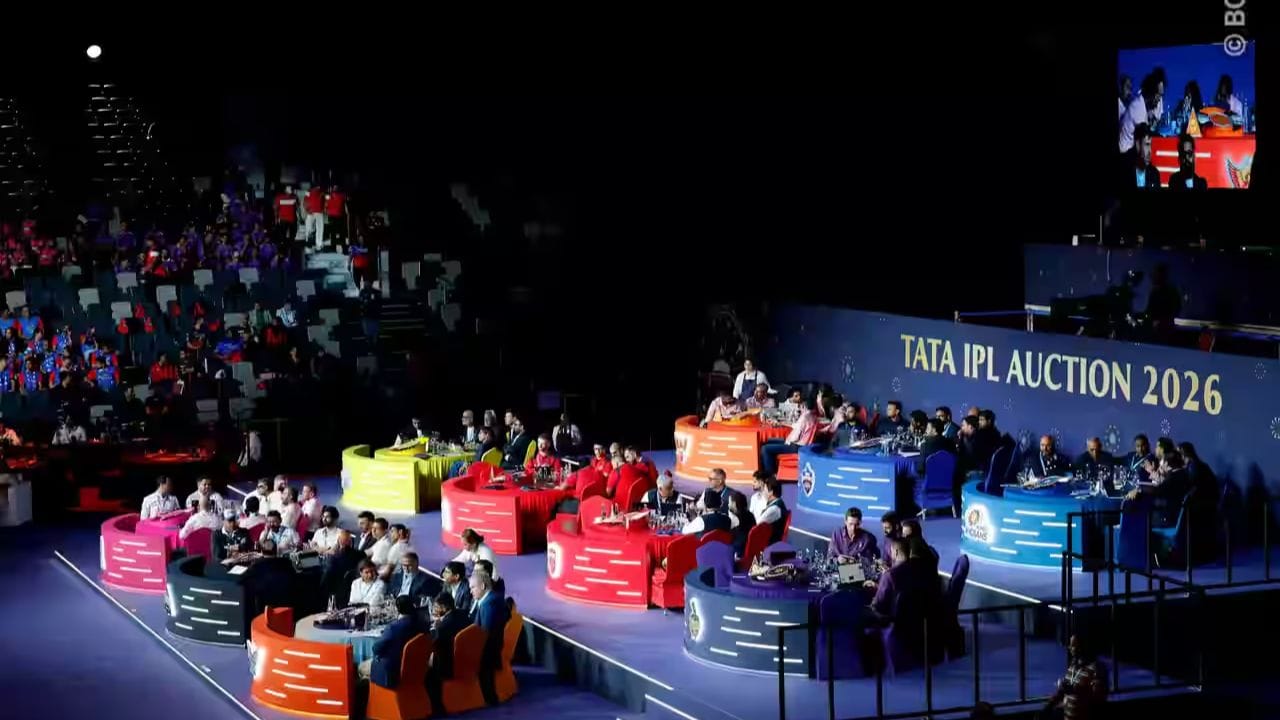
ABU DHABI: The IPL’s mini-auction has a habit of rewriting the rules. This year, it tore up the price list altogether. Cameron Green emerged as the face of the frenzy, becoming the most expensive overseas player in league history after Kolkata Knight Riders shelled out Rs 25.20 crore. In one breathless bidding war, the auction room confirmed what the IPL has long been drifting towards: scarcity, not reputation, now sets the price.
Green was not alone. KKR doubled down on fast-bowling firepower, snapping up Matheesha Pathirana for Rs 18 crore and Mustafizur Rahman for Rs 9.20 crore, assembling a pace unit built to intimidate and overwhelm. The message was blunt. In an IPL increasingly decided in the powerplay and at the death, elite quicks are worth almost anything.
Yet the true story of the auction lay elsewhere. This was not merely a night of superstar inflation. It was a youthquake.

Chennai Super Kings led the charge into uncharted territory, spending Rs 28.40 crore combined on two uncapped players, Kartik Sharma and Prashant Veer, both picked up for Rs 14.20 crore each. For a franchise synonymous with experience and calm heads, the pivot was striking. CSK clearly see the next cycle of the IPL being defined by domestic talent that can be moulded early and retained long-term. The addition of Rahul Chahar for Rs 5.20 crore added control to that vision, while overseas depth came via Matt Henry, Akeal Hosein and Matthew Short.
Delhi Capitals found their headline moment in Auqib Nabi Dar, the uncapped pacer who rocketed to Rs 8.40 crore. It was one of the auction’s sharpest jolts, reflecting the league’s growing willingness to gamble on upside rather than pedigree. Delhi balanced that punt with experience, bringing in David Miller, Ben Duckett, Pathum Nissanka, Kyle Jamieson and Lungi Ngidi to steady a squad that has often promised more than it has delivered.
Across the table, Gujarat Titans were measured rather than manic. Jason Holder at Rs 7 crore was their standout buy, a nod to versatility and leadership, while Tom Banton and a clutch of domestic names filled gaps without draining the purse.
Kolkata, however, were the night’s undisputed big spenders. Green, Pathirana and Mustafizur alone accounted for over Rs 52 crore. Add Rachin Ravindra, Finn Allen and Tim Seifert, and KKR have built an aggressively modern roster: athletic, flexible and unapologetically expensive.
Lucknow Super Giants focused on explosiveness. Josh Inglis fetched Rs 8.60 crore, while two uncapped Indians—Mukul Choudhary and Akshat Raghuwanshi—commanded over Rs 4.80 crore combined, underlining how mid-tier Indian talent is no longer cheap filler but central currency.
Mumbai Indians, by contrast, barely flexed. Quinton de Kock at base price was their lone capped buy, with the rest of the shopping list devoted to low-cost domestic prospects. Whether that restraint proves savvy or short-sighted will only be clear once the season begins.
Punjab Kings quietly strengthened their overseas contingent through Ben Dwarshuis and Cooper Connolly, while Rajasthan Royals made Ravi Bishnoi the centrepiece of their auction strategy, paying Rs 7.20 crore for the leg-spinner and backing him with pace options Adam Milne and Kuldeep Sen.
Royal Challengers Bengaluru landed their marquee Indian name in Venkatesh Iyer for Rs 7 crore, but the real surprise was the Rs 5.20 crore spent on uncapped Mangesh Yadav—another data point in the domestic gold rush.
Sunrisers Hyderabad, meanwhile, pushed hard for firepower, splashing Rs 13 crore on Liam Livingstone and backing him with a raft of young Indian bets.
Step back, and the pattern is unmistakable. Overseas stars still command headlines, but it is Indian youth that now drives bidding wars. Teams are paying not just for runs and wickets, but for potential, control and continuity in a league where retention rules reward foresight.
The mini-auction may be over, but its consequences will echo through the season. With March approaching fast, squads look bolder, younger and more unbalanced than ever. The cheques have been signed. The gambles have been taken. Now the IPL waits to see who guessed right—and who paid dearly to guess wrong.








NEW DELHI: Hamdard Laboratories gathered a cross-section of India’s achievers in New Delhi on Friday, handing out the Hakeem Abdul Hameed Excellence Awards to figures who have left their mark across healthcare, education, sport, public service and the arts.
The ceremony, attended by minister of state for defence Sanjay Seth and senior officials from the ministry of Ayush, celebrated individuals whose work blends professional success with a sense of public purpose. It was as much a roll call of achievement as it was a reminder that influence is not measured only in profits or podiums, but in people reached and lives improved.
Among the headline awardees was Alakh Pandey, founder and chief executive of PhysicsWallah, recognised for turning affordable digital learning into a mass movement. On the sporting front, Arjuna Awardee and kabaddi player Sakshi Puniya was honoured for her contribution to the game and for pushing women’s participation onto bigger stages.
The cultural spotlight fell on veteran lyricist and poet Santosh Anand, whose songs have echoed across generations of Hindi cinema. At 97, Anand accepted the honour with characteristic humility, reflecting on a life shaped by perseverance and hope.
Healthcare honours spanned both modern and traditional systems. Manoj N. Nesari was recognised for strengthening Ayurveda’s place in national and global health frameworks. Padma shri Mohammed Abdul Waheed was honoured for his research-backed work in Unani medicine, while padma shri Mohsin Wali received recognition for his long-standing contribution to patient-centred care.
Education and social development also featured prominently. Padma shri Zahir Ishaq Kazi was honoured for decades of work in education, while former Meghalaya superintendent of Police T. C. Chacko was recognised for public service. Goonj founder Anshu Gupta received an award for his dignity-centred rural development initiatives, and the Hunar Shakti Foundation was honoured for empowering women and young girls through skill development.
The Lifetime Achievement Award went to former IAS officer Shailaja Chandra for her long career in public healthcare and governance, particularly in the traditional systems under Ayush.
Speaking at the event, Hamdard chairman Abdul Majeed said the awards were a tribute to those who combine excellence with empathy. “These awardees reflect Hakeem Sahib’s belief that healthcare, education and public service must ultimately serve humanity,” he said.
Minister Seth struck a forward-looking note, saying India’s young population gives the country a unique opportunity to become a global destination for learning, health and wellness by 2047.
The ceremony also featured the trailer launch of Unani Ki Kahaani, an upcoming documentary starring actor Jim Sarbh, set to premiere on Discovery on 11 February.
Instituted in memory of Unani scholar and educationist Hakeem Abdul Hameed, the awards have grown into a national platform that celebrates those building a more inclusive and resilient India. For one evening at least, the spotlight was not just on success, but on service with substance.







