iWorld
Industry bigwigs sound the alarm on piracy from OTT platforms

KOLKATA: Digital piracy is nothing new. But it has registered a massive uptick as millions of people have been forced to stay cooped up in their homes because of the Covid2019 pandemic. Illegal streaming could cost the industry around $12.5 billion by 2024 and the only way to curb the threat is a concerted effort by policy makers and service providers, according to experts.
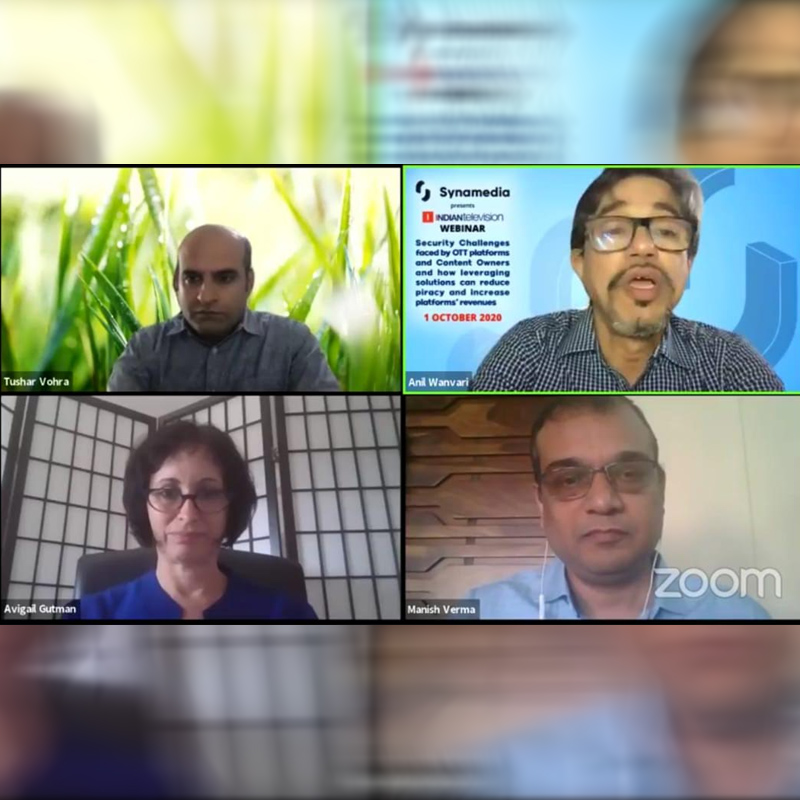
In a webinar hosted by Indiantelevision.com, panellists agreed that a 360 degree approach can help win the battle against piracy. ZEE5 India technology head Tushar Vohra, SonyLIV technology head Manish Verma, Synamedia intelligence and security operations VP Avigail Gutman participated in the discussion, which was moderated by Indiantelevision.com founder, CEO and editor-in-chief Anil Wanvari.
Gutman elaborated on how piracy from streaming platforms has come to be the most significant problem in the last five-ten years. Content is being extracted from the devices from where it is legitimately supplied, says Gutman. Along with that, another kind of copyright violation has emerged including identity theft and skimming of customer credentials. While there are many security solutions that prevent older forms of piracy, streaming is now “the lowest hanging fruit” for pirates.

Security Challenges of OTT platforms & Content Owners & how leveraging solutions can reduce piracy https://t.co/UxmRJPOqKs
— Indiantelevision.com (@ITVNewz) October 1, 2020
With more and more people switching to digital platforms, piracy is also increasing in tandem, states SonyLIV’s Manish Verma, agreeing to the fact that the issue is ever-evolving. He explained that it started with a very simple process like deep linking of content. It went one step further when people started using proxy and VPN to stream content illegally. This gradually devolved into credential theft, identity sharing, screen mirroring and copying the content on screen.
Verma believes that the rise in content piracy has a lot to do with malpractices on social media platforms like Telegram, which allows people to share large multimedia files without supervision. The messenger app became immensely popular after the government crackdown on peer-to-peer file sharing sites, better known as torrents. While the company behind the app claims to have a zero tolerance policy on pirated content, its encryption makes it nearly impossible to find out what users are sharing.
“With content acquisition and content production costs increasing – whether it is for original content or live sports events –it is very important for us to see what all we can do to stop piracy,” he added.
ZEE5’s Vohra pointed out how they witnessed a big spike in piracy in the wake of Covid2019 crisis. As TV content dried up with the beginning of lockdown, the platform saw a huge increase in credential theft, and original content getting pirated. This is only going to increase as people have now already tasted original premium content, he warned.
“It is easy for pirate services to lure audience as they combine content from several platforms and offer it freely or for a much lower price,” Vohra said. Clearly, 360 investment from content owners, communities, governments and lawmakers is the need of the hour to tackle this challenge.
With the evolution in the nature of piracy, security solutions have also changed. Verma said that at the outset, the platform used to take basic steps earlier as the volume of traffic and impact wasn’t very high. Then they went from encrypting content, user URLs, using DRMs to blocking proxy and VPN access. Now, they’re looking at more advanced measures at different layers to make the service completely watertight against piracy.
On the other hand, ZEE5’s Vohra said that the company believes in creating a barrier. It is trying to warn pirates that ZEE5 can catch them by figuring out their IP, user id, device etc. The platform is working on a forensic watermark to be launched on the web player in October. Later, it will be launched on all applications expect for KAIOS by end of December. He is optimistic that the OTT service will be in a better position after six months.
“We were engaging with the government of India for data protection laws and we stressed content protection as one of the most important clauses that the lawmakers should take up. We are seeing good results from that engagement. We are hopeful that a new law that doubles down on copyright protection will be introduced by April,” Vohra added.
Gutman concurred that there is great need for stricter law enforcement as hackers are attacking DRMs exploiting the loopholes, legitimate CDNs, video services. As piracy becomes increasingly sophisticated, it demands equally progressive regulations to check it.







iWorld
Prime Video bets big on India with global originals, films and franchise expansion
Execs highlight scale, travelability and new IP bets as India anchors global strategy
MUMBAI: At Prime Video Presents 2026, the message was clear and confident. India is not just part of the plan, it is central to it.
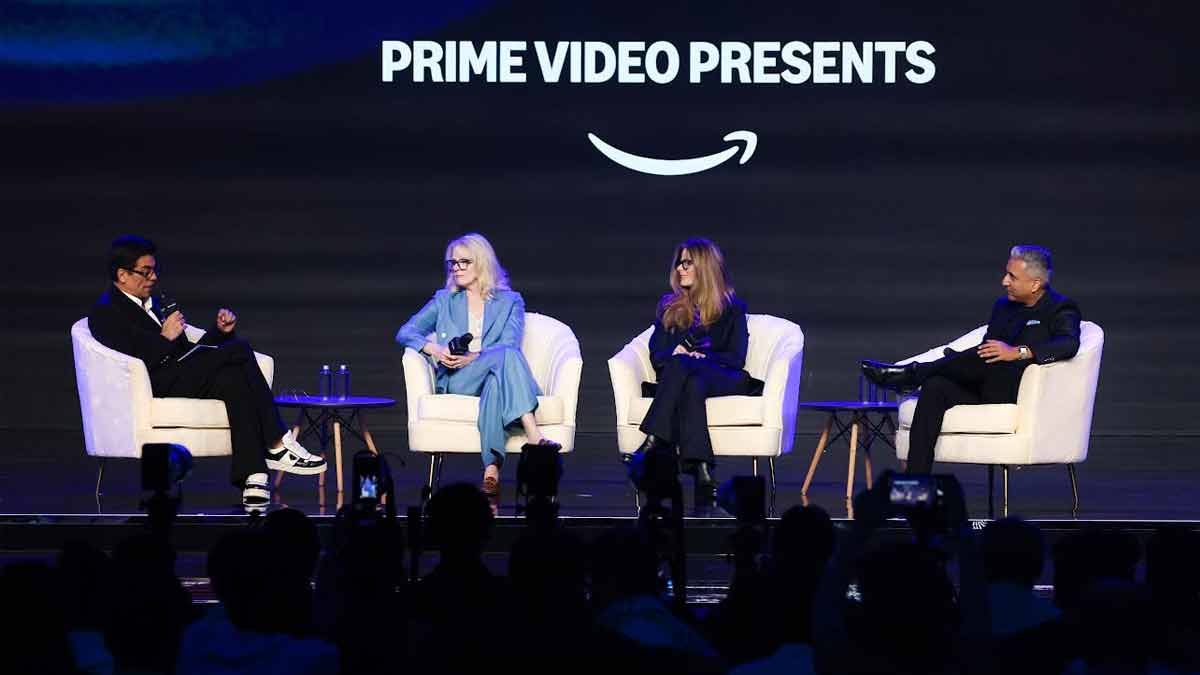
In a lively fireside chat hosted by filmmaker Karan Johar, Kelly Day, vice president of prime video and amazon mgm studios international, Nicole Clemens, vice president of international originals, and Gaurav Gandhi, vice president for Apac and Anz, laid out an ambitious roadmap. Think bigger stories, wider reach and a sharper focus on building franchises that travel.
Kelly Day, a regular visitor to India, set the tone early. Calling the country “one of the most important markets globally”, she pointed to the sheer scale and diversity of audiences as a driving force behind Prime Video’s growth. Indian Originals, she said, are not just local hits but global engines powering subscriptions and engagement.
That global appeal is already visible. According to Clemens, around 25 percent of viewership for Indian content now comes from outside the country. Shows rooted deeply in local culture are finding fans worldwide, proving that specificity, when paired with universal themes, travels well. From gritty dramas to sharp thrillers, Indian storytelling is increasingly crossing borders with ease.
Clemens, who joined recently to lead international originals, was particularly upbeat about India’s creative range. She highlighted a growing slate of over 100 shows in development and production, with more than 60 percent returning for multiple seasons. For her, the formula is simple. Authentic stories, told well, resonate everywhere.
Adding to the buzz, she teased new and returning titles, alongside a fresh superhero universe, the Kalyug Warriors. It signals a push into new genres while doubling down on familiar fan favourites.
If content is king, distribution is the clever courtier. Day outlined Prime Video’s layered business model in India, which blends subscription, rentals, add on channels and ad supported viewing through Amazon MX Player. The idea is straightforward. Give viewers choice, whether they want premium, free or pay per view.
India, she noted, has also become a testing ground for innovation. Tiered pricing, mobile only plans and language diversity have all been sharpened here before being exported to other markets. In many ways, the India playbook is now influencing global strategy.
For Gaurav Gandhi, the next chapter is about scale with intent. He outlined four priorities. Making Prime Video more accessible, pushing Indian content globally, building stronger franchises and supercharging the films business.
On films, the platform is moving beyond licensing into co productions and now theatrical releases in partnership with amazon mgm studios. These films will eventually stream on Prime Video, creating a full circle from cinema halls to living rooms across 240 countries.
Franchise building remains another key pillar. With hits like The Family Man, Mirzapur and Panchayat already enjoying multi season success, the focus is now on creating the next wave of enduring IP. Newer titles are already lining up for second seasons, signalling a steady pipeline.
What stood out through the conversation was a shared belief. Streaming in India is still in its early innings, and the runway is long. With a mix of local flavour and global ambition, Prime Video is betting that stories from India will not just stay at home, but travel far and wide.
Or as the executives seemed to suggest, the world is watching and India has plenty more to show.







