News Broadcasting
India’s TV blindspot hides 100 million eyeballs-and everyone wants a piece of it

MUMBAI: Far from the reach of TRPs and dish antennas lies a forgotten audience—There’s a silent crowd of 100 million Indian homes—unplugged, unconnected, and uncounted—who have neither a cable subscription nor a dish on the roof. They dwell beyond the prime-time spotlight in the shadows of India’s glitzy entertainment economy.
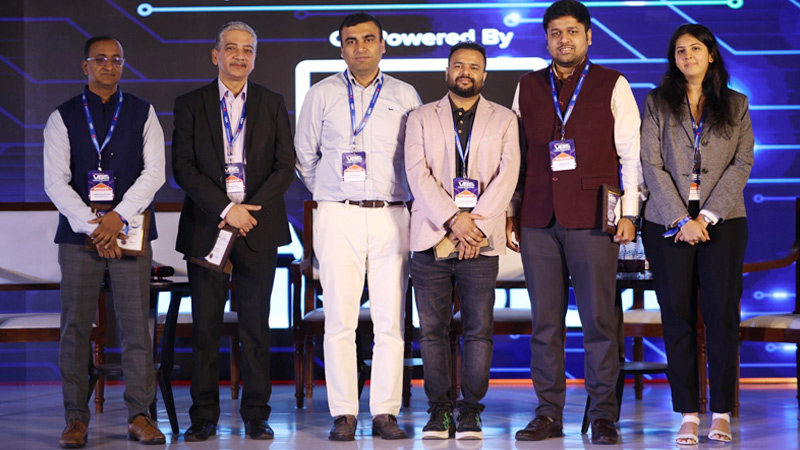
At Indiantelevision.com’s 21 edition of the Video, Broadband, Broadcast Technology Summit 2025, under the theme ‘Changing the Paradigm’, the opening panel titled “Plugging the Gaps – What’s the Right Formula?” saw industry leaders converge to crack the conundrum of these missing millions.
Moderated by BCG’s Payal Mehta, the session brought together a powerhouse of voices from broadband giants, content behemoths and tech disruptors, each offering their vision of reaching India’s TV no-go zones.
You Broadband CEO Sameer Mahapatra cut straight to the issue—access. “Fixed broadband is miles away when I’m talking about semi-rural and rural,” he said. While mobile broadband has gained significant ground, Mahapatra argued that public-private partnerships, such as those seen under the Universal Service Obligation Fund, would be vital for making rural access a reality.
Excitel Broadband chief customer experience officer Parag Garodia acknowledged the dominance of mobile over fixed networks but flagged affordability and infrastructure as persistent challenges. “Infrastructure in tribal and ultra-rural India is rare. Even shops that sell televisions or hardware are few and far between,” he noted. He emphasised the need for more vernacular content, citing that cultural disconnect is a major reason why rural India remains unhooked from TV.
Meanwhile, Warner Bros. Discovery head of distribution and eurosport – south Asia Ruchir Jain reminded the room that India, as a content market, is massive in size but tiny in monetisation. “India is either one of the largest or the largest country in the portfolio of global media firms, but its share in monetisation is of low significance,” he said. According to Jain, the content is there, the viewers are coming, but the money isn’t flowing. Yet.
GTPL Hathway Limited SVP Yatin Gupta laid bare the pricing dilemma. “The pricing has become common for rural as well as urban areas,” he said, referencing TRAI’s 2017 tariff order. He argued that differential pricing could revive cable TV in price-sensitive rural zones, where many have dumped their subscriptions altogether. “Affordability is the elephant in the room,” he added, stating that even basic necessities like uninterrupted electricity come before a television set in a rural household’s shopping list.
But the debate wasn’t just about televisions. PlayboxTV founder & CEO Aamir Mulani saw mobile as the true battlefield. “There’s a big war going on between mobile and TV—and that war is for attention,” he declared. With 74 per cent of content now consumed via mobile, compared to TV’s 26 per cent, Mulani advocated for microtransactions, mobile-first content, and pay-per-episode formats that have gained traction in China. “Revenue is not the challenge—it’s strategy that needs fixing,” he added.
The session closed with a call for aggregation—not just of content but of access models, pricing, and distribution. Community viewing centres, government-subsidised set-top boxes, bundled services and freemium ad-supported content models were all floated as potential solutions.
From DD Free Dish’s five crore loyal homes to the unexplored hinterlands, everyone agrees on one thing: India’s TV-dark households aren’t unreachable—they’re just waiting for the right connection.






