iWorld
India’s telecom subscribers cross 1.23 billion as Jio tightens grip


NEW DELHI: India’s total telephone subscriber base hit 1.23 billion at the end of October 2025, up 2.44 million from the previous month, according to data released by the Telecom Regulatory Authority of India. The overall tele-density—the number of connections per 100 people—now stands at 86.76 per cent, with urban areas at 134.66 per cent and rural regions at 59.72 per cent.
Wireless subscribers dominate the landscape at 1.18 billion, registering a monthly growth of 0.19 per cent. Urban wireless subscriptions increased from 647.47 million to 647.82 million, whilst rural areas saw a modest bump from 534.85 million to 536.80 million. The share of urban and rural subscribers in the total wireless base stood at 54.69 per cent and 45.31 per cent respectively.
The big story in October was Vodafone Idea’s catastrophic subscriber loss. The beleaguered operator shed a staggering 20.367 million users, the steepest monthly decline amongst all access service providers. In stark contrast, Reliance Jio added 1.43 million subscribers, cementing its position as India’s largest mobile operator with 504.93 million users—a commanding 41.36 per cent market share.

Bharti Airtel came in second with 302.62 million subscribers and a 24.79 per cent market share, followed by Vodafone Idea at 127.22 million (10.42 per cent) and Bharat Sanchar Nigam at 34.39 million. The top five providers now control 99.99 per cent of the wireless market.
In the broadband segment, total subscribers reached 999.81 million in October, up 4.18 million from September’s 995.63 million—a monthly growth of 0.42 per cent. Fixed wireless access led the charge with a 7.04 per cent monthly jump, whilst mobile wireless connections grew a more modest 0.31 per cent. Fixed wired access subscriptions rose 0.94 per cent.
Reliance Jio dominated broadband as well, with 508.34 million subscribers, followed by Bharti Airtel at 312.53 million and Vodafone Idea at 127.22 million. The top five broadband providers held 98.50 per cent of the market.
Wireless subscriber numbers jumped from 1.17 billion in September to 1.18 billion in October. Within this, 5G fixed wireless access users increased from 9.40 million to 9.91 million, with urban subscribers at 5.81 million and rural at 4.10 million. The urban share of 5G fixed wireless subscribers stood at 58.66 per cent.
In October, 15.05 million subscribers requested mobile number portability. The number of active wireless subscribers on the date of peak visitor location register stood at 1.09 billion. Most licensed service areas showed growth in wireless subscribers during October, barring Andhra Pradesh, Kerala, Punjab, Himachal Pradesh, Haryana, West Bengal, Mumbai, Kolkata, Uttar Pradesh (West), Gujarat and Delhi.
The wireline segment grew from 46.61 million in September to 46.75 million in October, a 0.30 per cent monthly increase. Overall wireline tele-density rose marginally from 3.287 per cent to 3.294 per cent. Urban wireline tele-density stood at 8.16 per cent and rural at 0.55 per cent on 31 October. Urban subscribers comprised 89.36 per cent of total wireline users, with rural subscribers at 10.64 per cent.
Private access service providers held 92.08 per cent of the wireless market share, whilst public sector undertakings—BSNL, MTNL and state-owned APSFL—together controlled 7.92 per cent. In the wireline segment, the split was 79.78 per cent private and 20.22 per cent public.
The data underscores the brutal consolidation sweeping through India’s telecom sector, with Vodafone Idea’s precipitous decline raising fresh questions about the sustainability of a three-player market. For Reliance Jio and Bharti Airtel, the path to dominance has never looked clearer.







iWorld
OpenAI hits back at Elon Musk’s lawsuit ahead of trial
Company calls claims “baseless” and accuses Musk of trying to disrupt a rival.
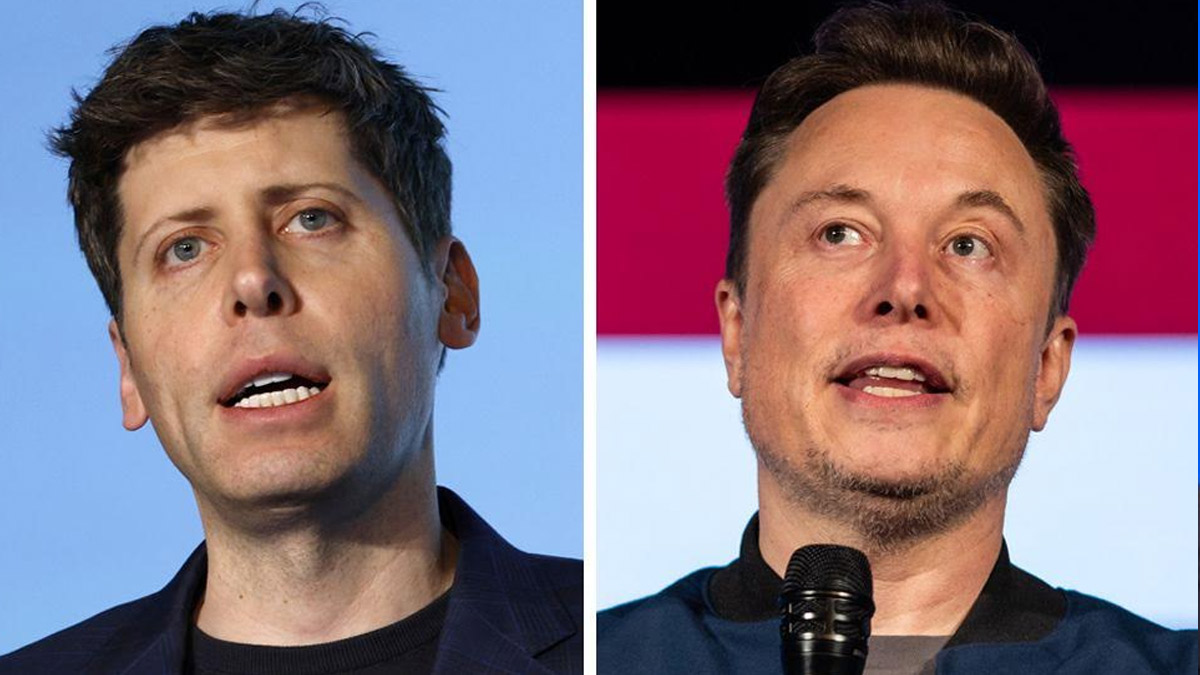
MUMBAI: When the stakes are measured in billions and egos are involved, even Silicon Valley titans can turn a courtroom into a battlefield. OpenAI has issued a sharp public response to Elon Musk’s ongoing lawsuit, accusing the billionaire of filing the case to harass a competitor rather than address genuine concerns. In a strongly worded statement shared on its official X account, OpenAI described Musk’s allegations as “baseless” and suggested the lawsuit is an attempt to disrupt the company as the case heads toward trial later this month in Oakland, California.
The response comes after Musk’s legal team recently amended the complaint, proposing that any damages potentially exceeding $150 billion should go to OpenAI’s nonprofit entity rather than to Musk personally. OpenAI questioned the timing and motive behind this change, calling it a late-stage attempt to “pretend to change his tune” on the nonprofit structure.
The company further labelled the lawsuit a “harassment campaign”, arguing that Musk’s actions are driven by personal rivalry, ego, and a desire for greater control and financial upside.
At the heart of the dispute is Musk’s claim that OpenAI has abandoned its original nonprofit mission of developing artificial intelligence for the benefit of humanity. A co-founder who left in 2018, Musk is seeking governance changes, including the removal of CEO Sam Altman from the nonprofit board, and the return of certain financial gains linked to Altman and President Greg Brockman.
OpenAI has firmly rejected these allegations, maintaining that its current hybrid structure, a public-benefit corporation overseen by a nonprofit parent remains true to its long-term goals. The company has also previously accused Musk of anti-competitive behaviour aimed at weakening its leadership.
As the case prepares for a jury trial, this public exchange highlights the deepening rift between two of the most influential figures in the AI revolution and raises broader questions about governance, mission, and power in the fast-moving world of artificial intelligence.
In the high-stakes game of AI, it seems the real drama isn’t just inside the models, it’s playing out in courtrooms too.






