News Headline
India’s Ad Industry got a dramatic makeover in 2025

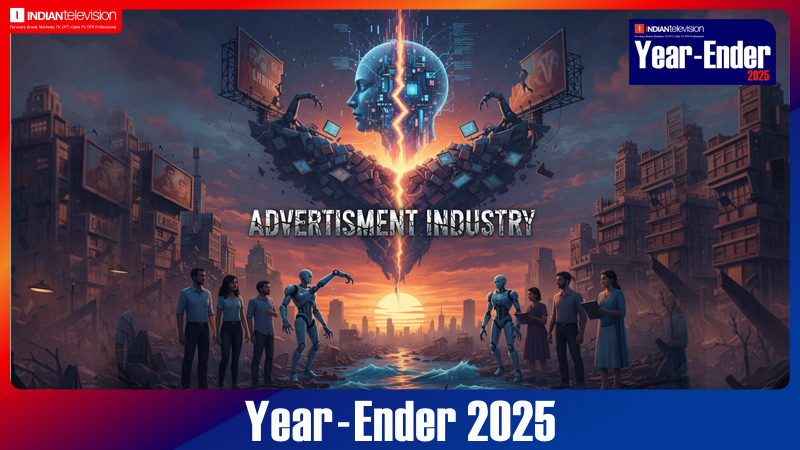
MUMBAI: India’s advertising world spent 2025 holding on tight as the ground shifted beneath it. It was a year where everything moved at once: the market’s steady rise, global giants colliding, creative empires collapsing, AI rewriting workflows and regulators tightening the screws, all playing out alongside the passing of the industry’s most iconic voices. The result? A dramatic makeover that reshaped how the business thinks, creates and competes.
Picture this: India’s cruising in the steady lane while the world’s found the accelerator. WPP Media’s This Year Next Year end-of-year 2025 outlook shows India climbing at a calm, steady pace while the global ad economy enjoys a sharper bounce.
The numbers tell the story. India’s total advertising revenue is set to hit $20.7 billion in 2025, notching up 9.2 per cent growth over 2024. It’s a measured climb for a market juggling agency shake-ups and the unstoppable march of digital.

Globally? The vibe’s sunnier. The worldwide advertising market is forecast to reach $1.14 trillion in 2025, growing at 8.8 per cent. India’s actually nosing ahead this time, though not by the commanding margin it once enjoyed when it used to leave everyone else eating its dust.
Fast forward to 2026, and the rhythm stays much the same. India’s projected to grow 9.7 per cent, nudging its ad market to $23 billion, while global ad revenue is expected to rise by about 7.1 per cent. India keeps its steady beat, while the world moves at a brisk but slightly cooling pace.
“2025 reflected a quiet confidence in India’s advertising industry,” says Dentsu CEO South Asia Harsha Razdan. “Growth remained resilient, even as many global markets slowed, driven by a clear shift towards digital, data and MarTech-led thinking.”
That resilience showed up clearly in the numbers and the strategic shifts brands made throughout the year.
“2025 was a strong year for Indian advertising, not explosive, but structurally solid,” says Admatazz founder & chief strategist Yash Chandiramani. “Ad-ex spends grew steadily on the back of FMCG recovery, BFSI expansion, and a maturing digital ecosystem where brands finally began balancing performance and brand-building rather than over-indexing on Roas.”
That steady growth played out very differently across the major holding companies. Some were popping champagne, others nursing headaches. Publicis stayed on its hot streak with 5.7 per cent organic growth in Q3, riding high on Connected Media, which now accounts for nearly 60 per cent of its takings. Havas wasn’t far behind, clocking a solid 3.8 per cent organic growth, smashing double digits in healthcare and posting a punchy 8.2 per cent in Asia-Pacific.
WPP? Not so cheerful. The giant watched revenues tumble 8.4 per cent year-on-year in Q3 and braced itself for a gloomy full-year outlook. Omnicom managed 2.6 per cent organic growth but saw its margins squeezed from 15.5 per cent down to 13.1 per cent as it rolled up its sleeves for the blockbuster move: snapping up Interpublic Group for $13.5 billion, creating a titan with over $20 billion in combined revenues.
When giants collide
Behind those quarterly numbers lay something bigger: a year of dramatic structural reorganisation that redrew the agency landscape.
Publicis Groupe kicked things off in January by doing the unthinkable: collapsing two of its most celebrated creative networks, Leo Burnett and Publicis Worldwide, into a single powerhouse called Leo. The unified entity brings together nearly 15,000 creatives across 90 countries, positioned as a next-generation creative engine where data, AI and storytelling live under one roof. By merging overlapping capabilities into one global constellation, Publicis signalled a clear shift towards scale, integration and streamlined client delivery.
Come May, WPP decided it was time for its own makeover. Out went the long-standing GroupM brand, in came WPP Media, a consolidated, AI-enabled global media company. Agencies like Mindshare, Wavemaker and EssenceMediacom continue as sub-brands, but the overarching structure now sits under a single media identity designed to deliver unified planning, buying and data solutions. With more than $60 billion in annual media investment under its command, WPP Media is betting on streamlined operations to compete in a world where speed, automation and precision rule.
The Omnicom earthquake

But the Publicis and WPP reshuffles were just warmups for what came next. The biggest tremor came from across the pond. When Omnicom snapped up Interpublic Group, the shockwaves rippled straight into India. Agency names that had been industry landmarks for decades began disappearing as global networks folded legacy brands into fewer, bigger units. Indian teams braced for restructures, leadership reshuffles and a new pecking order that now places the combined giant just behind WPP in the country.
At the heart of this shake-up is a dramatic reset of creative identities. Under the new Omnicom Advertising umbrella, BBDO emerges as one of three defining global networks. In a move packed with both symbolic and operational weight, FCB will be folded into BBDO, effectively retiring one of advertising’s oldest names and reshaping the network’s global creative footprint.
The other two pillars are TBWA and McCann. TBWA will absorb DDB and MullenLowe, bringing two storied agencies under its banner and ending their existence as standalone brands. Together with McCann, these networks form a streamlined trio in one of the boldest reorganisations the sector has seen.
When the corner offices emptied
The structural upheaval came with its own human cost. 2025 also saw a wave of management changes, with leadership moves quietly reshaping the industry from the top. WPP’s rebrand of GroupM into WPP Media in May set the tone, followed by senior exits later in the year, including Ajay Mehta and Kalyan Undinty, signalling a reset in leadership priorities. At Publicis, continuity came through promotion, with Neha Kapoor elevated to executive vice-president at Leo Burnett India, while Havas strengthened its southern leadership by appointing Sujata Singh as President, South.
Consolidation added further churn. The Omnicom–Interpublic merger triggered a major India-level reshuffle, naming Prasoon Joshi as chairman of Omnicom Advertising India and Aditya Kanthy as president and managing director. Closer home, Ajit Varghese returned to Madison Media as partner and group CEO for Media and OOH, even as independent agencies evolved through promotions and exits. Social Panga elevated senior leaders like Sahil Siddiqui, while Schbang saw co-founder Akshay Gurnani exit after a decade, followed by fresh strategy hires. Together, these moves made 2025 a year where leadership change became as defining as creative or technology shifts.
India’s last stand?
As global giants consolidated their empires, the focus shifted closer to home. With creative legacies merging and media empires rebranding, all eyes turned to India’s last big independent.
Madison World, one of the country’s oldest and largest independent agency groups, entered acquisition talks with Publicis and Havas. Long regarded as the last major Indian-owned powerhouse in a market dominated by multinational networks, Madison’s courtship by global suitors underscores India’s significance as one of the world’s fastest-growing advertising markets. While discussions remain fluid and the company has dismissed some reports as speculative, any eventual sale would mark the end of an era for India’s homegrown agency landscape.
India also saw its own consolidation story. Genesis Advertising joined forces with Puretech Digital to form Genesis Group, pairing traditional brand craft with performance marketing, martech, influencer work and analytics. The new entity now fields around 450 people across cities, offering clients a one-stop, full-funnel shop with brand muscle and digital bandwidth in equal measure.
When clients voted with their wallets
Madison’s courtship by global giants wasn’t happening in a vacuum. The market had already begun speaking, and it was speaking through account movements that quietly reshaped the landscape.
Madison World, once a long-standing fixture on several marquee mandates, watched a steady stream of exits. Marico handed its integrated media business, valued at Rs 800 to Rs 1,000 crore, to PHD India in November. Godrej Consumer Products ended a decade-long association to move its Rs 700 crore-plus account to EssenceMediacom in April. Even McDonald’s South and West operations joined the exodus, shifting its Rs 60 crore media AOR to Starcom in May.
The momentum, though, clearly favoured one player: Omnicom Media Group, with PHD India emerging as the year’s repeat winner. Atomberg Technologies moved its Rs 100 crore integrated media mandate to PHD in April. Kimberly-Clark followed in July, awarding the agency its Rs 100 crore-plus media AOR.
Together, the moves signal more than routine account swaps. They point to marketers rethinking scale, specialisation and long-term value in a market where loyalty is no longer a given and fresh thinking is the new currency. In an industry built on persuasion, these quiet transitions spoke volumes about where the real power was shifting.
When the money tap shut off

While agencies were busy merging and media giants rebranding, another story was unfolding that hit the industry like a thunderbolt. The real-money gaming ban didn’t just close a chapter; it slammed the book shut on one of India’s advertising goldmines.
Dream11 alone was among India’s top five advertisers in 2024, pumping an estimated Rs 1,200 to Rs 1,400 crore into the market, according to industry estimates in the Madison Advertising Report 2025. Games24x7 added another Rs 350 to Rs 500 crore to the pot. These weren’t just big spenders; they were everywhere. TV screens, YouTube pre-rolls, Instagram Stories, cricket jerseys, stadium hoardings. You couldn’t watch an IPL match without seeing a gaming app flash across your screen at least a dozen times.
Then, suddenly, silence.
Dream11’s omnipresence across the IPL, WPL and PKL vanished overnight. My11Circle’s hefty Rs 125-crore-per-year IPL fantasy gaming sponsorship deal? Gone. The ban didn’t nibble at the edges of the ad market; it tore a multi-thousand-crore hole straight through its center.
Broadcasters who’d grown comfortable with gaming money cushioning their balance sheets now face a revenue vacuum that’s proving painful to fill. Sports bodies that relied on these sponsors to bankroll tournaments are scrambling for alternatives. And the harsh reality? There aren’t many categories with pockets that deep and appetites that aggressive just waiting in the wings.
The gaming ban laid bare an uncomfortable truth: India’s advertising ecosystem had become dangerously dependent on one category’s spending spree. When that tap shut off, the ripple effects touched everyone from production houses to influencer agencies to the TV networks themselves.
When regulators came knocking
But 2025 wasn’t just about dealmaking and consolidation. While boardrooms buzzed with merger mania, regulators arrived with search warrants.
In March, the Competition Commission of India conducted sweeping raids on major media buying networks and a broadcasters’ body over suspected price-fixing. The allegations? That some players colluded with broadcasters through WhatsApp groups to fix advertising rates and potentially overcharge advertisers.
With penalties that could stretch up to 10 per cent of global turnover for each year of violation, the timing couldn’t have been worse. The crackdown landed right before the Indian Premier League season, one of the industry’s most lucrative advertising windows. Suddenly, the industry found itself under a bright compliance spotlight just as it grappled with global changes and rising digital demands.
When the machines joined the creative team

Amid the mergers, regulatory scrutiny and market growth, another force was quietly reshaping every corner of the business. AI wasn’t just the buzzword of 2025, it was the star of the show.
Havas doubled down with Converged.AI, a €400 million investment now in its second year, scaling agent-enabled, human-led AI across targeting, analytics, planning, personalisation and creative production to deliver faster, sharper integrated solutions. WPP matched the momentum with a five-year, $400 million partnership with Google, embedding Gemini, Veo, Imagen and DeepMind into WPP Open to deliver hyper-personalised campaigns in days, boost efficiency by up to 70 per cent, and build next-generation AI talent at scale.
“What stood out was the quality of growth,” notes Razdan. “Agencies that could genuinely integrate media, creativity, data and technology moved ahead. Buying power became hygiene. Effectiveness, accountability and strategic clarity defined advantage.”
Meanwhile, India’s fast-growing digital advertising market turned up the heat. Brands began demanding tighter ROI, deeper data, smarter automation and sharper performance metrics.
“Digital continued its upward curve, while TV showed resilience, not surprising as it remains a high-reach, low-avoidance medium,” says Chandiramani. “The real shift was the rise of emerging formats such as retail media, connected TV, influencer ecosystems and OOH innovations. Brands pushed budgets into formats that deliver low ad-avoidance and high memorability, especially integrated OOH with digital amplification.”
Behind these format shifts were deeper changes in audience behaviour that forced brands to rethink strategy. “Three shifts stood out: sound-off mobile viewing driving visual-first storytelling; connected TV adoption opening premium inventory with TV-like impact; and high ad-avoidance online, pushing brands towards formats that can’t be skipped, OOH, connected TV, retail media and creator-led integrations,” he adds. “These shifts forced advertisers to rethink creative craft, not just media channels.”
The AI revolution wasn’t limited to global holding companies. Indian agencies began building their own capabilities rather than waiting on external platforms. Social Panga launched an internal AI Council and extended AI-led thinking into influencer marketing through The Viral Union (TVU). Schbang deployed AI-generated ads using Google Veo 3 for Pyng, winning both AI Agency of the Year and Digital Agency of the Year. DigiChefs turned AI into a product with ChefAI, its in-house automation and campaign optimisation solution.
Search also underwent a fundamental shift. AdLift (now part of Liqvd Asia) launched Tesseract to help brands surface in AI-powered search as consumers increasingly turned to ChatGPT over traditional search engines. Liqvd Asia further expanded its AI footprint with Aikonic Studios, an AI-first content production arm designed for speed and scale.
The transition wasn’t without challenges. “The biggest issue was the performance illusion,” notes Chandiramani. “Roas spikes without real long-term growth.” He points to inconsistent measurement, attribution confusion, ad fraud and the force-fitting of AI where it wasn’t needed as persistent pain points. Still, there are signs of correction. Referencing a McKinsey Europe report, he suggests CMOs are refocusing on brand marketing and moving beyond vanity, last-click metrics.
Bottom line? Indian agencies stopped talking about AI and started building around it. 2025 became the year AI moved from the innovation deck to the operating system.
Goodbye to the greats

Beyond the boardroom battles and technological shifts, 2025 carried a deeper weight. Advertising also saw the loss of some of its most influential creative legends, both in India and around the world.
India mourned Piyush Pandey, the Ogilvy icon who shaped the voice of modern Indian advertising through unforgettable campaigns for Cadbury, Fevicol and Asian Paints. His passing at 70 marked the end of an era defined by storytelling rooted in Indian culture.
Globally, the industry lost Neil French, the provocative WPP creative force who helped put Asian advertising on the world stage. He died at 81, leaving behind a legacy of bold work and fearless craft.
The world also bid farewell to Steve Hayden, the American creative mind behind Apple’s legendary “1984” ad. He passed away at 78, closing the chapter on one of advertising’s most influential storytellers.
Together, their departures marked a year of creative loss for the global advertising community.
What’s next?
So where does this leave the industry as it heads into 2026? With new alliances, shifting leadership and the digital tide rising higher, India’s advertising business spent 2025 rewriting its rulebook. The mega-mergers created fewer but more powerful players, AI moved from experimentation to execution, and the balance between performance and brand building finally began shifting back.
“2026 will be the year of quality reach over cheap reach,” says Chandiramani. “Brands will demand clearer, evidence-backed measurement frameworks and more creative distinctiveness as AI-generated sameness becomes a real risk.”
As the focus shifts from sheer scale to meaningful impact, the emphasis is no longer just on where brands show up, but how effectively their investments translate into real outcomes. This evolving mindset is pushing advertisers to reassess partner expectations, measurement rigor and accountability across the value chain.
“India continues to be one of the world’s most dynamic advertising markets, but the year made one thing clear,” says Razdan. “Sustainable success now depends on faster, more transparent and outcome-led partnerships grounded in real business impact.”
If this year was about shake-ups, next year may be about settling in. Or, given the pace of change, shaking again. Either way, the industry has proved it can stay pitch-ready, even when the script keeps changing.






NEW DELHI: Hamdard Laboratories gathered a cross-section of India’s achievers in New Delhi on Friday, handing out the Hakeem Abdul Hameed Excellence Awards to figures who have left their mark across healthcare, education, sport, public service and the arts.
The ceremony, attended by minister of state for defence Sanjay Seth and senior officials from the ministry of Ayush, celebrated individuals whose work blends professional success with a sense of public purpose. It was as much a roll call of achievement as it was a reminder that influence is not measured only in profits or podiums, but in people reached and lives improved.
Among the headline awardees was Alakh Pandey, founder and chief executive of PhysicsWallah, recognised for turning affordable digital learning into a mass movement. On the sporting front, Arjuna Awardee and kabaddi player Sakshi Puniya was honoured for her contribution to the game and for pushing women’s participation onto bigger stages.
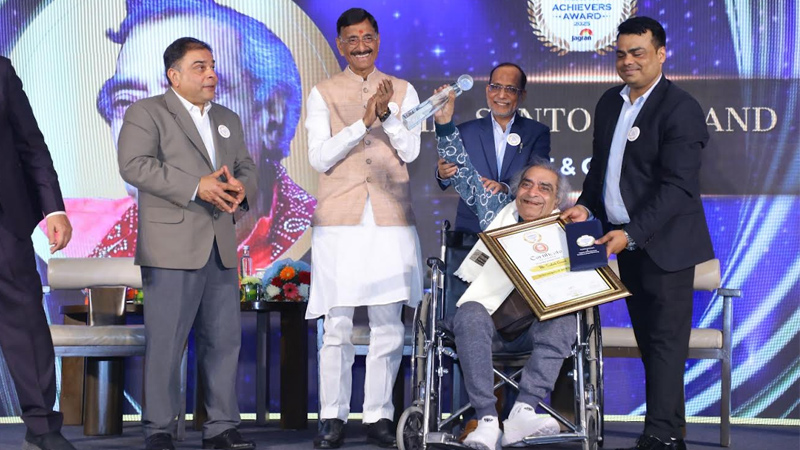
The cultural spotlight fell on veteran lyricist and poet Santosh Anand, whose songs have echoed across generations of Hindi cinema. At 97, Anand accepted the honour with characteristic humility, reflecting on a life shaped by perseverance and hope.
Healthcare honours spanned both modern and traditional systems. Manoj N. Nesari was recognised for strengthening Ayurveda’s place in national and global health frameworks. Padma shri Mohammed Abdul Waheed was honoured for his research-backed work in Unani medicine, while padma shri Mohsin Wali received recognition for his long-standing contribution to patient-centred care.
Education and social development also featured prominently. Padma shri Zahir Ishaq Kazi was honoured for decades of work in education, while former Meghalaya superintendent of Police T. C. Chacko was recognised for public service. Goonj founder Anshu Gupta received an award for his dignity-centred rural development initiatives, and the Hunar Shakti Foundation was honoured for empowering women and young girls through skill development.
The Lifetime Achievement Award went to former IAS officer Shailaja Chandra for her long career in public healthcare and governance, particularly in the traditional systems under Ayush.
Speaking at the event, Hamdard chairman Abdul Majeed said the awards were a tribute to those who combine excellence with empathy. “These awardees reflect Hakeem Sahib’s belief that healthcare, education and public service must ultimately serve humanity,” he said.
Minister Seth struck a forward-looking note, saying India’s young population gives the country a unique opportunity to become a global destination for learning, health and wellness by 2047.
The ceremony also featured the trailer launch of Unani Ki Kahaani, an upcoming documentary starring actor Jim Sarbh, set to premiere on Discovery on 11 February.
Instituted in memory of Unani scholar and educationist Hakeem Abdul Hameed, the awards have grown into a national platform that celebrates those building a more inclusive and resilient India. For one evening at least, the spotlight was not just on success, but on service with substance.






