Hindi
Indian film ‘Jai Bhim Comrade’ gets FSA 2011 Best Film Award
New Delhi,: ‘Jai Bhim Comrade’, a film by the renowned and often controversial Anand Patwardhan, was awarded the Ram Bahadur Trophy for Best Film at the Film South Asia 2011 festival of documentaries.
In the Festival which concluded yesterday in Kathmandu, Nepal, the festival jury highlighted “the depth of personal involvement in one film, a contact firmly anchored in political commitment”.
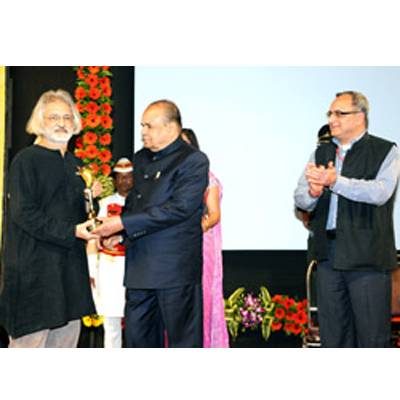
The ‘Bhim’ in the film refers to the Indian constitutionalist and thinker Bhimrao Ambedkar. Filmmaker Patwardhan, who has been making political documentaries for nearly three decades, was present to receive the Ram Bahadur Trophy from the chief guest, eminent Bangladeshi filmmaker Catherine Masud.
The three hours and 20 minute long film explores the history of Dalit activism in Maharashtra in the aftermath of the killing of 10 activists in Mumbai in 1997 and has been in the making for 14 years.
‘The Truth That Wasn’t There”, directed by Guy Guneratne, was recognised by the jury for Second Best Film. It is about three student journalists who cross into the north of Sri Lanka in the aftermath of the war in 2009. The film was recognised “for having pushed the debate around the very idea of documentary as truth-telling, in a new digital age where the boundaries of newer documenting mediums are increasingly blurred.”
The Tareque Masud Debut Film Award was given to ‘Journey to Yarsa’ by Dipendra Bhandari, recording the fight for economic survival by a family in Rukum District of Nepal, searching for the yarsagumba larvae-caterpillar. The jury noted the film’s “determination to record a story of a subject little known to the world, a powerful tale of people’s endeavours and relationships in a remote community.”
A documentary from Burma, ‘Nargis: When Time Stopped Breathing’, was recognised for Special Mention, “for its poetic yet strong visual craft celebrating the human spirit in the aftermath of the devastating cyclone in a closed society.” The film records the tragedy of the Cyclone Nargis, which killed 140,000 people in the Irrawaddy Delta in May 2008.
It is made by two Burmese directors who prefer not to be known by their real names. The Jury of the FSA 2011 festival was made up of Satish Sharma, photographer, curator and cultural critic; Manesh Shrestha, educator, journalist and former director of Film Southasia; and Igor Blazevic, the founder of the One World Film Festival with its base in Prague. According to Upasana Shrestha, co-director of Film Southasia, 15 of the films selected from the 36 shown at FSA ’11 will tour the Subcontinent and the world as ‘Travelling Film Southasia” over the next two years. The next Film Southasia festival is scheduled for September 2013.

Hindi
Jio Studios unveils AI-powered Krishna teaser at NAB Show 2026
Global first look of Krishna uses Galleri5 AI pipeline on Azure, Historyverse slate as Jio’s Dhurandhar crosses Rs 3,000cr worldwide.
MUMBAI: Krishna has just dropped a divine teaser and this time the gods are powered by silicon, not just scripture. Jio Studios and Collective Studios’ Historyverse stole the spotlight at the NAB Show 2026 in Las Vegas with the world’s first teaser for their upcoming theatrical feature Krishna, directed by Manu Anand. The big reveal happened during Microsoft’s keynote “Powering Intelligent Media, From AI Experimentation to Real-World Impact,” where the film’s AI-native production pipeline took centre stage alongside Collective Artists Network’s in-house platform, Galleri5.
At the heart of this mythological spectacle lies a fresh cinematic workflow built by Galleri5 on Microsoft Azure’s advanced AI and cloud infrastructure. Forget bolting AI onto traditional VFX or animation, this is an end-to-end, production-grade system woven into every layer: world-building, character creation, shot design and final output. Yet the storytelling remains firmly director-led, emphasising emotional depth, stillness, music and performance rather than pure spectacle. The result? Large-format theatrical cinema rooted in Indian history and culture, but conceived in ways that were simply not possible before.
Collective Artists Network runs Galleri5 natively on Azure, leveraging Microsoft Foundry and cutting-edge AI tools to handle film, episodic and advertising workflows in a secure enterprise environment. Microsoft highlighted Collective as a “Frontier” organisation successfully moving AI from pilot projects to real production-scale deployment in cinema. The technology is also on display at Microsoft’s NAB booth in the West Hall (Booth W1731).
Jio Studios (Media & Content Business, Reliance Industries), president Jyoti Deshpande said the project advances the studio’s mission to take Indian stories global with scale, ambition and authenticity, “With Krishna, we are embracing cutting-edge AI-led filmmaking while democratising these tools to make them more accessible, intuitive and cost-effective for storytellers everywhere.”
Collective Artists Network founder & group CEO Vijay Subramaniam added, “We’re using technology developed in India to carry our culture and history to audiences worldwide at a scale never seen before.”
Microsoft, vice president for telco media & entertainment, gaming Silvia Candiani noted that the media industry has reached an inflection point, “AI is no longer about experimentation but delivering real impact at production scale… By building AI-native creative systems on Microsoft Azure, Collective exemplifies how storytellers can unlock new formats, move faster and realise a true return on intelligence while keeping human creativity at the centre.”
Krishna forms part of Historyverse, Collective Studios’ ambitious slate of history and culture-driven IPs. The slate draws from iconic figures and traditions that shaped the Indian subcontinent, including stories inspired by Kali, Karna and Durga. It builds on the already-released Mahabharat: Ek Dharmayudh series, showing how ancient narratives can be reimagined for modern screens.
Jio Studios, India’s leading content studio and the media and content arm of Reliance Industries, continues its blockbuster run. The studio’s Dhurandhar franchise led by Dhurandhar and Dhurandhar: The Revenge has become the first Indian film series to cross Rs 3,000 crore worldwide. It also delivered three consecutive years of India’s highest-grossing Hindi films: Stree 2 (2024), Dhurandhar (2025) and Dhurandhar: The Revenge (2026). In just eight years, Jio Studios has assembled a library of over 160 films and series, with more than 60 titles winning over 500 awards. Other notable successes include Laapataa Ladies (India’s official Oscar entry 2025), Stree, Article 370, Shaitaan and Mrs.
The NAB unveiling marks another step in Jio Studios and Collective’s push to blend Indian storytelling talent with frontier technology proving that the future of cinema may well be both ancient in spirit and thoroughly modern in execution. For audiences who love epic tales with a fresh twist, Krishna promises to deliver divine drama, this time with a little help from the cloud.