News Headline
Indian broadcasters demand ‘level playing field’

NEW DELHI: The game is getting murkier as the Indian broadcasters have come together to take on the might of foreign-owned broadcasters.
The likes of Aaj Tak, Eenadu, NDTV, Sahara, Sun TV and SAB TV have requested the government to provide a “level playing field” in regards to ownership norms and uplinking guidelines.
The Indian broadcasters, in a joint statement, have raised the government’s attention towards recent media coverage on some channels’ (alluding to Star News) “bypassing” the I&B guidelines pertaining to uplinking from India and ownership norms. Zee Group chairman Subhash Chandra is not a party to this statement presumably because he still maintains non-resident Indian (NRI) status.
The Indian broadcasters have expressed concern at the “manner in which certain foreign broadcasters are bypassing the laid-down procedures and guidelines, and how the government continues to remain a passive spectator to the subject of de facto control as distinct from mechanical control through caps such as 26 percent cap on FDI in the broadcasting industry.”
A statement issued by them asserts that there is an urgent need for the government to review critically and address the ownership guidelines pertaining to the various channels as practiced in countries like the UK and US.
The move by the Indian broadcasters follows related articles in India Today (the group that owns Aaj tak and Headlines Today) and The Times of India recently. In these reports questions were raised over the way Media Content & Communication India Pvt Ltd (MCCI), in which Star holds 26 per cent equity stake, was given permission to uplink content for Star News channel. Though the newly-formed company adheres to the government restriction of having foreign equity capped at 26 per cent, critics have questioned the way government gave it clearance, especially on a weekly basis.
The statement points out that Indian channels in general, and news channels in particular, cannot uplink from India without conforming to the complete laid-down procedures comprising of permission/licence agreement from the ministry of information and broadcasting, and operating licences from the Department of Telecom (DoT) as well as permission from the home ministry, Department of Space, etc. However, the foreign channels “do not conform to, or appear to have by-passed all these formalities”, the statement adds.
Foreign channels have structured their ownership pattern to bypass the laid down guidelines based on certain ‘technicalities’ and the government has so far been a mute spectator even though it is aware of the same. Some of these foreign broadcasters operating in India have other channels in their folds apart from the news channel, effectively creating a monopoly over 65 per cent of the viewership, and accounting for ad revenue of around 50 per cent of the ad pie, the statement further adds.
“Though all this revenue comes from India, these channels do not conform to the Indian laws and guidelines. In fact, broadcasting is the only economic activity solely aimed at the India market that the Indian republic permits to be carried out from outside the Indian borders.”
“These foreign broadcasters walk away with subscription revenue of approx. Rs. 500 Crores and advertisement revenue of approx. Rs. 2000 Crores, which is still growing. This makes the TV Industry the only industry in the country to repatriate top-line revenue to foreign countries. Also, these foreign channels are not subject to taxes that are applicable to the Indian channels,” the statement says.
The Indian broadcasters have raised this issue, it points out, to highlight the “anomaly” in the laid-down guidelines pertaining to broadcasting in India, and requests the policy-makers to take immediate steps to address and rectify it. “This would not only provide a level-playing field for the Indian broadcasters who have pioneered the growth of the broadcasting industry, but also safeguard this country’s socio-economic and cultural interests.”
This is the second “anti-foreigner” missive issued by the Indian broadcasters in the last seven days. Lat Friday, when the government announced its deferred CAS rollout plan, they had issued a statement that said: “It is quite noteworthy that those opposing the implementation of CAS are either foreign broadcasters or those who have a keen eye on the DTH business. They are the ones who are trying to delay the implementation of CAS even though they do not conform to Indian rules and regulation, since the implementation would act in favour of the Indian cable industry. Any further deferment in the implementation of CAS might seriously affect the cable industry in India, and expose it to the risk of DTH players taking over the business.”
indiantelevision.com was unable to contact Star India CEO Peter Mukerjea or SET India CEO Kunal Dasgupta for their response, if any, to this development.







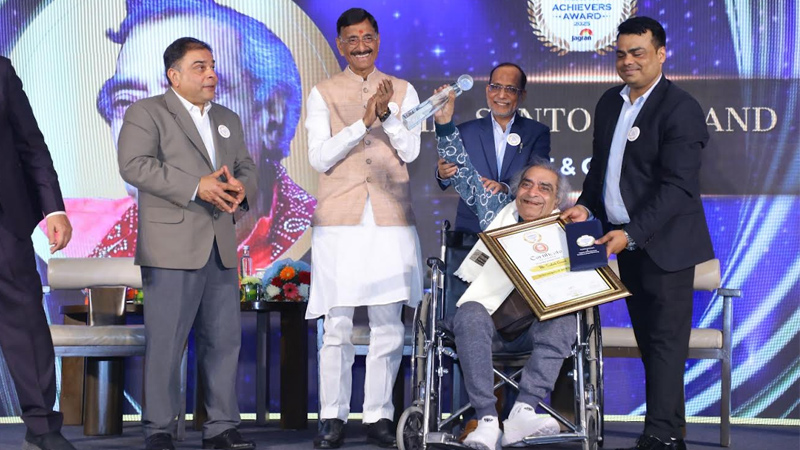
NEW DELHI: Hamdard Laboratories gathered a cross-section of India’s achievers in New Delhi on Friday, handing out the Hakeem Abdul Hameed Excellence Awards to figures who have left their mark across healthcare, education, sport, public service and the arts.
The ceremony, attended by minister of state for defence Sanjay Seth and senior officials from the ministry of Ayush, celebrated individuals whose work blends professional success with a sense of public purpose. It was as much a roll call of achievement as it was a reminder that influence is not measured only in profits or podiums, but in people reached and lives improved.
Among the headline awardees was Alakh Pandey, founder and chief executive of PhysicsWallah, recognised for turning affordable digital learning into a mass movement. On the sporting front, Arjuna Awardee and kabaddi player Sakshi Puniya was honoured for her contribution to the game and for pushing women’s participation onto bigger stages.

The cultural spotlight fell on veteran lyricist and poet Santosh Anand, whose songs have echoed across generations of Hindi cinema. At 97, Anand accepted the honour with characteristic humility, reflecting on a life shaped by perseverance and hope.
Healthcare honours spanned both modern and traditional systems. Manoj N. Nesari was recognised for strengthening Ayurveda’s place in national and global health frameworks. Padma shri Mohammed Abdul Waheed was honoured for his research-backed work in Unani medicine, while padma shri Mohsin Wali received recognition for his long-standing contribution to patient-centred care.
Education and social development also featured prominently. Padma shri Zahir Ishaq Kazi was honoured for decades of work in education, while former Meghalaya superintendent of Police T. C. Chacko was recognised for public service. Goonj founder Anshu Gupta received an award for his dignity-centred rural development initiatives, and the Hunar Shakti Foundation was honoured for empowering women and young girls through skill development.
The Lifetime Achievement Award went to former IAS officer Shailaja Chandra for her long career in public healthcare and governance, particularly in the traditional systems under Ayush.
Speaking at the event, Hamdard chairman Abdul Majeed said the awards were a tribute to those who combine excellence with empathy. “These awardees reflect Hakeem Sahib’s belief that healthcare, education and public service must ultimately serve humanity,” he said.
Minister Seth struck a forward-looking note, saying India’s young population gives the country a unique opportunity to become a global destination for learning, health and wellness by 2047.
The ceremony also featured the trailer launch of Unani Ki Kahaani, an upcoming documentary starring actor Jim Sarbh, set to premiere on Discovery on 11 February.
Instituted in memory of Unani scholar and educationist Hakeem Abdul Hameed, the awards have grown into a national platform that celebrates those building a more inclusive and resilient India. For one evening at least, the spotlight was not just on success, but on service with substance.







