News Headline
Indian animation 2019 – the year of highs


2019 was a great year for the Indian animation industry. What a wonderful culmination of a decade which saw the complete transformation of the industry. Today we are at the cusp of a creative revolution. There has been a proliferation of media platforms and content consumers are spoilt for choice. The resulting increase in supply has peculiarly resulted in increased demand and consumption, thereby giving rise to more such platforms and more opportunities all round. A recent report by KPMG pegs that the Indian animation and VFX industry, which now stands at $1.23 billion, will more than double in size to $2.6 billion in the next 5 years.
2019 was a year of highs for the industry. After being declared the most popular Indian television show in the world by Google, Motu Patlu, Cosmos-Maya’s flagship IP, was immortalized in wax at the Madame Tussauds museum. The year also saw the launch of Cosmos-Maya’s Bapu, the first-ever IP in this space based on Mahatma Gandhi, commemorating his 150th birth anniversary. Green Gold Animation’s Mighty Little Bheem became the second most-watched original series globally on Netflix in the Kids’ category. When a homegrown franchise which is with a pay-TV broadcaster like Turner takes the original route with Netflix, you know that winds of change are blowing.
In addition to the above, there were giant leaps in terms of the evolution of storytelling, where major franchises are being planned. Cosmos-Maya’s Motu Patlu spinoffs, Inspector Chingum and Guddu were launched on Disney and Amazon Prime Video respectively. Both these IPs followed a ‘Digital First’ approach where it was envisaged that these first air on a major OTT to propagate the IP, and then on Pay TV to increase eyeballs manifold. Also, in the normal run of things, where OTTs spend big to get original and exclusive content on board, they are now preferring to air content which is already running on a different platform, thereby leveraging the placement of an IP.

The current digital scenario is very promising. WowKidz, Cosmos-Maya’s YouTube network, has been a big benefactor of this digital growth. WowKidz today has more than 35 million subscribers and 16 billion views. An average of 75,000 new subscribers are added daily to the mix. The reason is simple. Close to 650 million Indians have access to internet services today. Smartphone penetration has reached the 500 million mark. When we look at the breakup of India’s animation production pie, 53.5 per cent is digital’s share. This is driven by content viewing on mobile phones in a country which has mostly single TV households. TV has 30 per cent share in India’s animation production pie but still has the maximum reach.
For content creators like Cosmos-Maya, both platforms are equally lucrative. If the brand is big, Digital and Pay TV can end up being similar partners. A situation very unique to India, today TV and OTT are both growing in the country and there is a beautiful co-existence of both. Animation is transcending boundaries in this regard.
Speaking of transcending boundaries, 2019 also heralded a new trend. Cosmos-Maya’s ‘Selfie With Bajrangi’, one of the highest-rated and most popular shows has made its way into a general entertainment channel through Star Plus, which from an industry perspective is a welcome change because animation has always been an under-indexed category with low ad rates, in spite of its GRP contribution being in line with some of the most popular categories. The year also marked the ‘Bring in Bollywood!’ era. IP’s like Golmaal Jr with Nickelodeon Sonic, Fukrey Boyzzz with Discovery Kids capitalized on the popularity of the Golmaal and Fukrey franchises.
Another important trend which Sony Yay! started off is the airing of their content in 7 regional languages. Speaking here from a more holistic perspective, though OTT players like Amazon Prime Video, Netflix, Hotstar, Zee5, Alt Balaji among others, are producing more and more regional content to tap on as many users as possible in the country, TV still dominates here. To add more perspective, OTT is yet to penetrate rural India, which has always been a big traditional media market. TV is a god-sent for rural folk who make up around 70 per cent of Indian population.
On the global front, Indian animation content reached almost all corners of the world. To quote an example, our non-dialogue show Eena Meena Deeka is aired in more than 50 countries today.
International co-productions are becoming big and we have captured newer frontiers in this regard as an industry. There were times when only a bunch of people who would attend international markets from India to discuss co-production possibilities. Today, dedicated Indian delegations attend these markets. Hence, the scope has increased exponentially. 4 of Cosmos-Maya’s co-produced international IPs have been ‘glocalised’ and will air in Hindi on a major broadcaster. To quote an example, Berry Bees, one of our biggest co-productions, an all-girl IP, with Atlantyca, SRL and Telegael will air as The Dabangg Girls in India, thereby giving it an Indian soul and yet retaining its original charm.
2019 also saw the $ 2 billion giant in the form of the Indian ed-tech industry being given a push by animation. A major need gap exists between the education and entertainment industries and we identified it. Cosmos-Maya has the animation mandate of the ed-tech unicorn BYJU’s, which has also tied up with Disney. Entertainment to empowerment, through the power of education, is a mass phenomenon.
While this decade for Indian animation belonged to Entertainment, the next ten years will belong to education.
(The author is CEO, Cosmos Maya. The views expressed are his own and Indiantelevision.com may not subscribe to them.)







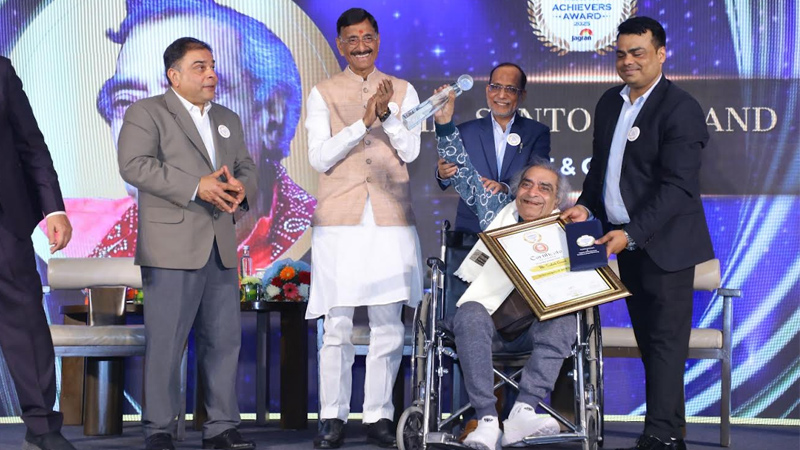
NEW DELHI: Hamdard Laboratories gathered a cross-section of India’s achievers in New Delhi on Friday, handing out the Hakeem Abdul Hameed Excellence Awards to figures who have left their mark across healthcare, education, sport, public service and the arts.
The ceremony, attended by minister of state for defence Sanjay Seth and senior officials from the ministry of Ayush, celebrated individuals whose work blends professional success with a sense of public purpose. It was as much a roll call of achievement as it was a reminder that influence is not measured only in profits or podiums, but in people reached and lives improved.
Among the headline awardees was Alakh Pandey, founder and chief executive of PhysicsWallah, recognised for turning affordable digital learning into a mass movement. On the sporting front, Arjuna Awardee and kabaddi player Sakshi Puniya was honoured for her contribution to the game and for pushing women’s participation onto bigger stages.
The cultural spotlight fell on veteran lyricist and poet Santosh Anand, whose songs have echoed across generations of Hindi cinema. At 97, Anand accepted the honour with characteristic humility, reflecting on a life shaped by perseverance and hope.
Healthcare honours spanned both modern and traditional systems. Manoj N. Nesari was recognised for strengthening Ayurveda’s place in national and global health frameworks. Padma shri Mohammed Abdul Waheed was honoured for his research-backed work in Unani medicine, while padma shri Mohsin Wali received recognition for his long-standing contribution to patient-centred care.
Education and social development also featured prominently. Padma shri Zahir Ishaq Kazi was honoured for decades of work in education, while former Meghalaya superintendent of Police T. C. Chacko was recognised for public service. Goonj founder Anshu Gupta received an award for his dignity-centred rural development initiatives, and the Hunar Shakti Foundation was honoured for empowering women and young girls through skill development.
The Lifetime Achievement Award went to former IAS officer Shailaja Chandra for her long career in public healthcare and governance, particularly in the traditional systems under Ayush.
Speaking at the event, Hamdard chairman Abdul Majeed said the awards were a tribute to those who combine excellence with empathy. “These awardees reflect Hakeem Sahib’s belief that healthcare, education and public service must ultimately serve humanity,” he said.
Minister Seth struck a forward-looking note, saying India’s young population gives the country a unique opportunity to become a global destination for learning, health and wellness by 2047.
The ceremony also featured the trailer launch of Unani Ki Kahaani, an upcoming documentary starring actor Jim Sarbh, set to premiere on Discovery on 11 February.
Instituted in memory of Unani scholar and educationist Hakeem Abdul Hameed, the awards have grown into a national platform that celebrates those building a more inclusive and resilient India. For one evening at least, the spotlight was not just on success, but on service with substance.







