I&B Ministry
India, US should resolve IPR issues at earliest: IACC

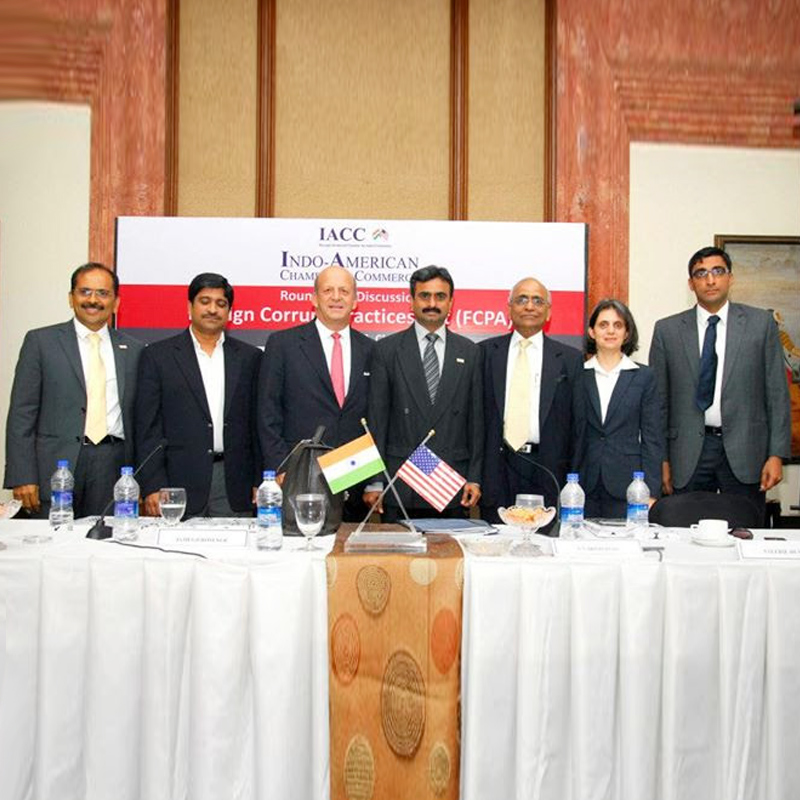
NEW DELHI: India and the United States should exchange a bouquet of “wish lists” includig IPR issues aimed at fast tracking resolution of bilateral issues that impede accelerated flow of investment between the two countries, Indo American Chamber of Commerce national president N VSrinivasan said today.
Broad contours of the wish lists should include amicable settlement of IPR issues leading to earliest conclusion of the Bilateral Investment Treaty (BIT), Totalization Agreement, a sound legal framework to expeditiously settle disputes, settlement of issues emanating from non-tariff measures and importantly a fast solution to nagging visa problems.
He said that there was a growing realization among the US corporations that India, lying mid-way between West and the East, has the potential to emerge as a Gateway for serving both markets. Many corporations are seriously discussing these ideas in their board room meetings, while others are taking concrete steps towards investing in India with a renewed interest. “We have to capitalize on the situation by removing impediments to flow of investments and take concrete step toease doing business in India to leverage our position as an attractive investment destination,” according to Srinivasan.
The US President – Elect Donald Trump is in the process of recalibrating the policies to deal pragmatically with each country by their level of importance and economic engagement. Against this backdrop, India’s recent policy initiatives like Make in India, Digital India, Smart city project, high budget investments in infrastructure etc. where critical technical and financial investments are needed, would stand to benefit.
Trump has has made it very clear that he is averse to regional trade agreements like NAFTA, emerging Trans Pacific Partnership (TPP) etc. which according to him have been militated against the US interests.
Flagging the contentious issues that are coming up in the bilateral economic negotiations, such as tardy intellectual property rights (IPR) protection and their enforcement, retrospective tax regime in India, insistence on deciding economic disputes under Indian laws etc, the IACC President said these issues can be settled in a spirit of give and take.
There has been a proliferation of Indian companies and start-ups in the US, mostly in the ICT sector. These are set up mostly by people who migrated to the US at various stages, particularly during the dotcoms days. Their business enterprises are providing gainful employment to many US citizens. Most of the IT and technology platforms in India, such as mobile telephony, credit/debit card networks, climate tracking equipment, heavy duty computers, drones, sensors etc are working on equipment mostly imported from the US.
“We are happy and privileged to have two administrations in the US and India, which are pro-business and believe in creating an environment for seamless business activities. Donald Trump’s significant business interests in India in various sectors and his statement of intent to forge a strong business relationship are pointers to an exciting bilateral business relationship”.