iWorld
India-UK strengthen ties in telecom, AI, and emerging technologies

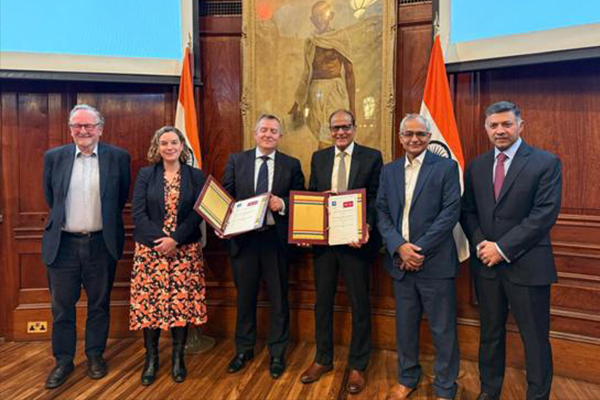
MUMBAI: India’s push for technological leadership just got a major boost. Strengthening its global partnerships, India has expanded its collaboration with the United Kingdom in key areas, including telecommunications, artificial intelligence (AI), and emerging technologies. This move underscores India’s determination to shape the future of digital infrastructure and network security.
During his visit to the UK, Telecom secretary of India Neeraj Mittal engaged with the department of science, innovation and technology (DSIT), discussing next-gen advancements in 5G, 6G, and digital security. He met with national scientific adviser Chris Johnson and national technology adviser Dave Smith to explore policy and technical frameworks aimed at fostering deeper cooperation.
Mittal also met Govt of Scotland digital directorate director Geoff Huggins to discuss Scotland-India collaboration in digital transformation, telecom security, and emerging communication technologies. A field visit to one of the Federated Telecom Hubs (FTH) in the UK offered insights into cutting-edge research in 6G distributed cloud, AI for 6G, and green 6G solutions.
In a significant step forward, Sonic Labs and India’s centre for development of telematics (CDOT) signed an MoU on Open RAN policy and technical cooperation, covering 5G Open RAN and AI-driven advancements in 4G/5G networks. This partnership signals an ambitious plan to push Open RAN innovation, bringing flexibility and efficiency to telecom infrastructures.
India’s telecom delegation also met Alan Turing Institute CEO Jean Innes to explore collaboration in digital twins, AI-driven telecom security, and ethical AI. The discussions focused on fostering an AI-powered startup ecosystem, aiming to build robust, trustworthy, and scalable digital solutions.
The visit also saw engagement with Scotland’s 5G centre at the University of Strathclyde and the 6G research centre at the University of Glasgow. These meetings opened doors for joint research, student exchange programmes, and collaborative work on 6G innovation and future sensing technologies.
Building on the UK-India technology security initiative (TSI), a telecom roundtable brought together DSIT officials, business leaders from BT and Ericsson, and innovation hubs including UK Telecom Labs, Sonic Labs, and Titan. The High Commission of India (HCI) partnered with UKTIN (UK Technology Innovation Network) to organise the event, reinforcing India’s leadership in next-generation telecom development.
During the discussions, key areas of Indo-UK collaboration were identified:
1 Joint centres of excellence focused on telecom cybersecurity, AI in telecom, and digital twins.
2 Partnerships with British telcos to leverage mobile data for urban infrastructure planning.
3 Joint contributions to ITU’s 6G standards (IMT 2030).
4 Mutual recognition of telecom testing labs and the creation of new facilities.
5 Advancing quantum communication and submarine sea cable security.
6 Promoting India’s indigenous 4G/5G telecom stack, developed by CDOT.
7 Collaboration on space technology communication (TN-NTN) between Bharat 6G Alliance and UK entities.
This visit cemented India’s role as a key global player in telecom innovation, reinforcing the country’s commitment to AI-driven connectivity and digital inclusion. By fostering strategic alliances with the UK, India is positioning itself at the forefront of 6G research, telecom security, and space communications.
Mittal summed it up, “India’s telecom sector is at the cutting edge of global advancements. Strengthening our collaboration with the UK will further accelerate innovation in 6G, AI-driven security, and digital infrastructure, ensuring a resilient and connected future.”
With this partnership, India and the UK have laid the groundwork for a digitally secure, AI-enhanced, and globally competitive telecom landscape. The future of connectivity just got brighter.






