Applications
India tops in avg app downloads per month

NEW DELHI: A new study shows that Indians led in the number of apps downloaded per month in the first quarter of 201
The survey that covered 10 countries showed that Indians downloaded an average of just over forty apps per month, even though the number of apps available on a smartphone was just under eighty as against over 100 apps available in smartphones in Japan.
In South Korea, Mexico, Brazil, Japan, and India, the top 20% of smartphone users spent over four hours per day in apps.The emerging markets of Mexico, Brazil, and India had the highest time for users at the median and at the bottom 20%.

The average user’s time spent varied widely between countries, from just over 1.5 hours per day in France to well over three hours in South Korea, where average Indian user’s time spend was 2.5 hours.
Nearly 75% of users install at least one app per month, according to app data and insights provider App Annie. App Annie delivers the most trusted for your business to succeed in the global app economy. Over 800,000 registered members rely on App Annie to better understand the app market, their businesses and the opportunities around them. The company is headquartered in San Francisco with 450 employees across 15 global offices.
In the ten countries analyzed, the users on average used over thirty apps per month and over nine apps per day. The other countries covered were Germany, China, France, United Kingdom and United States.
In terms of time spent per user, mobile gamers in Japan and South Korea far exceeded those in the other countries.
Users continue to download apps at a high rate. In all countries analyzed, over 65% of users installed at least one app in May 2017. In half of the countries analyzed, over half of all users installed two or more apps.
On the whole, people are still looking for new apps to add to their arsenal. As mobile becomes more central to more industries, users will continue to be open to integrating new apps into their lives.
This indicates strong adoption of apps even for the least-avid users in these countries, thanks to widespread adoption of apps such as WhatsApp and an emerging mobile-first lifestyle
In terms of time per user, Travel & Local is an increasingly important category. In the United States, users now spend over two hours per month on average in these apps, and time per user in these apps is strongly growing across the board.
The per cent of users who use these apps is already over 75% and increasing in most countries analyzed.
The top 10% of mobile gamers are spending more time playing games. With these gains outstripping the increases at the median, the industry may be moving in a more core-centric direction.
Even in Japan and South Korea, where time spent towers over the other countries, the top 10% increased its time spent in these countries. These gamers are spending roughly 3 hours per day in games.
Especially in these countries, hardcore mobile games continue to be massively popular. In South Korea, Lineage II: Revolution exemplifies this. In Q1 2017, the online role-playing game had both the most total time spent and the highest time per user as any game in South Korea
The total time spent in mobile apps will exceed 3.5 trillion hours in 2021.
Exploding install bases in emerging markets will play a major part in this trend, and in APAC’s expanding lead
Notably, Germany over performs in Shopping where it ranks as the number four country by average time spent, in contrast to its number seven position by average spent time spent overall. A significant portion of German mobile shoppers’ time comes from both eBay and eBay Kleinanzeigen, eBay’s local classifieds app in Germany.
Brazil was the only country in the set whose users spent more time on average in Finance apps than Shopping.
A large amount of this time was spent in banking apps. Six banking apps in Brazil, led by Banco de Brasil, exceeded 10% usage penetration. For comparison, no banking app in the United States achieved this.






Applications
With 57 per cent single new users, Ashley Madison rebrands as discreet dating platform
Platform says majority of new members now identify as single
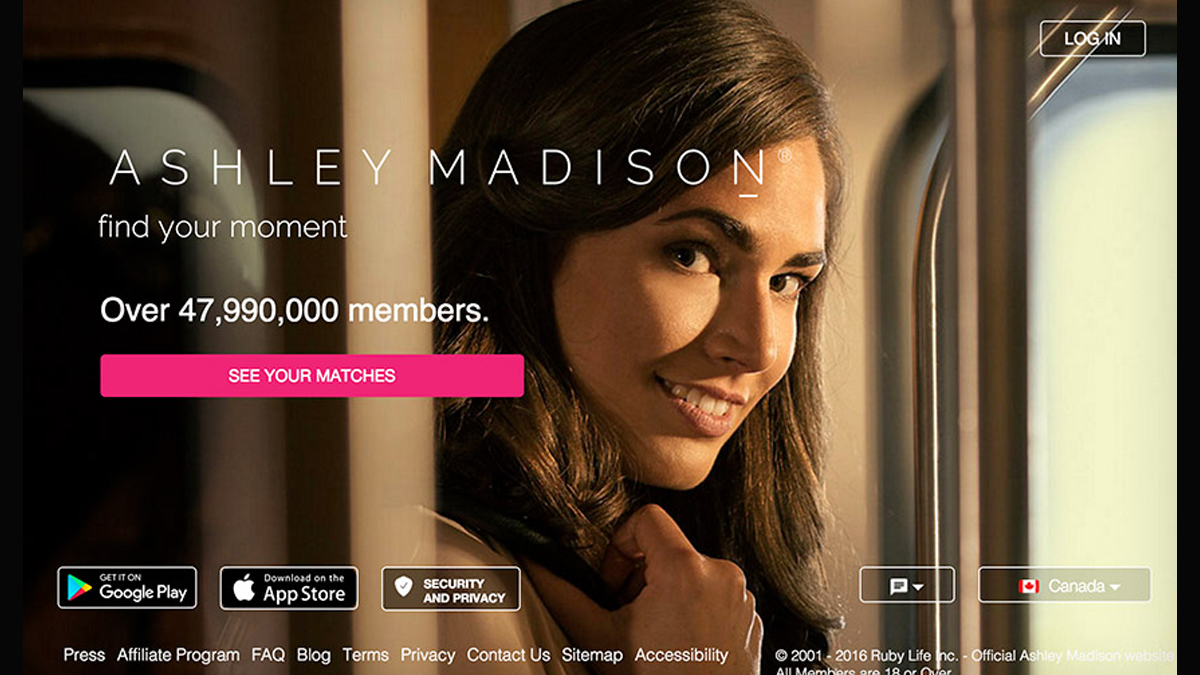
INDIA: Ashley Madison is shedding the “married-dating” label that defined it for two decades, repositioning itself as a platform for discreet dating in what it calls the post-social media age.
The rebrand, unveiled in India on 27 February, 2026, marks a structural shift in business model and identity. Once synonymous with married dating, the company now describes itself as the “premier destination for discreet dating” under a new tagline: Where Desire Meets Discretion.
The pivot is data-driven. Internal figures show that 57 per cent of global sign-ups between 1 January and 31 December, 2025 identified as single: a notable departure from the platform’s married core. The company argues that its community has already evolved beyond its original positioning.
“In an age where our lives have been constantly put on public display, privacy has become the new luxury,” said Ashley Madison chief strategy officer Paul Keable. He framed the platform’s offering as “ethical discretion” for singles, separated, divorced and non-monogamous users seeking private connections.
The shift also taps into wider digital fatigue. A global survey conducted by YouGov for Ashley Madison, covering 13,071 adults across Australia, Brazil, Canada, Germany, India, Italy, Mexico, Spain, Switzerland, the UK and the US, found mounting discomfort with hyper-public online lives.
Among dating app users, 30 per cent cited constant swiping and messaging as a source of fatigue, while 24 per cent pointed to pressure to curate public-facing profiles and early personal disclosure. Some 27 per cent said fears of screenshots or information being shared contributed to exhaustion; an equal share cited unwanted attention.
The retreat from oversharing appears broader. According to the survey, 46 per cent of adults actively try to keep most aspects of their life private online. Only 8 per cent feel comfortable sharing most aspects publicly, while 35 per cent say they are becoming more selective about what they disclose.
Ashley Madison is betting that this cultural recalibration towards controlled visibility can be monetised. By doubling down on privacy infrastructure and reframing itself around discretion rather than infidelity, the company is attempting to convert reputational baggage into a premium proposition.







