News Headline
India – Pak rivalry: Why is cricket the only scapegoat?

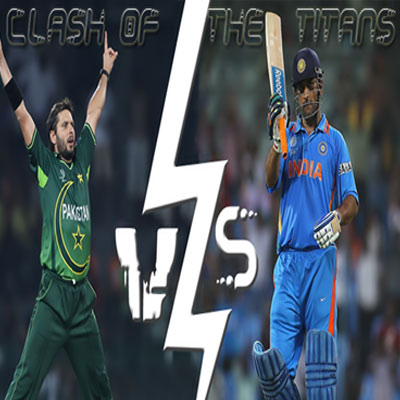
MUMBAI: Since Independence, which then also led to Partition, the relationship between India and Pakistan has been all but cordial. Even as pigeons were flown from either side to send across a message of peace and harmony, it could not prevent bullets and bloodshed.
If there’s been one unallied casualty as a result of the unrest at the Line of Control and differences between the two countries, it is cricket.

In the recent past, while commenting on the Indo-Pak bilateral series former Indian skipper Sourav Ganguly and Board for Control of Cricket in India (BCCI) secretary Anurag Thakur said that terrorism and cricket cannot go together. Strong message indeed! Yes, it’s true that Pakistan is infiltrating every now and then as a result of which soldiers and innocent civilians are losing their lives and hence a blockage of dialogue is indeed pragmatic.
What’s more, blocking cricket between the two countries as a part of process is also justified. However, the all important question here is: Why the partial blocking?
Consider this: Mibah-Ul-Haq is not allowed to bat in India but Ramiz Raza and Shoaib Akhtar are allowed to commentate on a India – South Africa match. Not only that, while Wasim Akram is allowed to coach the Indian Premier League (IPL) team, Pakistani players’ participation is strictly prohibitive in the same. Aleem Dar – the umpire from Pakistan – has access to cricket fields in India whereas Mohammad Hafeez is not allowed.
Why is the diplomatic barrel limited to the 11 players in the lush green cricket field? Why are we restricting ourselves to cricket, which is a form of entertainment in India? Shouldn’t the blockage be unanimous?
Music is also a form of entertainment and singers’ voices from the other side of the border reverberate all across the nation as they croon in Bollywood movies, launch their albums and hold many public and private concerts. This year Atif Aslam has already had three concerts in India. The Pakistani artist and his team charge between Rs 60 – 70 lakh for a live concert. Indians buy tickets and enjoy the concert, whereas the organisers reap in the benefit and generate huge revenue through ticketing and sponsorship. Rates of a Ustad Rahat Fateh Ali Khan live concert are also in the similar range.
Money making from India and Indian market is not only limited to music. Actors and actresses often feature in Bollywood movies. Recently Pakistani actor Fawad Khan paired up with Sonam Kapoor for Khoobsurat and soon Bollywood Shah Rukh Khan will be seen romancing the famous Pakistani TV actress Mahira Khan on the big screen.
Speaking of Fawad and Mahira Khan, Zee TV has a dedicated entertainment channel – Zindagi, which has content sourced from Pakistan.
The India vs Pakistan bouts in cricket are considered to be one the biggest derbies in the world of sports. Ecstasy, agony, congratulations and commiserations during any such bout are unlike any other match. What’s more, television ratings also prove the same. The ratings of an India vs Pakistan match almost doubles the ratings of any other match in a bilateral series.
Absence of Indo-Pak cricket series is a major loss for broadcasters too. While the ad rates for a normal match generally fluctuate between Rs 1.5 – 3 lakh for a 10 second slot, the rival series can command as high much as Rs 4 lakh.
As is said – ‘Art, Music, Sports has no religion, caste, community, geography or demographical barriers.’ However, with the way things are progressing, we might find sports out of it very soon. Pakistani players were restricted to participate in Mumbai and Pune during the second edition of Star Sports Pro Kabaddi League. On the other hand, India’s national sports Hockey is also mulling following the no Pakistan rule. In December 2014 India last hosted Pakistan for a bilateral series, and whether India will host or travel to Pakistan anytime soon is something that the Sports Authority of India has yet to decide.
India is scheduled to play a bilateral series against Pakistan in December. But now that seems to be nothing but impossible. In a press conference, Pakistan Cricket Board chairman Shariyar Khan said, “The series with India does not look possible now and it is a big loss for cricket but we will try, although I do not think it will lead to anything. We have always said that politics and sports should be kept apart. But apparently India does not think this way.”
Board of Control for Cricket in India (BCCI) secretary Anurag Thakur’s tweet almost spelled the rule out for the series. His tweet read, “There will be no revival of cricketing relations between the two countries if Pakistan harbours Dawood Ibrahim and makes attempts to indulge in dialogue with separatist leaders.”
Whether the ‘no sports with Pakistan’ route is right or not, is the prerogative of lawmakers to adjudicate but this partial prohibition certainly is a subject of a larger debate. So the question remains, why ban only cricket and let rest of the entertainment go on?







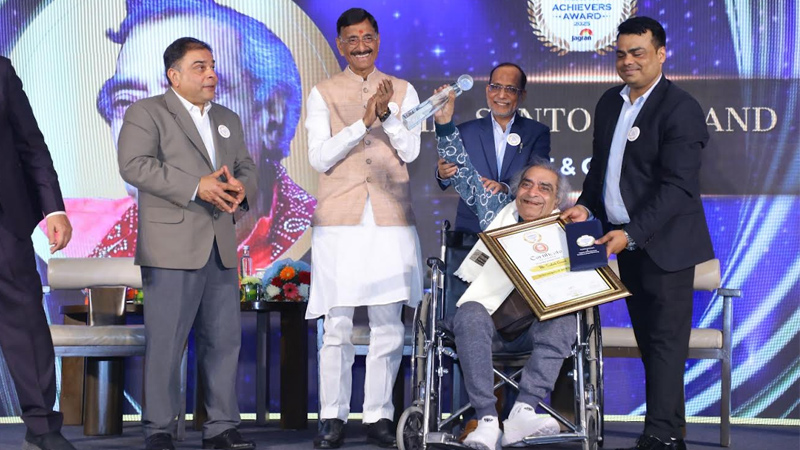
NEW DELHI: Hamdard Laboratories gathered a cross-section of India’s achievers in New Delhi on Friday, handing out the Hakeem Abdul Hameed Excellence Awards to figures who have left their mark across healthcare, education, sport, public service and the arts.
The ceremony, attended by minister of state for defence Sanjay Seth and senior officials from the ministry of Ayush, celebrated individuals whose work blends professional success with a sense of public purpose. It was as much a roll call of achievement as it was a reminder that influence is not measured only in profits or podiums, but in people reached and lives improved.
Among the headline awardees was Alakh Pandey, founder and chief executive of PhysicsWallah, recognised for turning affordable digital learning into a mass movement. On the sporting front, Arjuna Awardee and kabaddi player Sakshi Puniya was honoured for her contribution to the game and for pushing women’s participation onto bigger stages.
The cultural spotlight fell on veteran lyricist and poet Santosh Anand, whose songs have echoed across generations of Hindi cinema. At 97, Anand accepted the honour with characteristic humility, reflecting on a life shaped by perseverance and hope.
Healthcare honours spanned both modern and traditional systems. Manoj N. Nesari was recognised for strengthening Ayurveda’s place in national and global health frameworks. Padma shri Mohammed Abdul Waheed was honoured for his research-backed work in Unani medicine, while padma shri Mohsin Wali received recognition for his long-standing contribution to patient-centred care.
Education and social development also featured prominently. Padma shri Zahir Ishaq Kazi was honoured for decades of work in education, while former Meghalaya superintendent of Police T. C. Chacko was recognised for public service. Goonj founder Anshu Gupta received an award for his dignity-centred rural development initiatives, and the Hunar Shakti Foundation was honoured for empowering women and young girls through skill development.
The Lifetime Achievement Award went to former IAS officer Shailaja Chandra for her long career in public healthcare and governance, particularly in the traditional systems under Ayush.
Speaking at the event, Hamdard chairman Abdul Majeed said the awards were a tribute to those who combine excellence with empathy. “These awardees reflect Hakeem Sahib’s belief that healthcare, education and public service must ultimately serve humanity,” he said.
Minister Seth struck a forward-looking note, saying India’s young population gives the country a unique opportunity to become a global destination for learning, health and wellness by 2047.
The ceremony also featured the trailer launch of Unani Ki Kahaani, an upcoming documentary starring actor Jim Sarbh, set to premiere on Discovery on 11 February.
Instituted in memory of Unani scholar and educationist Hakeem Abdul Hameed, the awards have grown into a national platform that celebrates those building a more inclusive and resilient India. For one evening at least, the spotlight was not just on success, but on service with substance.