Gaming
India boasts 442 million online gamers: Thornton Bharat & E-Gaming Federation report


Mumbai: A report by Thornton Bharat and the E-Gaming Federation, titled “Guardians of Safe Play: Ethical Gaming for Vibrant Bharat,” revealed that India now boasts 442 million online gamers, making it the second-largest gaming market globally, just behind China. The industry is anticipated to grow by 20 per cent by FY25, reaching Rs 253 billion. This report showcased the importance of a strong code of conduct and self-regulation for the sustainable development of the gaming sector.
The real money gaming (RMG) segment is highlighted as a major revenue driver, with users spending an average of 8.5 hours per week in FY22. Despite facing challenges in 2023 due to the government’s 28 per cent GST implementation, investor sentiment in the RMG sector remains positive.
The report mainly dug deeper into the regulatory framework governing the real money gaming (RMG) sector, clearly distinguishing between games of skill and games of chance. It offers an overview of key legislative milestones, such as the Public Gambling Act and the Information Technology (Intermediary Guidelines and Digital Media Ethics Code), which have influenced current RMG policies. This highlights the pressing need to update laws and create clear, cohesive guidelines to effectively manage the complexities of the RMG sector.
Despite the challenges faced by the government’s implementation of a 28 per cent GST, which resulted in the closure of several niche gaming startups last year, the gaming industry has experienced significant growth. To understand the reasons behind this surge, Indiantelevision.com reached out to STAN CEO & founder Parth Chadha who provided detailed insights.
He explained, “The Indian gaming industry has stood firm despite the challenges posed by the 28 per cent GST on the real money gaming sector. Several factors contribute to this boom:
Digital infrastructure expansion in India: India has witnessed rapid expansion of digital infrastructure, including widespread access to smartphones that has significantly bolstered the growth of the Indian Gaming industry providing people the flexibility and ease of playing games on their phones like never before. It has significantly increased growth & engagement.
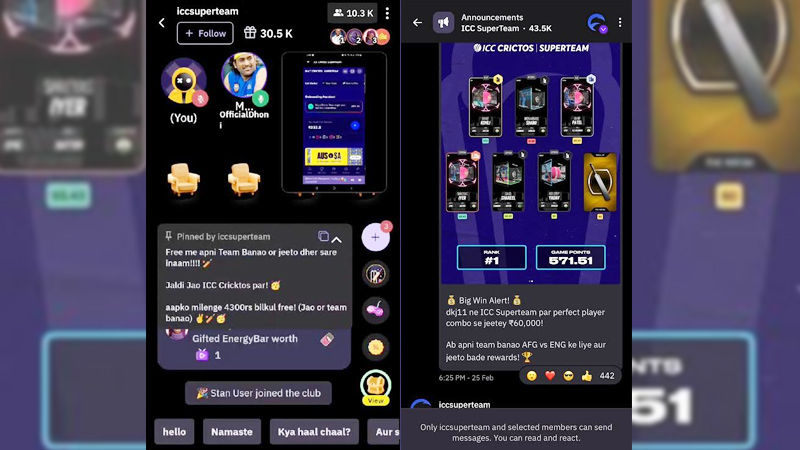
Advent of gaming communities: The presence of vibrant gaming communities has always been a true game changer for the industry. For example, STAN, the fastest-growing community startup in India provides a chance to hang out, watch videos together, play games, and win rewards at STAN clubs. These social communities foster rapid growth and expansion by appealing to a broad audience.
Government support: Government Initiatives like Digital India to transform India into a digitally empowered society & knowledge economy have been an instrumental part of the industry growth. Additionally, as per the Invest India Report, The Indian government allows 100% FDI in the online gaming sector, making it an attractive proposition for investors. This support is crucial for the industry’s development and expansion.
With these factors in play, India holds significant potential to become a hub for developing and providing platforms for online gaming.”
He further elaborated, “We at Stan fully support the recent Thornton Bharat and EGF report, which highlights the importance of regulatory mechanisms to protect players from cyber threats, fraud, and other unfair practices. In the gaming sector, ensuring player protection and upholding consumer rights are the most important factors to the integrity and future growth of the gaming industry. With 442 million online gamers, India now stands as the second largest country with such a massive gaming user base. It is truly a proud moment for all the gaming community stakeholders. We are on the path of rapid expansion, and implementing a code of conduct and self-regulation becomes paramount for the gaming industry. We believe that gaming communities in India are the key driving factor to further bolster India’s gaming system altogether at a new extent.
Gaming in India has become one of the popular sources of income for youth that was considered as a mere timepass earlier. Gaming communities foster a sense of belonging among players, enhancing social interactions, and encouraging collaboration and competition. We are proud to share that our platform has recorded an impressive 10 million+ downloads of the STAN app within just two years, making STAN India’s fastest-growing gaming community startup in India,” he concluded.