News Broadcasting
In week 35, Arnab Goswami rules the Indian news waves

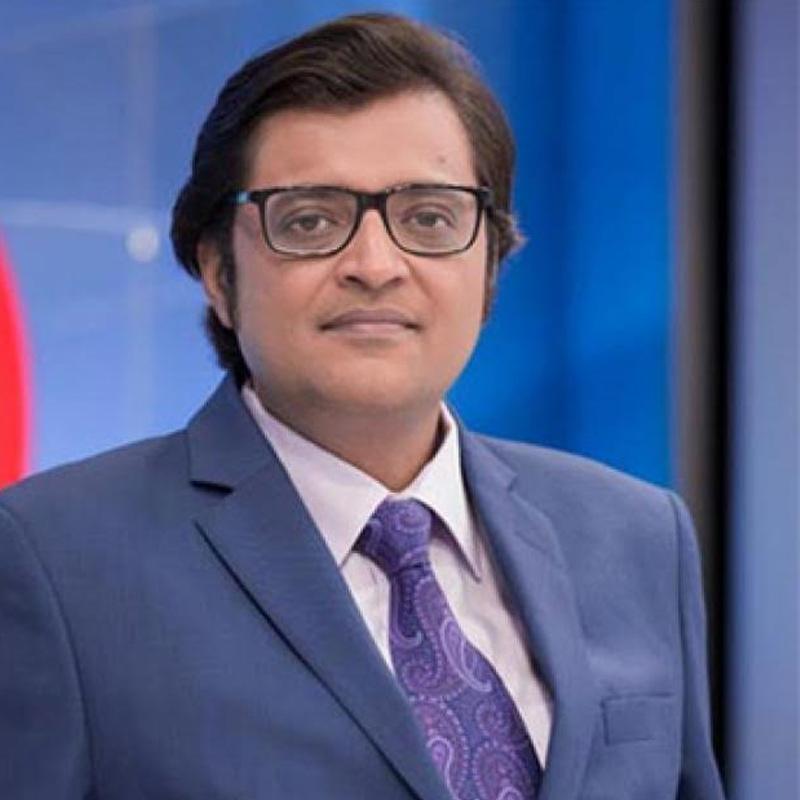
BENGALORE: The Arnab Goswami led English News channel Republic TV and Hindi News channel Republic Bharat both topped the news genre in their respective languages in Week 35 (Saturday, 29 August 2020 to Friday, 4 September 2020, week or period under review) based on Broadcast Audience Research Council of India weekly data put up in the public domain. And based on the breakup of rural and urban markets, Republic Bharat was the most watched news channel in both markets.
The News genre has been losing viewership steam that it had gained during the COVID2019 weeks. It was the Republic Network that first questioned the conclusion of suicide arrived at by the Mumbai Police without any preliminary investigations or autopsy on Rajput. The coverage of the shenanigans of the Maharashtra chief minister Thakerey’s party members over the issue as well as utterances by the ruling Shiv Sena’s authorised spokesperson Sanjay Raut against Kangana Ranaut, a female Indian actor only helped boosting Republic TV and Republic Bharat viewership. Has Thakerey bitten off more than he can chew?
Read our coverage on Arnab Goswami

BARC data for top 5 English News channels for week 35 of 2020 shows that Republic TV led its genre by far with 6.563 million weekly impressions. Following far behind at rank 2 was Times Now with just about one third the ratings at 2.194 million weekly impressions. At rank 3 in Week 35 of 2020 was CNN News18 with 1.505 million weekly impressions. DD India at rank 4 garnered 1.405 million weekly impressions followed by India Today Television with 1.381 million weekly impressions at rank 5.
According to a Tweet, that has not been verified by www.indiantelevision.com , Republic TV had an all-time band market share of 51.40 percent in week 35 of 2020. In the case of week days in the time band of 2100 to 2300 hours Republic TV had a market share of 60.28 percent.
As mentioned above, Republic Bharat led the Hindi News genres in the combined as well as the individual urban and rural Hindi speaking markets – HSM (U+R), HSM (U), HSM (R).
Republic Bharat scored 287.062 million weekly impressions in HSM (U+R) in Week 35 of 2020, about 45 percent more than the India Today group’s flagship Hindi News channel Aaj Tak which was ranked 2 with 198.245 million weekly impressions. At rank 3, was TV9 Bharatvarsh with 168.764 million closely followed by India TV at fourth rank with 165.444 million weekly impressions. At fifth rank in HSM (U+R) was News18 India with 134.583 million weekly impressions.
In HSM (U), Republic Bharat led with 168.824 million weekly impressions followed by Aaj Tak with 110.739 million weekly impressions at second place in Week 35 of 2020. At rank 3 was India TV with 99.544 million weekly impressions while at the fourth place was TV9 Bharatvarsh with 90.901 million weekly impressions. At fifth rank was News18 India with 82.699 million weekly impressions in week 35 of 2020 in HSM (U).
In HSM (R), Republic was ranked first with 118.328 million weekly impressions in Week 35 of 2020. Aaj Tak was ranked second with 87.507 million weekly impressions followed by TV9 Bharatvarsh with 77.863 million weekly impressions. India TV was ranked fourth with 65.900 million weekly impressions. At rank 5 was News18 India with 51.884 million weekly impressions in the HSM (R) in Week 35 of 2020.





News Broadcasting
CNN-News18 to host Fury in the Gulf conclave on West Asia crisis
Three-hour summit to unpack geopolitical fallout and impact on India
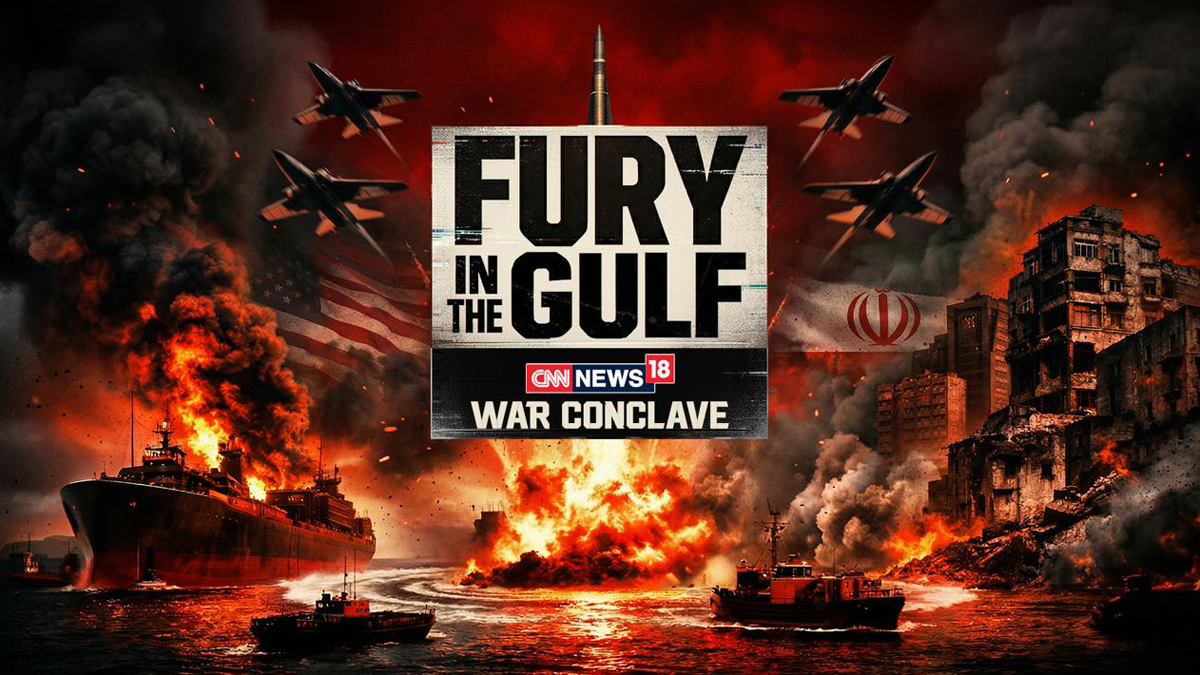
MUMBAI: CNN-News18 is set to host a special three-hour broadcast, Fury in the Gulf – War Conclave, on April 7, aiming to decode the escalating West Asia crisis and its far-reaching implications for India.
Scheduled from 4:00 PM to 7:00 PM, the conclave comes at a time when tensions between Iran and the United States are reshaping global geopolitics and triggering economic uncertainty. With India’s deep energy ties, trade links and large diaspora in the Gulf, the developments carry significant domestic relevance.
Built around the theme ‘Conflict, Consequences, and The Future,’ the programme will feature six curated sessions combining one-on-one interviews and panel discussions. The focus is to cut through the clutter and offer viewers a clearer understanding of the fast-evolving situation.
Key sessions include ‘Diplomacy in Times of War’ featuring Shashi Tharoor, and ‘World After the Iran Conflict’ with voices such as Ram Madhav, Reuven Azar, representatives from the European Union and the Iranian Deputy Envoy. Another session titled ‘Another Dunkirk?’ will bring together K. J. S. Dhillon and Jitin Prasada among others.
CNN-News18 editorial affairs director Rahul Shivshankar said, “In times of war, clarity becomes the most powerful tool. Fury in the Gulf – War Conclave brings together credible voices to address the questions and confusion that arise amid an overwhelming influx of information.”
He added that the initiative is aimed at delivering “facts, perspective, and insight” at a time when misinformation can easily cloud public understanding.
Echoing the sentiment, CNN-News18 CEO– English and business news Smriti Mehra said the conflict marks a defining global moment, with consequences that extend well beyond the region. She noted that the conclave seeks to present the crisis with “depth, nuance and responsibility” so audiences can better grasp its real-world impact.
As geopolitical tensions continue to dominate headlines, the conclave positions itself as an attempt to bring order to the noise, offering viewers a structured, insight-led look at a complex and rapidly shifting global situation.






