Connect with us

I&B Ministry

Implementation of first two phases of cable TV digitisation has taught valuable lessons: Tewari

Published

on

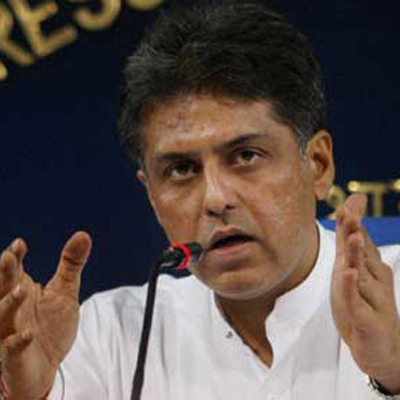
NEW DELHI: Information and Broadcasting Minister Manish Tewari has said the first two phases of digitisation of cable television provided a learning experience as far as implementation of the process was concerned.


Speaking at the 8th Indian Magazine Congress in the capital on the theme “Winning through Innovation”, he said these lessons would be incorporated while implementing the remaining two phases. The Minister reiterated that Digitisation was bound to be a game changer for the sector and would define contours of orderly growth.

Advertisement


While providing qualitative choices to the consumer, digitisation would also ensure that the subscription revenues and skewed business models are rectified. The Government has already decided to merge phases III and IV and complete the entire process by December this year.


Advertisement

While the first phase of digitisation covering the four metros had come into effect from November 2012 (though it was stayed in Chennai following a court order and was implemented marginally in Kolkata after initial reluctance), the second phase covering 39 cities was implemented by 31 March 2013.


The Government is still considering the proposal to merge Phase III covering all urban areas (Municipal Corporations/Municipalities) and Phase IV covering rest of India to 31 December 2014. The present dates for these two phases are 30 September 2014 and 31 December 2014 respectively.

Advertisement


Ministry sources told indiantelevision.com that if the government achieves its target, it will overtake countries like the United States and the United Kingdom which set long deadlines.

Advertisement
Click to comment

Leave a Reply

Your email address will not be published. Required fields are marked *

I&B Ministry

Government sets up AI governance group to steer policy

AIGEG to align ministries, assess jobs impact, guide AI deployment.

Published

on

MUMBAI: If artificial intelligence is the engine, the government is now building the dashboard and making sure everyone reads from the same screen. The Centre has constituted a new inter-ministerial body to coordinate India’s approach to AI, formalising a key recommendation from its governance framework and the Economic Survey. The AI Governance and Economic Group (AIGEG), set up by the Ministry of Electronics and Information Technology, will act as the central platform to align AI-related policy across ministries, regulators and departments, an attempt to bring coherence to what has so far been a fragmented and fast-evolving landscape.

The group will be chaired by union minister Ashwini Vaishnaw, with minister of state Jitin Prasada as vice chairperson. Its composition reflects both technological and economic priorities, bringing together the principal scientific adviser, the chief economic adviser, and the CEO of NITI Aayog, alongside key secretaries from telecommunications, economic affairs and science and technology. A representative from the National Security Council Secretariat is also part of the group, while the MeitY secretary will serve as member convenor.

At its core, AIGEG is designed to do two things: coordinate and anticipate. On the policy front, it will review existing regulatory mechanisms, issue guidance across sectors and ensure companies remain compliant with evolving legal frameworks. Beyond that, it will oversee national initiatives on AI governance, with a focus on enabling responsible innovation rather than merely regulating it.

Advertisement

The economic dimension is equally central. The group has been tasked with assessing how AI-driven automation could reshape jobs identifying which roles are most at risk, where those impacts may be geographically concentrated, and whether technology will augment or replace human labour. Based on these assessments, it will develop mitigation strategies and transition plans, signalling a more proactive stance on workforce disruption.

In parallel, AIGEG will work with industry stakeholders to chart a long-term roadmap for AI adoption, categorising use cases into “deploy”, “pilot” or “defer” buckets depending on readiness factors such as data availability, skill levels and regulatory clarity. The aim is to move from broad ambition to structured execution deciding not just what can be built, but what should be built now.

The group will function as the apex layer in India’s AI governance architecture, supported by a Technology and Policy Expert Committee that will track global developments, emerging risks and regulatory priorities. Together, the two bodies are expected to shape both the pace and direction of AI adoption in the country.

Advertisement

In a landscape where technology often outruns policy, the creation of AIGEG signals an attempt to close that gap ensuring that India’s AI journey is not just rapid, but also coordinated, accountable and economically grounded.

Continue Reading

Advertisement News18
Advertisement
Advertisement
Advertisement
Advertisement Whtasapp
Advertisement Year Enders

Indian Television Dot Com Pvt Ltd

Signup for news and special offers!

Copyright © 2026 Indian Television Dot Com PVT LTD