Hindi
IFFI 2016: India, S. Korea keen on co-productions

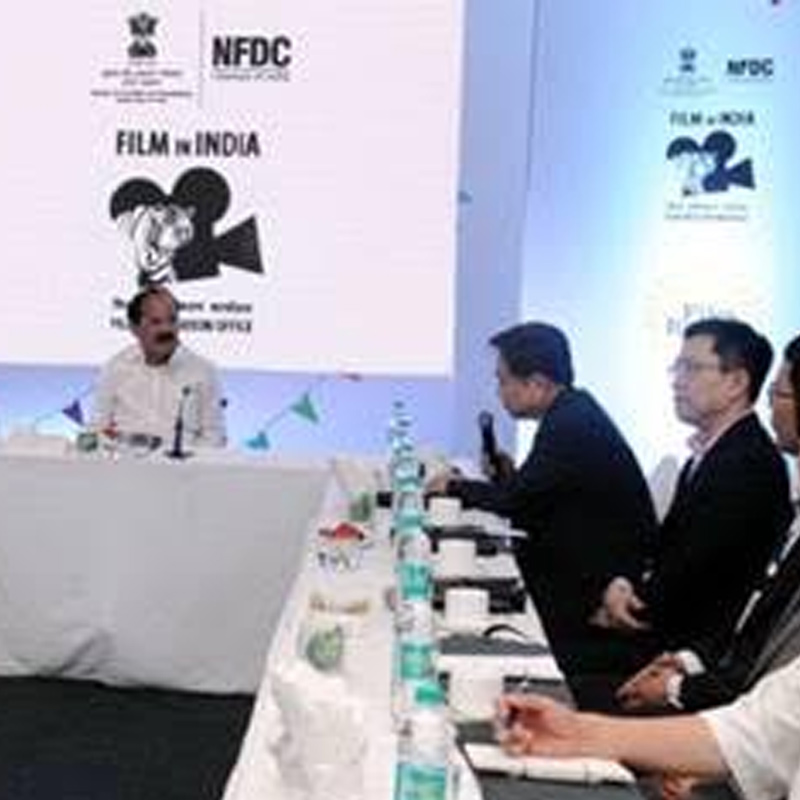
NEW DELHI: Minister for Information and Broadcasting (MIB) M Venkaiah Naidu has said the government is keen to work and cooperate with South Korea in the domain of film production in a way that could benefit both countries.
Speaking at a meeting with the Korean delegation yesterday in Panaji, the Minister said the government gave great importance to the 2014 agreement between the two countries on co-production and exchange of ideas and expressed satisfaction at Korea being the main partner in the cultural sphere and the focus country at the International Film Festival of India (IFFI).
MIB Secretary Ajay Mittal said the Film Facilitation Office was set up by the National Film Development Corporation (NFDC) to address issues on film production and facilitating mutual cooperation.
Korean ambassador to India Cho Hyun shared his ideas and themes for future film making. The delegation also expressed its happiness of the remake of the South Korean movie `Montage’. Hyun also remembered the role India played on the peace keeping operations in the Korean War.
A large Korean delegation is attending the IFFI this year and veteran Korean filmmaker Im Kwon Taek had been awarded the Lifetime Achievement Award at the inauguration of the festival.
A total number of 18 films are being screened from South Korea and the opening film was `Tunnel’ whose director Kim Seong-hun said later at a press meet that it was his first visit to India and he was thrilled to meet a new audience at this venue. The other directors and producers present at the event talked about their films’ genres and storylines.
The Korean Film Council (KOFIC) representative, also present at the conference, talked about the screening of 18 films at the fest and further strengthening the foundation of Indo-Korean relationship through this step. He added that Korea produces three films per year under co-production and has a budget of $ 300,000.
Director Lee Joon-ik of ‘Dongju: The Portrait of a Poet’ spoke about the removal of censorship in South Korea and its impact on the Korean film industry. He said that in the 70s, Hollywood had 80 per cent share in the Korean market. But with the complete removal of censorship, now the Korean cinema has gained 30 per cent of the market share, reducing Hollywood share by up to 50 per cent.
Korean Film has come of age in terms of technology and production said Korean filmmakers. The directors believe that if the Indian audience enjoy Hollywood cinema, they will surely like Korean cinema as well, because just like Hollywood, Korean cinema is also technology-driven and, at times, is way ahead of Hollywood.
The film ‘Tunnel’ tears down the conventional disaster movie genre. Through a disaster, which seems lifted from ordinary reality, the film reminds us all of the forgotten dignity of human life. The director shifts smoothly between emotional extremes to create a distinctive and realistic disaster movie that brings something new to the genre.