News Broadcasting
If not Sony, then who for Zee?


Mumbai: It’s on. It’s off. It’s on again. It’s off again. The yes and no speculation about the Zee Entertainment merger with Culver Max Entertainment (Sony in India) has been crazy enough to blow one’s brains in almost every direction.
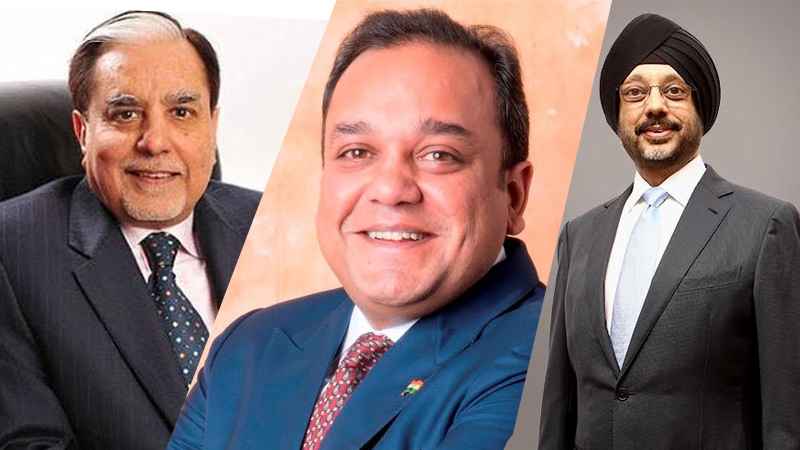
Yesterday, Zee-baiters and haters must have gone all gleeful when Bloomberg broke the news that Sony is dis-inclined to go ahead with the fusion courtesy all the brouhaha that has been created around allegations that father Subhash Chandra and son Punit Goenka personally pocketed company-borrowed money. This despite, Punit was loathe to agree to Sony’s demand that he accede his position as CEO of the merged entity to Sony India head NP Singh. Indian media bit the bait of the “failed merger” news and went to town and proclaimed the death of the merged entity. Both Zee and Sony kept their lips zipped officially.
Towards evening came a report that a partnership might yet be in discussion splitting the odds equally. The reason: a penalty of $100 million will have to be paid out to Zee TV by Sony should they pull out of the merger, said a few newspaper reports. Others suggested Zee had failed to live up to many conditions precedent in the merger agreement documents between the two and hence a tremendous trust deficit has been built up between the two. (These reports have since been denied by Zee in a regulatory filing and it has claimed that it is continuing to pursue the merger agreement).
Sony has to respond to Zee’s last month’s merger proposal and new conditions by 20-22 January and agree or disagree to the terms; it still has a lot of time to decide. Then why be in a rush to have anonymous sources make the revelation that its interest was off the table? Did the Bloomberg journo misquote the source? Or was Sony just testing how Zee would react to its disgruntlement? Would the latter take advantage of the stringent exit clause and howl or would it just walk away quietly?
Whatever be Sony’s rationale, it’s imperative that it gets clarity sooner than later. That’s because a megalith is being created with the signing of an agreement between Mukesh Ambani’s Jio (Viacom18) and Disney’s India operations under Disney + Star India. The agglomeration of the two will create a giant which will control a sizeable chunk of the market by viewership. That’s something which many are saying could harm the development of the media & entertainment vertical in the long term, especially placing oodles of power in the hands of one giant.
Sectors do better when there is an equally fit No 2 giving the No 1 a run for its dollars. And a No 3 and a No 4. Muscle is needed to fight muscle. Sony, Zee, Sun TV on their own will be dwarfed in front of the Jio-Disney combine. Yes, we have gorillas like Netflix, Amazon, Google, Microsoft operating in India. But one is not clear about how they will play their hand going forward. A few smaller players will innovate and through their nimble-footedness score a few points. But the advantage of scale of capital, content creation, distribution, and advertising inventory will lie with one major – Jio-Disney.
We have seen how Jio has changed the dynamics of the telecom as well as streaming business, thanks to its humongous 400 million plus telco subscribers. Making premium sports and entertainment content available for free to subscribers can be a good customer acquisition strategy. But for how long will that go on and that too unchallenged?
Cable TV operators have been crying foul to the regulator TRAI as the same content on cable TV and DTH is being levied at a fee to subscribers. True, the government wants to make TV available to many more though its free to air service DD FreeDish. For obvious reasons. It wants to be able to address large swathes of the population across the nation on one platform, rather than have to engage with many more outlets. And it wants it to say what the powers-that-be want to say.
In such a scenario, it’s imperative that consolidation in the industry is encouraged. So that balance and sanity are maintained.
Let’s suppose that Sony is willing to let go of a hundred mill in penalties for calling off the merger. Will a corporate raider swoop in jostling out the promoters? Doubtful, considering media is a specialized business which is transforming so rapidly that no non-strategic corporate will be willing to lose billions of dollars in trying to set things right at Zee. Especially considering that its margins have been under pressure and how much cleaning up it needs on several fronts.
Then, what are the white knight options left for Zee to get scale and get out of its financial commitments to debtors as well as get infusion of cash for growth.
Private equity? Hedge funds with mountains of resources? They might be cautious, considering how Sony has fled from getting into bed with it.
Could Adani be interested? He is yet digesting his news venture NDTV and digital acquisitions, so interest from his side might be lukewarm.
Or could it be Kalanithi Maran’s Sun TV?
It seems like a good fit. Both Chandra and Maran -run entrepreneurial organisations. Both are pioneers and the latter has so much cash, he does not know what to do with it. Sun TV is strong in the south, Zee TV has strengths in Hindi and some regional languages. Sun TV is nurturing a Hindi language entertainment channel. A joint venture will see lots of benefits accruing to both. The two business groups will have to keep aside the personal and professional differences of the promoters and look at long term survival and growth.
But that’s in the future. Now, if Goenka and Chandra can find ways to assuage the miffed mood amongst executives in Sony headquarters, the story might have a fairy tale ending like the two want.
The author is a media analyst. The views expressed in the comment piece are his own and indiantelevision.com need not subscribe to them.