I&B Ministry
I&B unlikely to nod in favour of ZeeBiz uplink

NEW DELHI: Even as Zee News, from the Zee Telefilms stable, maintained there was nothing “official” about it, media reports indicated that the government is no mood to allow the proposed ZeeBiz channel to use the uplinking permission granted to a regional language channel.
“We haven’t heard yet anything from the government related to the uplinking of ZeeBiz (a business channel being proposed by Zee),” Zee Telefilms’ news director Laxmi Goel told indiantelevision.com.
But he did admit that the company had sent in a proposal to the information and broadcasting ministry that ZeeBiz channel may be allowed to uplink from India, using an approval received earlier for another company channel.
A report in Hindu BusinessLine (HBL) today quoted a government source as saying, “But the vernacular channel did not take off and the company (Zee) wanted to use the same permission for its (proposed) business channel. The ministry has, however, not agreed to this proposal as the content and language are different.”
When contacted today, the ministry officials did not dish out any further information, on the issue, to indiantelevision.com. They offered that “the ZeeBiz file is still being studied”.
The HBL report had said that the launch of Zee’s proposed business channel seems to have hit a roadblock with the information and broadcasting ministry rejecting Zee Telefilms’ proposal of using an uplinking approval received earlier, for a regional channel, for this one.
The report further added that the channel would have to apply afresh conforming to the guidelines framed for news channels. The newspaper report quoted a government source as saying: “Uplinking for news has become a sensitive issue and only if a channel complies with the guidelines in both letter and spirit, we would give it permission to uplink from India.”
The issue of uplink of news channel had been pitchforked into limelight when the government had revise the guidelines, in August this year, after it felt that Star News had been violating the norms in `spirit’.
It may be added here that the government was literally forced to rework the uplink norms on being petitioned by the high-profile Indian Media Group, which also included the likes of Zee Telefilms and Aaj Tak, that Star and its owner Rupert Murdoch were making a “monkey” of the India laws.
Besides the business news channel, Zee Telefilms would also have to rework its structure for its flagship Zee News channel and bring down the foreign investment to 26 per cent. The government had given it one year’s time to comply with the uplinking norms. As on June 30, 2003, the company has a total foreign equity of 58 per cent, of which 26.98 per cent is held by foreign promoters, about 29.43 per cent stake is held by foreign institutional investors (FIIs), while the Indian promoters hold just 23.51 per cent, according to the HBL report.
Now that the uplink norms have been tightened and implementation is monitored in more stringent way, the circle seems to have come full for Zee Telefilms.







I&B Ministry
Govt extends TRP suspension for news channels by four weeks amid concerns
I&B ministry cites sensationalism fears linked to West Asia conflict coverage
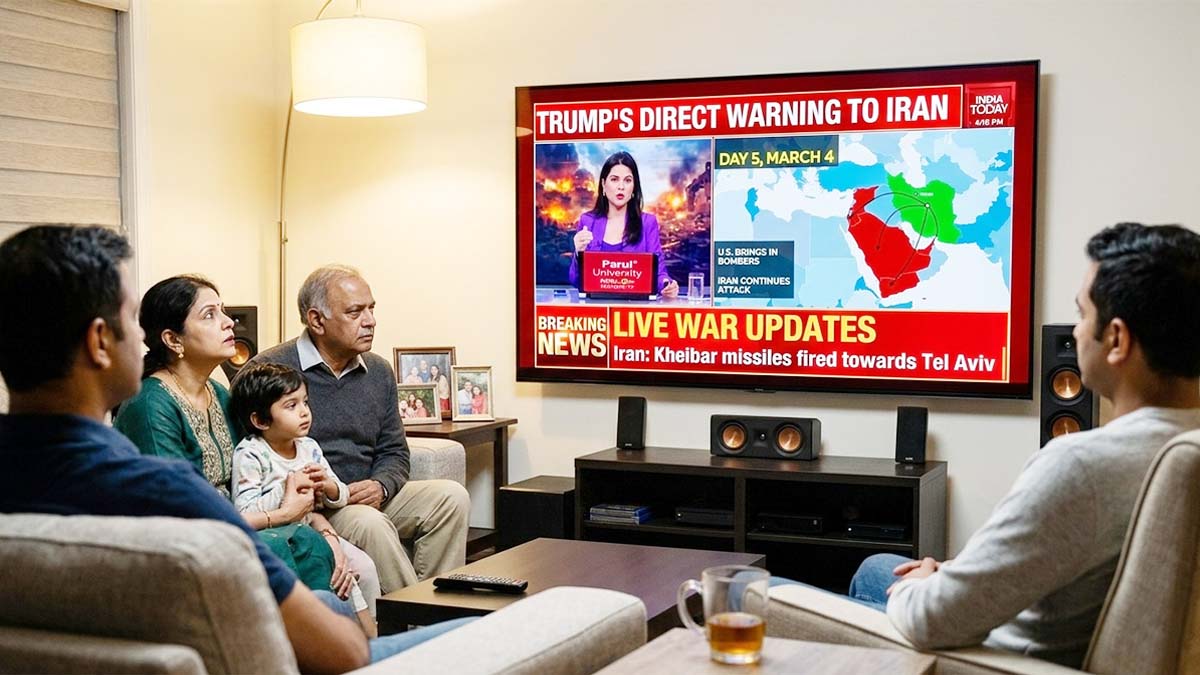
NEW DELHI: The Ministry of Information and Broadcasting has extended the suspension of Television Rating Points for news channels by another four weeks, keeping the industry in a ratings blackout for a longer stretch.
In an order dated March 31, the ministry directed the Broadcast Audience Research Council to continue withholding TRP data “for a further period of four weeks or until further directions, whichever is earlier.” This marks the second such directive after an initial four-week pause was imposed on March 6.
The government said the extension is aimed at curbing unwarranted sensationalism and speculative reporting, particularly in the context of the ongoing tensions in West Asia. It noted that the conflict continues to evolve and could trigger anxiety among viewers, especially those with personal or economic ties to the region.

TRPs serve as the primary yardstick for measuring television viewership and play a crucial role in shaping advertising revenues and competitive positioning among news broadcasters. Their absence effectively removes a key performance benchmark, forcing channels to operate without publicly available ratings.
The directive applies specifically to news television channels and has been issued under the government’s regulatory powers in the interest of public order. While the move is framed as a temporary measure, its continuation suggests ongoing concerns about the tone and nature of coverage.
For broadcasters, the extended blackout means navigating a high-stakes news cycle without the usual scoreboard. Whether it tempers the noise or simply shifts the battle elsewhere remains to be seen, but for now, the ratings race is officially on pause.






