I&B Ministry
I&B Ministry to meet industry leaders to discuss online video content regulation

Amidst reports of government considering certification/censorship of online video content, the I &B Ministry will hold a second round of consultation next week with industry players, who are determined to oppose any pre-censorship on digital platform.
The I&B Ministry has invited all online curated content providers (OCCPs), including Netflix, Amazon and Hotstar, through industry association, the Internet and Mobile Association of India (IAMAI) for consultation on the issue of regulation of online video content, as per a report in ET.
The meeting, slated for next week in Chennai, comes close on the heels of a similar consultation in Mumbai last month.

In October, PTI had quoted union minister for information and broadcasting Prakash Javadekar as saying that there should be some kind of regulation of OTT platforms on the lines of print and electronic media and films.
“I have sought suggestions on how to deal with this because there are regular feature films coming on OTT — good, bad and ugly. So how to deal with this, who should monitor, who should regulate?. There is no certification body for OTT platforms and likewise news portals also,” Javadekar was quoted as saying.
Earlier in September, Live mint has reported that I&B Ministry was looking to finalize a model for the certification of online video streaming content soon after Diwali.
However, any government attempt to regulate content on OTT, is bound to face stiff opposition from the industry, who believe that the existant IT Act 2000 and a voluntary self-regulatory code signed by major OTT players in January this year, are sufficient in dealing with any untoward situation.
Online vidoe streaming players like Netflix, Hotstar, Jio, Voot, Zee5, Arre, SonyLIV, ALT Balaji and Eros Now have signed a self-censorship code in January that prohibited these platforms from showing certain kinds of content and set up a redressal mechanism for customer complaints.
The self-regulation code, bars video players from showing content that’s banned by Indian courts, disrespects the national emblem and flag, outrages religious sentiments, promotes terrorism or violence against State and shows children in sexual acts. Amazon, however, is not part of the self-regulatory code signed under the aegis of IAMAI.
“We should publish a list of all the laws that apply to OCCP platforms so that there is no is perception that OCCPs are not regulated,” Gowree Gokhale, head of Telecom, Media and Technology practice at Nishith Desai Associates, which is part of the consultation process, was quoted as saying by ET.
However, despite the presence of a self-regulatory code, there have been an array of PILs in court demanding regulation of online video content.
In May, the Supreme Court had issued a notice to the Centre on an appeal to regulate content on online streaming platforms.







I&B Ministry
Govt extends TRP suspension for news channels by four weeks amid concerns
I&B ministry cites sensationalism fears linked to West Asia conflict coverage
NEW DELHI: The Ministry of Information and Broadcasting has extended the suspension of Television Rating Points for news channels by another four weeks, keeping the industry in a ratings blackout for a longer stretch.
In an order dated March 31, the ministry directed the Broadcast Audience Research Council to continue withholding TRP data “for a further period of four weeks or until further directions, whichever is earlier.” This marks the second such directive after an initial four-week pause was imposed on March 6.
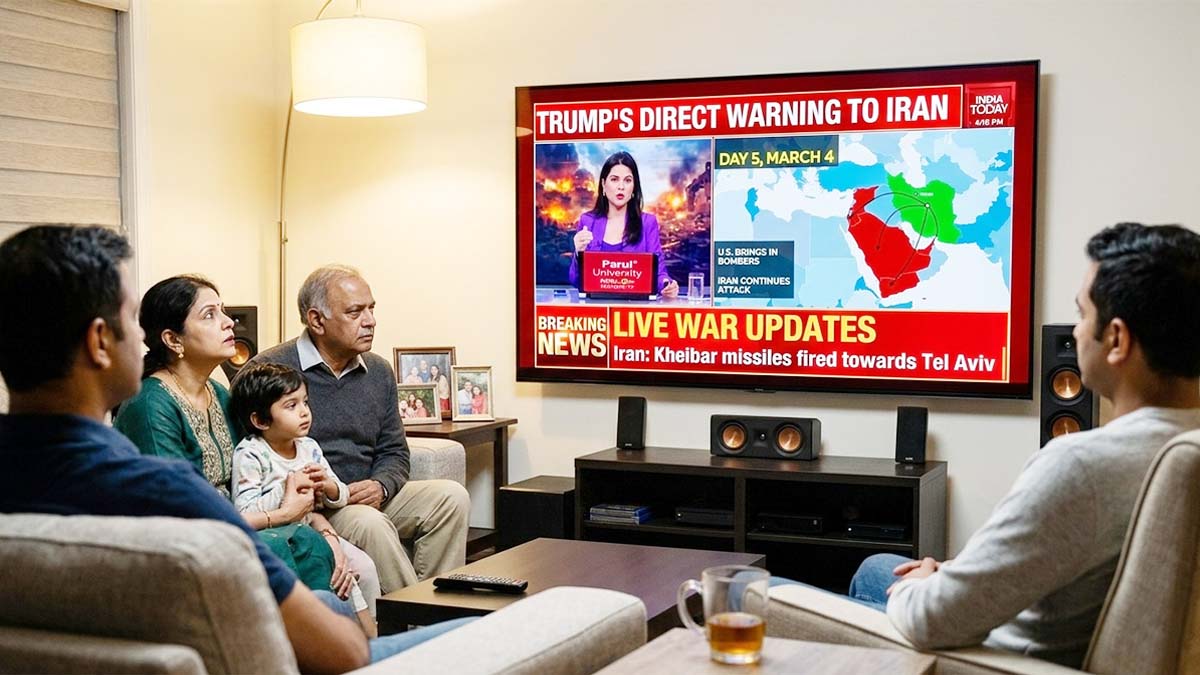
The government said the extension is aimed at curbing unwarranted sensationalism and speculative reporting, particularly in the context of the ongoing tensions in West Asia. It noted that the conflict continues to evolve and could trigger anxiety among viewers, especially those with personal or economic ties to the region.
TRPs serve as the primary yardstick for measuring television viewership and play a crucial role in shaping advertising revenues and competitive positioning among news broadcasters. Their absence effectively removes a key performance benchmark, forcing channels to operate without publicly available ratings.
The directive applies specifically to news television channels and has been issued under the government’s regulatory powers in the interest of public order. While the move is framed as a temporary measure, its continuation suggests ongoing concerns about the tone and nature of coverage.
For broadcasters, the extended blackout means navigating a high-stakes news cycle without the usual scoreboard. Whether it tempers the noise or simply shifts the battle elsewhere remains to be seen, but for now, the ratings race is officially on pause.






