I&B Ministry
I&B minister RSP on Star World’s ‘Cover Story’
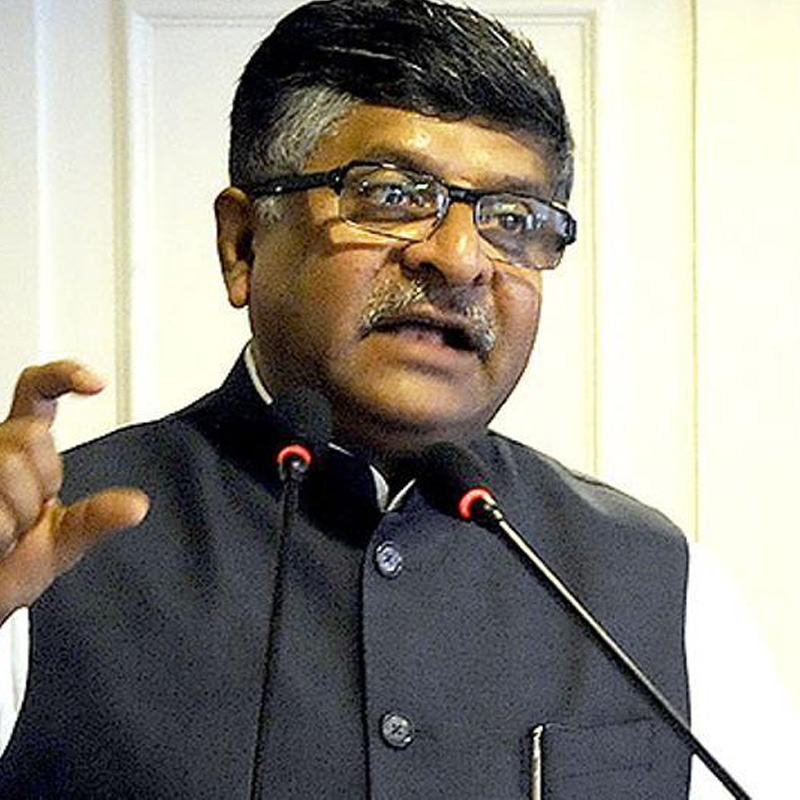
The latest episode of Star World's interview show Cover Story will feature our I&B minister Ravi Shankar Prasad. Viewers can catch him on 29 February at 10 pm.
On the show Prasad talks to the show's host Vir Sanghvi about his childhood memories, career, his entry into politics. He said," My father was a man of great commitment and was truly a self-made man. He fought his way up, became an eminent lawyer of Bihar and was the president of Jansangh for 10 years. He was very particular about my studies."
Talking about his job he said, "It's an interesting job. I came in the I&B ministry at a time when the sheer growth of the entertainment sector has impressed me enormously and I am very much convinced that if the nineties were the decade of IT and communication, this is the decade of Indian Entertainment – films, TV animation, radio. As a minister I am trying my level best to facilitate the same."
Talking about the conditional access system (Cas) debacle for which he had to take some harsh criticism last year he put on a brave face. "The Cas story is well known. We had to put it off in Delhi because of political considerations. I took a very clear position from day one that the state and the central government have to work as a team. The government is a facilitator and not an arbitrator."

I&B Ministry
Prasar Bharati opens AIR to private content under new policy
NIPP introduces revenue share, sponsored and gratis models
MUMBAI: Radio may be the oldest voice in the room, but it’s learning some very modern tricks. In a bid to stay tuned to changing listener habits, Prasar Bharati has opened the doors of All India Radio to private players under a newly rolled-out content framework. The initiative, titled Notice Inviting Programme Proposals (NIPP), marks a significant shift in how the public broadcaster approaches programming moving from a largely in-house model to a more collaborative, market-aligned ecosystem. Issued by Akashvani’s Directorate General in April 2026, the policy invites private producers, content owners and aggregators to pitch programmes across formats, from radio dramas and documentaries to quiz shows, storytelling and music-led content.
At the heart of the framework lies a three-pronged participation model designed to balance creative freedom with commercial viability. The most prominent route is revenue sharing, where advertising and sponsorship income generated by a programme is split between the producer and the broadcaster. The structure tilts in favour of creators offering a 70:30 split when producers bring in advertising, and 65:35 when monetisation is handled by Prasar Bharati.
Alongside this sits the sponsored model, where producers fully fund and monetise their content, subject to compliance with advertising norms and the AIR Broadcast Code. For those less commercially inclined, a gratis route allows content to be submitted free of cost, with Prasar Bharati retaining all monetisation rights effectively turning the platform into a national distribution channel for diverse voices.
The move comes as legacy media grapples with intensifying competition from private FM networks, streaming platforms and digital audio ecosystems. By repositioning AIR as both a public service broadcaster and a content marketplace, Prasar Bharati appears to be recalibrating its role in a rapidly evolving media landscape.
Importantly, the framework does not dilute editorial control. All submissions must adhere to the AIR Broadcast Code, and proposals are evaluated through a layered process that weighs storytelling quality, production capability, audience appeal and revenue potential. Only proposals crossing a defined threshold move forward, signalling that while access has widened, the bar remains firmly in place.
Operational discipline is another cornerstone of the policy. Producers are required to maintain broadcast-ready content, deliver episode banks in advance and navigate a structured approval process. Crucially, all production costs are borne by the content provider, reinforcing Prasar Bharati’s positioning as a distribution and oversight platform rather than a commissioning entity.
What elevates the initiative further is its scale. The framework spans multiple clusters and stations across India, covering both metro and regional markets, with specific language mandates and submission channels. This not only expands the content pipeline but also deepens linguistic and cultural representation, an area where AIR has historically held an advantage.
In effect, NIPP signals a quiet but meaningful transformation. AIR is no longer just broadcasting to the nation, it is inviting the nation to broadcast with it, blending legacy reach with contemporary content economics in a bid to stay relevant in an increasingly fragmented audio universe.