News Broadcasting
I&B issues notice to Aaj Tak on Mumbai terror coverage

NEW DELHI: Even as news broadcasters are still to react on advisories issued earlier this week on the continual coverage of the terrorist attack in Mumbai, notice has now been sent to the Aaj Tak to the effect that the channel’s coverage was creating public panic.
According to the notice, which is presently being considered by the management of Aaj Tak, the channel has been accused of acting in a manner that may affect ’the integrity of the country’. Sources in the channel confirmed receipt of the notice, but refused to say anything else.
News broadcasters seem divided on their reaction to the Information and Broadcasting Ministry’s advisory to all news channels not to carry on with the coverage of the Mumbai attacks by showing the same clips which were now several days old and which only created panic.

As of now, the News Broadcasters Association have failed to send any reply to the Ministry’s advisory and a meeting slated for this purpose yesterday did not take place. While some channels feel that this is necessary to report fresh news breaks, others feel a confrontation with the Government on this issue should be avoided.
In its advisory, the Ministry said: “Repeated visuals and stories pertaining to the attack, which would make the perpetrators feel their attack was a ‘success’, should, therefore, now be avoided.”
It further said if the ‘unbalanced reporting’ by TV channels continued, “it may be treated as coverage against the interest of the nation in the circumstances and attract appropriate action as per rules and as per terms and conditions of the permission granted for uplinking and downlinking of TV channels in India.”
The advisory said that television news channels were devoting almost 100 per cent news coverage time to “replay the attack, general criticism, display of shocked public reaction, eyewitness accounts, multimedia reconstruction of the attack, display of blood and gore’ and appeared to be ignoring all other news of national and international significance.”
Meanwhile, Rajat Sharma of India TV told indiantelevision.com he was not free to discuss the reply sent by his channel early this month to a notice received from the Information and Broadcasting Ministry late last month.
The Ministry is understood to have objected to the telecast soon after the attack commenced of the telephonic conversation with two terrorists hiding in the Nariman House and Oberoi-Trident.





News Broadcasting
CNN-News18 to host Fury in the Gulf conclave on West Asia crisis
Three-hour summit to unpack geopolitical fallout and impact on India
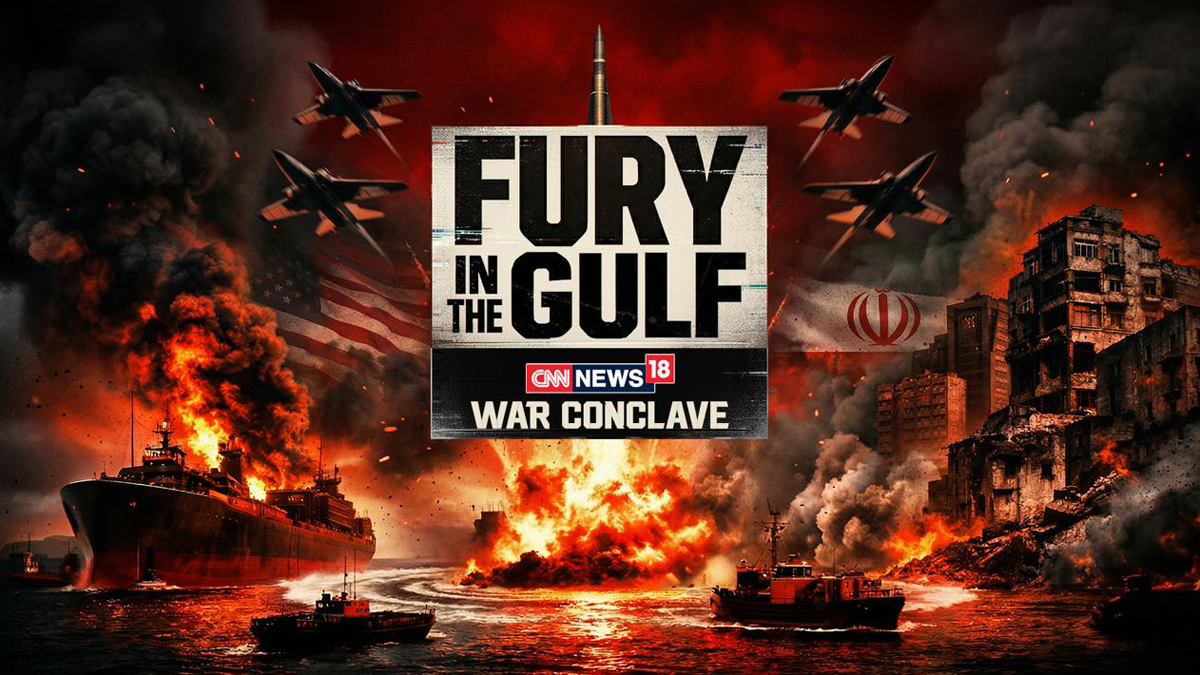
MUMBAI: CNN-News18 is set to host a special three-hour broadcast, Fury in the Gulf – War Conclave, on April 7, aiming to decode the escalating West Asia crisis and its far-reaching implications for India.
Scheduled from 4:00 PM to 7:00 PM, the conclave comes at a time when tensions between Iran and the United States are reshaping global geopolitics and triggering economic uncertainty. With India’s deep energy ties, trade links and large diaspora in the Gulf, the developments carry significant domestic relevance.
Built around the theme ‘Conflict, Consequences, and The Future,’ the programme will feature six curated sessions combining one-on-one interviews and panel discussions. The focus is to cut through the clutter and offer viewers a clearer understanding of the fast-evolving situation.
Key sessions include ‘Diplomacy in Times of War’ featuring Shashi Tharoor, and ‘World After the Iran Conflict’ with voices such as Ram Madhav, Reuven Azar, representatives from the European Union and the Iranian Deputy Envoy. Another session titled ‘Another Dunkirk?’ will bring together K. J. S. Dhillon and Jitin Prasada among others.
CNN-News18 editorial affairs director Rahul Shivshankar said, “In times of war, clarity becomes the most powerful tool. Fury in the Gulf – War Conclave brings together credible voices to address the questions and confusion that arise amid an overwhelming influx of information.”
He added that the initiative is aimed at delivering “facts, perspective, and insight” at a time when misinformation can easily cloud public understanding.
Echoing the sentiment, CNN-News18 CEO– English and business news Smriti Mehra said the conflict marks a defining global moment, with consequences that extend well beyond the region. She noted that the conclave seeks to present the crisis with “depth, nuance and responsibility” so audiences can better grasp its real-world impact.
As geopolitical tensions continue to dominate headlines, the conclave positions itself as an attempt to bring order to the noise, offering viewers a structured, insight-led look at a complex and rapidly shifting global situation.






