News Headline
How has the Indian viewer of long-content evolved?


Mumbai: A decade ago, Indian television was dominated by soap operas and family dramas. The limited choice and often repetitive content left viewers wanting more. This frustration paved the way for the streaming revolution. Platforms like Netflix, Amazon Prime, Disney+ Hotstar, and others entered the Indian market, offering a plethora of options across genres and languages.
The Indian viewers, once bound by rigid TV schedules, suddenly had the freedom to watch what they wanted, when they wanted. This marked the beginning of a seismic shift in the consumption of long-form content. The audience was no longer tethered to the living room; they could watch their favourite shows and movies on their smartphones, tablets, or laptops. One of the most significant changes in the Indian viewer’s preferences has been the diversification of content. While family dramas and sitcoms still hold a special place in our hearts, viewers have grown more inclined towards exploring diverse genres. Crime thrillers, historical dramas, sci-fi series, and international content have found a dedicated fan base. Here are some more evolutions of the long form content consumer
Nuanced storytelling

The long form content viewer today has broken away from traditional, run of the mill concepts which were mass favourites. Traditional entertainment often followed familiar and predictable formulas. For example, many television shows and movies relied on standard plotlines, character archetypes, and storytelling techniques that had proven successful. Today more and more viewers are shifting are demanding nuanced and complex storylines to keep them hooked. This means they want narratives that challenge them intellectually, emotionally, and morally. They want characters with depth and development, intricate plot twists, and thought-provoking themes. This demand has led to the creation of content that explores a wide range of topics and genres.
Binge watching
Binge-watching has transformed the way audiences consume content. In the past, viewers were limited by TV schedules and movie timings, but now, with long-form content readily accessible, binge-watching has become a common phenomenon. It involves viewers becoming deeply engrossed in a show, series, or movie, often watching multiple seasons or episodes in one sitting due to content availability. Many proudly admit to being binge-watchers. This surge in binge-watching has created a higher demand for content, as consumption accelerates, prompting content creators to produce more to meet viewers’ insatiable appetite for continuous, immersive storytelling
Watching content from different regions
Most long form content had restricted distribution due to language issues. However, today, global accessibility, including subtitles and dubbing, has cultivated enthusiastic fans worldwide. The popularity of Turkish serials and K-dramas in India stands testament to this fact. The pandemic accelerated language-agnostic viewing as viewers sought compelling content through digital streaming, uncovering gems from various regions. Now, the focus is on the content’s concept and storyline, transcending language and cultural origins. This shift has expanded markets for long-form content creators.
Passive to active consumers
Today’s social media natives aren’t passive consumers of long-form content; they’re active and engaged fans. They form fan clubs, create pages for celebrities and characters, drive trending hashtags, and participate in content discussions on platforms like Reddit. This involvement sparks spin-offs, alternate storylines, and direct feedback loops with writers, influencing the creative process
Over the years, the Indian viewer’s journey has undergone a remarkable transformation, as they have played a pivotal role in shaping and driving numerous changes within the long form content market.
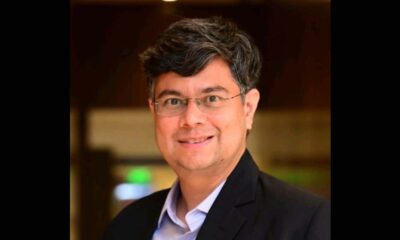
The author of this article is Creative Viibe founder Santosh Kher.







NEW DELHI: Hamdard Laboratories gathered a cross-section of India’s achievers in New Delhi on Friday, handing out the Hakeem Abdul Hameed Excellence Awards to figures who have left their mark across healthcare, education, sport, public service and the arts.
The ceremony, attended by minister of state for defence Sanjay Seth and senior officials from the ministry of Ayush, celebrated individuals whose work blends professional success with a sense of public purpose. It was as much a roll call of achievement as it was a reminder that influence is not measured only in profits or podiums, but in people reached and lives improved.
Among the headline awardees was Alakh Pandey, founder and chief executive of PhysicsWallah, recognised for turning affordable digital learning into a mass movement. On the sporting front, Arjuna Awardee and kabaddi player Sakshi Puniya was honoured for her contribution to the game and for pushing women’s participation onto bigger stages.
The cultural spotlight fell on veteran lyricist and poet Santosh Anand, whose songs have echoed across generations of Hindi cinema. At 97, Anand accepted the honour with characteristic humility, reflecting on a life shaped by perseverance and hope.
Healthcare honours spanned both modern and traditional systems. Manoj N. Nesari was recognised for strengthening Ayurveda’s place in national and global health frameworks. Padma shri Mohammed Abdul Waheed was honoured for his research-backed work in Unani medicine, while padma shri Mohsin Wali received recognition for his long-standing contribution to patient-centred care.
Education and social development also featured prominently. Padma shri Zahir Ishaq Kazi was honoured for decades of work in education, while former Meghalaya superintendent of Police T. C. Chacko was recognised for public service. Goonj founder Anshu Gupta received an award for his dignity-centred rural development initiatives, and the Hunar Shakti Foundation was honoured for empowering women and young girls through skill development.
The Lifetime Achievement Award went to former IAS officer Shailaja Chandra for her long career in public healthcare and governance, particularly in the traditional systems under Ayush.
Speaking at the event, Hamdard chairman Abdul Majeed said the awards were a tribute to those who combine excellence with empathy. “These awardees reflect Hakeem Sahib’s belief that healthcare, education and public service must ultimately serve humanity,” he said.
Minister Seth struck a forward-looking note, saying India’s young population gives the country a unique opportunity to become a global destination for learning, health and wellness by 2047.
The ceremony also featured the trailer launch of Unani Ki Kahaani, an upcoming documentary starring actor Jim Sarbh, set to premiere on Discovery on 11 February.
Instituted in memory of Unani scholar and educationist Hakeem Abdul Hameed, the awards have grown into a national platform that celebrates those building a more inclusive and resilient India. For one evening at least, the spotlight was not just on success, but on service with substance.






