Factual
‘Homo Sapiens’ as real a swing back in time as it can get

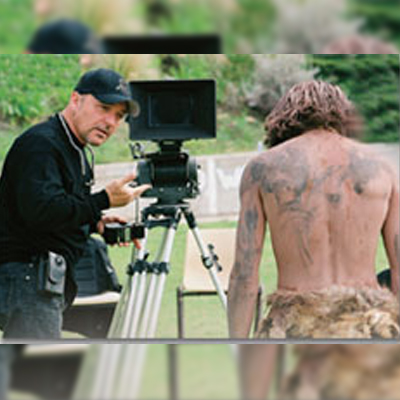
CANNES: Day Two of REED Midem’s documentary market Mipdoc opened to chill winds and a continuous drizzle, but that couldn’t dampen the high that one felt after watching The Making Of, an astounding documentary effort Homo Sapiens last evening.
Cold stats do not quite give a feel of the sheer scale and audacity that this truly multinational cinematic effort entailed. Homo Sapiens has been co-produced by France 3, Boréales Productions (Barthélémy Fougea) and Pixcom, with support from RTBF (Belgium), TSR (French Switzerland), Télé- Québec, the Discovery Channel, Tang Media (China) and Melchior Studio (Russia).
Homo Sapiens is the sequel to A Species Odyssey, a global success that attracted an audience of nearly nine million people in France and 30 million throughout the world.
After their astounding success with the documentary A Species Odyssey, Homo Sapiens continues director Jacques Malaterre and director of photography Martial Barrault’s quest for the origins of humankind. They aren’t quite done yet; next on the drawing block is a third edition – The Future of Mankind.
“Each film is an approach to a reality, with no historical record of any line emerging from the encounter between Neanderthal man and Homo Sapiens; we know only that they cohabited for a time,” explains Barrault.
According to him, “When A Species Odyssey ends, we see the beginnings of Neanderthal man’s religious rituals, art and writing, which I was tempted to extend. But the problem is that Homo Sapiens is a human being like us and we weren’t trying to create a scripted film like Quest for Fire.
” We had to find a formula that would be capable of making the film credible; if there were too many anecdotes, it could turn into a cartoon. But, on the other hand, with too little information, people would have no idea of the story we were trying to tell and that’s where Jacques and my shared experience of documentaries proved so valuable.”
What is most remarkable, however, is that the final product was delivered within budget at $ 4.8 million (Euro 4 million). A six-minute sequence in the film that involved a charging herd of mammoths shot using CGI alone cost Euro 350,000.
After more than 37,000 miles scouting for locations for the four month shoot, Malaterre and Barrault settled on South Africa for the bulk of the sequences. “We knew we were going to have to adjust to a lot of footage with a portable camera, so we decided to concentrate most of the shooting there, although we also used locations in the Swiss Alps, China, Canada and France,” says Barrault.
In all, the film was two years in the making with a huge amount of planning and logistics to be managed.
Preparing the acting cast was a process in itself, much of which was done in South Africa. Make-up involved having to get up at 3 am since the process of converting each actor into an authentic looking pre-historic human involved four hours of work every day. (Removing all the face gob took another hour after pack-up.)
Putting the whole thing in perspective, producer Barthelemy Fougea told indiantelevision.com that without Malaterre, the project would just not have been possible to manage since actual shooting on location involved extremes of both climate, as well as physical exertion.
Although Malaterre and Barrault have always shot their documentaries on film, the production team decided to make a budget comparison between silver film and HD through to the end of the post-production process.