International
Hollywood studios laud China’s willingness to treat US films more fairly
MUMBAI: The recent move of the Chinese government to comply with a World Trade Organisation order to treat US films more fairly has been lauded by studio executives in Hollywood.
But privately, they wonder how it will shake out and when because the Chinese government has yet to sign a WTO Memorandum of Understanding.
Hollywood had agreed to live with the resulting agreement because it could be revisited in five years. A fine ticking point was revenue-sharing: The studios wanted 30 per cent but had to settle for 25 (previously, it was 13 to 17 per cent).
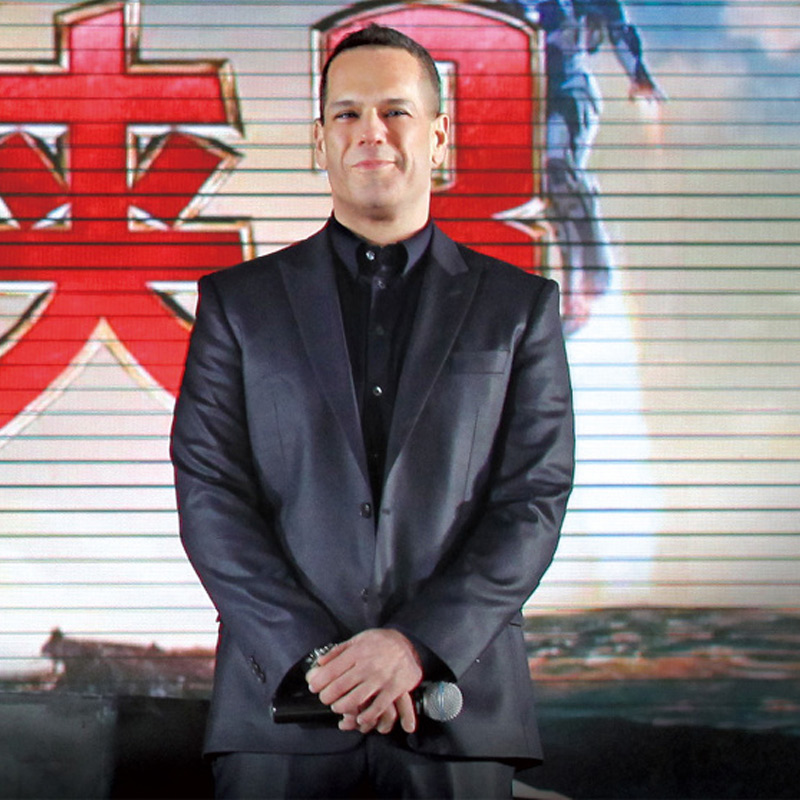
Beijing-based DMG Entertainment’s CEO Dan Mintz said, “Obviously, from the top-line level, all of this is good. But it‘s important to remember that the quota is just one layer that is used by the powers that be to control things. They have censorship, they control all the screens and hold control over when a film comes on against which competition and how long it stays in theatres.”
The Chinese market is too hot for Hollywood studios not to keep trying. In 2008, the local box-office intake was $630 million; in 2011, it reached a massive $2.1 billion. Theatre construction is also growing by bounds spurring a proliferation of state-of-the-art 3D screens. And this is where Hollywood has the upper hand as its proliferation of 3D films deliver much-needed content.
It may be noted that five of China‘s 10 top-grossing films in 2011 were 3D studio releases, all of them from Hollywood. In 2011, Transformers: Dark of the Moon (3D) was China‘s top-grossing title, earning $172 million.
Interestingly, had the new revenue-sharing deal been in effect then, Paramount would have seen a return of $43 million compared to $26 million.
The first 3D release set to open in China this year is Titanic 3D, in early April. No one — not even the film‘s overseas distributor, Fox — knows whether the new rules will be in place by then, but most studios believe they will by summer.
It is also uncertain as to which 3D titles China will accept this year from films like The Amazing Spider-Man, The Dark Knight Rises, Brave, The Avengers, Men in Black III and Madagascar 3.

International
Utopai Studios unveils 4K three-minute video generation for PAI platform
New Story Agent and editing tools aim to streamline AI-led filmmaking workflows
MUMBAI: Utopai Studios has announced a major upgrade to its PAI storytelling AI platform, introducing what it claims is an industry-first capability to generate three-minute videos in 4K resolution, alongside enhancements to its Story Agent feature.
The update, rolling out from April 15, expands the platform’s capabilities across the filmmaking process, from early concept development to post-production. The company said the new features are designed to help filmmakers maintain continuity across characters, scenes and visual styles, a key challenge in AI-driven storytelling.
At the heart of the release is a next-generation model that enables more structured narrative development, allowing creators to move more seamlessly from idea to execution. With tools such as multi-shot sequencing and multi-turn editing, the platform aims to give both studios and independent creators greater control over complex storytelling workflows.
Commenting on the launch, Utopai Studios co-founder and CTO Jie Yang said, “The next phase of AI in media will not be defined by isolated tools, but by systems that can carry story, continuity and collaboration across the full creative process.” He added that the update is a step towards enabling more practical, end-to-end narrative development at a professional level.
Echoing this, Utopai Studios co-founder and chief scientific officer Zijian He said, “Generative video is opening the door to a new production model, where creative ambition is less constrained by traditional cost and complexity.” He noted that the platform combines multimodal models with iterative editing to give creators more speed, control and consistency.
The company said PAI is already being used in professional film and television productions, particularly in Hollywood, for tasks such as pre-visualisation, scene design and post-production refinements. The latest update adds features including improved voice options, character consistency, unlimited editing and more flexible asset management.
Utopai also emphasised that its models are not trained on copyrighted material, positioning the platform as a cleaner alternative for creators and rights holders navigating the evolving AI landscape.
As AI continues to reshape content creation, Utopai’s latest push signals a shift from standalone tools to integrated systems, aiming to make high-quality filmmaking faster, more flexible and increasingly accessible.