
High Court
HCs’ informed about SC decision to transfer all DAS cases to Delhi HC


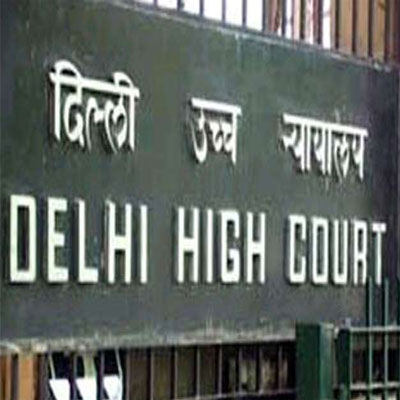
NEW DELHI: The registry of the Supreme Court has finally sent to all the concerned high courts the directive of the apex court for transfer of all cases seeking extension to digital addressable system for cable television to Delhi High Court with a view to avoid conflicting decisions’.
Court registry officials told indiantelevision.com that the order of the apex court of early this month had been sent on 16 April. A copy of the order was also sent to the Delhi High Court and it was now up to that court to fix a date.
The officials said that the attempt would be to first receive from the various high courts the papers relating to the petitions, which almost all had pleaded shortage of set top boxes for seeking extension or stay of DAS which became effective 1 January 2016.
Earlier, the apex court had accepted the plea of the central government that ‘it would be justand proper for this court to withdraw all those cases pending in different high courtsand transfer the same to Delhi High Court.’
In its order of 1 April, justices V Gopala Gowda and Arjun Mishra had said on the transfer petition filed by the central government that ‘in future, if any case on the same legalquestion is filed before the high court(s), such case(s) shall also be transferred to theDelhi High Court’.
The Supreme Court registry was directed to communicate the order tothe registrar general(s) of the respective high courts for transmitting the records of thecases pending before the respective high courts to Delhi High Court.
The order took on record the fact that the All Sikkim Cable Operators Association
had withdrawn from the High Court of Sikkim. The court also noted that one petitioner, JBM Cable Network, had refused to accept notice but this service would be considered sufficient. Ironically, the Information and Broadcasting Ministry had on 12 January written to its counsel in Punjab and Haryana High Court that it had understood the Hyderabad order to mean a pan India stay while asking him to defend the case.
Buit later, the ministry sources admitted to indiantelevision.com that there was a misreading of the Bombay High Court directive. The Court had merely refereed to the Kusum Ingots & Alloys Ltd vs the Union of India 2004 case to say that if one high court gives a stay, another high court can act in similar fashion if the facts are similar – in this case, shortage of STBs. Thus, they agree that the high court stay was only confined to Maharashtra and not pan-India.
Earlier, the Indian Broadcasting Foundation had withdrawn its petition after the Supreme Court said that the order of the Bombay High Court did not imply any pan-India stay.
Meanwhile, cases are pending in the high courts of Bombay, Hyderabad (with separate petitions for Telengana and Andhra Pradesh), Allahabad, Assam, Odisha, and Chhattisgarh for the entire states, apart from Tamil Nadu where prolonged legal cases have been pending since Phase I.
In Karnataka, three individual stakeholders have got stay orders in Mangalore and Mysore areas while there is no state-wide stay.
The Bombay High Court had referred in its order to the argument by counsel that the Supreme Court in the Kusum Ingot case had said that if similar circumstances persist in other states, then they can pass an order similar to one passed by an earlier court.






