Cable TV
Hathway expands in north, acquires 51% in a Kanpur cable network
MUMBAI: Hathway Cable & Datacom is expanding its cable TV network in the northern region through the acquisition route. After buying a controlling stake in two local cable TV networks in Chandigarh and Mohali, the multi-system operator (MSO) is expanding its footprint in Kanpur.
Hathway has acquired 51 per cent equity in JMD Sherawali Network, a leading cable operator in Kanpur, for an undisclosed amount.
“By reaching out to Kanpur, it will be an important start for us into the core Uttar Pradesh market. JMD Sherawali Network has a 60 per cent market share in Kanpur. We have bought 51 per cent stake in the network,” said Hathway Cable & Datacom CEO and MD K Jayaraman.
The MSOs are selectively expanding their cable networks. Last year, rival MSO Siticable bought out Indian Cable Net from the RPG Group to become the dominant MSO in Kolkata. Hathway has swung into action this year with the first acquisition made in February.
With this acquisition, Hathway will be operating its cable TV services in 14 cities. Hathway’s cable TV is already available in cities across the nation including Mumbai, New Delhi, Chennai, Pune, Nashik, Bangalore, Hyderabad, Ludhiana, Vijaywada, Jalandhar and Mysore. The MSO is currently offering digital cable services in New Delhi, Mumbai, Pune, Bangalore and Hyderabad.
Besides the analogue business, Hathway is also making efforts to rolout its digital services. The MSO will be launching gaming on its digital cable TV services by April-end. For the gaming technology, Hathway has selected NDS. Though available free, the commercial launch is likely to take about a month.
“The gaming feature will be available to all our digital customers initially on a free of cost basis from end of April. Many more games will be added in the course of the year,” said Jayaraman.

Cable TV
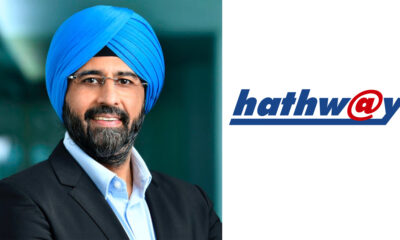
Hathway Cable appoints Gurjeev Singh Kapoor as CEO
Leadership change comes as cable TV faces shrinking subscriber base and modest earnings pressure
MUMBAI: Hathway Cable and Datacom has tapped industry veteran Gurjeev Singh Kapoor as chief executive officer, marking a leadership pivot at a time when India’s cable television business is under mounting strain.
Kapoor will take over from Tavinderjit Singh Panesar, who is set to retire in August after a long innings with the company. Panesar, chief executive since 2023, has held multiple leadership roles at Hathway, including his latest stint beginning in 2022.
Kapoor brings more than three decades of experience in media and entertainment. He most recently led distribution at The Walt Disney Company’s Star India business, now part of JioStar. His career spans television distribution and affiliate partnerships, with stints at Sony Pictures Networks India, Discovery Communications and Zee Entertainment.
Panesar, with over three decades in the industry, has worked across strategic planning, distribution and business development in media, broadcasting and manufacturing. His past associations include ESPN Star Sports, Star India, Apollo Tyres and JK Industries.
The transition lands as the cable sector grapples with structural disruption. Traditional operators are losing ground to streaming platforms, while telecom and broadband players tighten the squeeze with bundled offerings.
An EY report estimates India’s pay-TV base could shrink by a further 30 to 40 million households by 2030, taking the total down to 71 to 81 million. The slide follows a loss of nearly 40 million homes between 2018 and 2024, a contraction that has already wiped out more than 37,000 jobs in the local cable operator ecosystem.
Hathway’s numbers reflect the strain. The company reported a consolidated net profit of Rs 93 crore for FY25, down from Rs 99 crore a year earlier. Revenue inched up to Rs 2,040 crore from Rs 1,981 crore. As of December 2025, it had about 4.7 million cable TV subscribers and roughly 1.02 million broadband users.
Kapoor steps in with a familiar brief but a shrinking playbook. In a market where viewers are cutting cords faster than companies can reinvent them, the new chief executive inherits a business fighting to stay plugged in.