Cable TV
Guest Column: The way forward for DPOs, broadcasters in the new TRAI tariff regime


During the early 2000s, cable television began to spread rapidly across India and the cable distribution business rapidly shifted from the early muddled phase towards a more corporate structure which put emphasis on the rationalisation of business practices, billing system transparency and technical know-how.
The number of cable television subscribers in India grew from 4 lakh in the early nineties to more than 91 million by the end of 2009, the number of satellite television channels grew from a handful in 1992 to around 550 channels in 2010 and there was a significant increase in the number of distribution platform operators. However, the landscape of the cable industry completely transformed when the ordinance to digitise analogue cable systems was passed. The ordinance mandated the digitalisation and it got completed over a period of 6 years from 2011 to 2017 in four phases. Phase I covered the four metro cities of Delhi, Kolkata, Mumbai and Chennai, followed by 38 cities in phase II, all remaining urban areas and rest of India were covered in phase III and phase IV.
The benefits of digitalisation for consumers as compared to analogue are multi-fold including refined quality of transmission, better sound clarity, and the choice to pay for select channels. Post digitalisation, we have witnessed significant consolidation/merger/closure of DPOs in the market with the number of distribution platforms reduced to 1200 from around 6000.

The introduction of the New Tariff Order from 1 Feb 2019 focuses on “Consumer Choices” and will completely change the manner of channel selection, pricing and reach which is likely to disrupt existing revenue models of both broadcasters and DPOs.
New regime and its impact
Prior to the implementation of the new tariff order, the DPOs and the broadcasters were mostly operating on a fixed fee model. However, the new regime is likely to have a significant impact on the channel reach, channel share, ratings of non-driver channels and the overall revenue. The key to address these challenges for securing the correct revenue share amongst other things would entail consumer education, constant monitoring of consumer preferences and realignment of the bouquet packaging strategies taking into account consumer preferences.
Under the new regime, consumers will have the option of paying only for channels they want to watch and can drop other channels from their list and hence, the subscriber base will now solely depend on the communication between the DPOs and the end consumer, and in the event of any communication gap, the last mile consumer will not subscribe to the channels and these may result in significant erosion of subscriber base impacting the revenue of DPOs and the broadcasters.
Also, broadcasters and DPOs will have to upgrade or completely revamp their internal credit risk management and operating systems used for billing, settlements and disputes to capture complex and multiple combinations of channels that a consumer would choose from.
Under the MRP regime, the revenues of MSO & broadcasters will be solely dependent on the subscriber numbers reported by LCO to MSO and IPTV, DTH and MSO to broadcasters. As subscriber reporting requirements have changed from reporting opening & closing of the month to opening & closing for all the weeks of the month, it requires significant system and process upgrades at DPOs’ end. Till such time, revenues of MSOs and Broadcasters remain in jeopardy. It would be imperative to closely monitor the situation from March 2019 onwards when DPOs are expected to submit their first subscriber report.
Way forward
The best solution for broadcasters and the DPOs to earn their fair share of revenues would be to continuously monitor the ground, track channel reach & availability and adapt to changing consumer preferences on a real-time basis. Such requirements can be effectively managed by mapping every DPOs headend catering to each and every last mile consumer, getting complete ground information on packages and channels being offered to consumers through field surveys and regular transport stream (TS) recording cum analysis at consumer points which will help to determine the placement of the channels and their encryption status !
*DPOs include IPTV, DTH, MSO and LCOs.
(The author is managing director in Risk Assurance Practice of PwC, India. The views expressed here are his own and Indiantelevision.com may not subscribe to them)






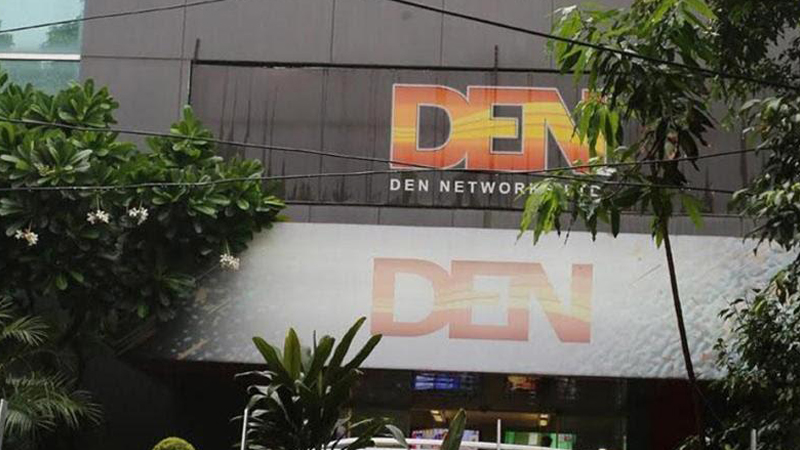
MUMBAI: When margins wobble, liquidity talks and in Q3 FY25-26, cash did most of the talking. Den Networks Limited closed the December quarter with consolidated revenue of Rs.251 crore, marginally higher than the previous quarter but down 4 per cent year-on-year, even as profitability stayed resilient on the back of strong cash reserves and disciplined cost control.
Subscription income softened to Rs.98 crore, slipping 3 per cent sequentially and 14 per cent from last year, while placement and marketing income offered some cheer, rising 15 per cent quarter-on-quarter to Rs.148 crore. Total costs climbed faster than revenue, up 7 per cent QoQ to Rs.238 crore, driven largely by higher content costs and operating expenses. As a result, EBITDA dropped sharply to Rs.13 crore from Rs.19 crore in Q2 and Rs.28 crore a year ago, pulling margins down to 5 per cent.
Yet, the bottom line refused to blink. Profit after tax stood at Rs.40 crore, up 15 per cent sequentially and only marginally lower than last year’s Rs.42 crore. A healthy Rs.57 crore in other income helped cushion operating pressure, keeping profit before tax at Rs.48 crore, broadly stable quarter-on-quarter despite the tougher cost environment.
The real headline-grabber, however, sits on the balance sheet. The company remains debt-free, with cash and cash equivalents swelling to Rs.3,279 crore as of December 31, 2025. Net worth rose to Rs.3,748 crore, while online collections accounted for 97 per cent of total receipts, underscoring strong cash discipline across operations, including subsidiaries.
In short, while Q3 showed signs of operating strain, the financial backbone remains solid. With zero gross debt, steady profits and a formidable cash war chest, the company enters the next quarter with flexibility firmly on its side proving that in uncertain markets, balance sheet strength can be the best growth strategy.






