News Broadcasting
GUEST COLUMN: Is The Current News Dumbing Us Down?

“Sonu Nigam Quits Twitter!!”flashed on my TV screen today morning. We obviously thought this was worthy of coverage at a national level, because the ‘breaking news’ kept playing in loop for a considerable period of time.
When CNN covered the Gulf war in the early 90s, it was to be the coming of age of News television. As explosion after explosion played out on the screen to the background score of intermittent gun-fire, News was suddenly more interesting than daily soaps and movies. This was information, played out in real time, offered without filter or opinion. The promise of a new age of journalism was immense, and Indian news channels mushrooming over the next decade carried this promise with them.
Cut to today, when the same channels are falling over each other purely with an objective to grab eyeballs. Celeb gossip has replaced substance, leaving crucial news stories and events to fade away, thus resulting in what is called the‘dumbing down’ of us, the audience. Issues that have no worth culturally or socially are being brought to the forefront and as breaking news.Today, when a celeb singer was quitting a social media platform as breaking news, a major bus accident in Uttarkashi was relegated to the background. In layman terms, breaking news refers to events that are unexpected and impromptu.

Clearly, news topics such as politics or calamities are a lot harder to report on in an interesting way. While allnews channels pursue stories of lesser significance, some may even choose to embrace it as their lead story. After all, in order to hold more viewership than that of the competitions’, it obviously must be something that entertains and excites.As a result, we are forced to air content that is appealing to masses because we gauge both news and non-news by the same yardstick.
Television is primarily consumed for entertainment and anything that’s entertainment will get the numbers, anything that’s not will simply miss out on the ratings. As a result, globally in the current scenario, most of the news stories cater only to human interest.
Ideally, there should be six factors thatmake a story newsworthy-

How is the content of a news channel judged?
Arbitrating the content of a news channel is a subjective call. It is not a mechanical process, there has to be human intervention to gauge the quality of what is being aired, which would be the 5 factors covered above along with On-Air presentation.
The other even more critical factor – Distribution.

News ratings are direct impact of distribution and affinity from a panel, relevant to news itself, while taking distribution factors into consideration.What news is witnessing today is more the consequence of the Medium’s Measurement Methodology, than that of Distribution’s Multi-LCN phenomena.
The import lies in being able to measure news qualitatively on-air, and cannot be limited to extrapolation of minute by minute viewing data.Furthermore, there are content affinity (On-Air presentation) factors that impact news delivery today- starting from News Pick, Graphic Display, Screen Packaging, Treatment to LIVE, Anchor Presentation, Expert Panel Members and so on.
Coming to distribution, there are critical factors like Pack Placement by MSOs leading to Channel Non-availability in the Universe, Multi LCNs, Landing Channels, EPG Ranking, Channel Neighbourhood, etc. It is therefore important to factor the Universe delivery and presentation dynamics, in the viewership measurement methodology, as the Sample itself derives itself from the Universe. In the Universe lie 6000+ Towns, 6 Lac+ Villages, 1200+ licensed /otherwise channels, 60,000+ LMOs and some 5000 large and independent Distribution Providers.

It is time the industry understands the grave impact the delivery chain has on Viewership Measurement. In my view, On-Air factors (qualitative) married with Off-Air factors (distribution) would create abalanced News Viewership Index, thus making way for news that is relevant, fair and informative.
 Pankaj Krishna is the founder & CEO of Chrome Data Analytics & Media Pvt. Ltd. Views expressed are personal, and indiantelevision.com need not necessarily subscribe to them. Pankaj Krishna is the founder & CEO of Chrome Data Analytics & Media Pvt. Ltd. Views expressed are personal, and indiantelevision.com need not necessarily subscribe to them. |







News Broadcasting
CNN-News18 to host Fury in the Gulf conclave on West Asia crisis
Three-hour summit to unpack geopolitical fallout and impact on India
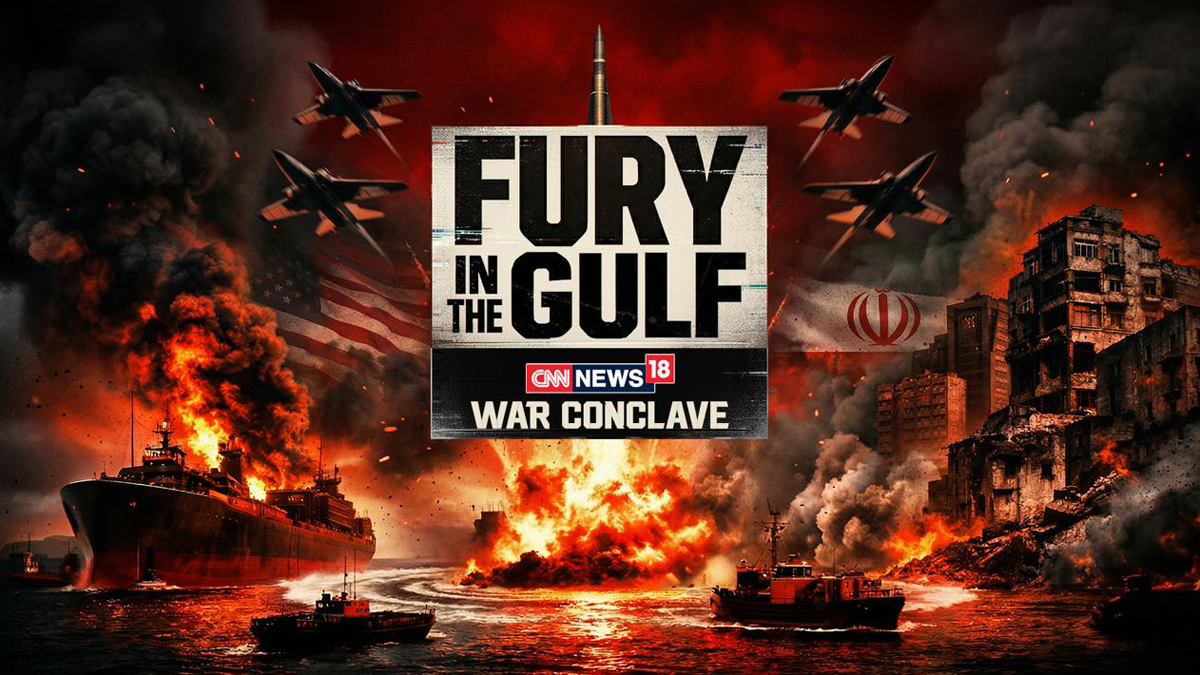
MUMBAI: CNN-News18 is set to host a special three-hour broadcast, Fury in the Gulf – War Conclave, on April 7, aiming to decode the escalating West Asia crisis and its far-reaching implications for India.
Scheduled from 4:00 PM to 7:00 PM, the conclave comes at a time when tensions between Iran and the United States are reshaping global geopolitics and triggering economic uncertainty. With India’s deep energy ties, trade links and large diaspora in the Gulf, the developments carry significant domestic relevance.
Built around the theme ‘Conflict, Consequences, and The Future,’ the programme will feature six curated sessions combining one-on-one interviews and panel discussions. The focus is to cut through the clutter and offer viewers a clearer understanding of the fast-evolving situation.
Key sessions include ‘Diplomacy in Times of War’ featuring Shashi Tharoor, and ‘World After the Iran Conflict’ with voices such as Ram Madhav, Reuven Azar, representatives from the European Union and the Iranian Deputy Envoy. Another session titled ‘Another Dunkirk?’ will bring together K. J. S. Dhillon and Jitin Prasada among others.
CNN-News18 editorial affairs director Rahul Shivshankar said, “In times of war, clarity becomes the most powerful tool. Fury in the Gulf – War Conclave brings together credible voices to address the questions and confusion that arise amid an overwhelming influx of information.”
He added that the initiative is aimed at delivering “facts, perspective, and insight” at a time when misinformation can easily cloud public understanding.
Echoing the sentiment, CNN-News18 CEO– English and business news Smriti Mehra said the conflict marks a defining global moment, with consequences that extend well beyond the region. She noted that the conclave seeks to present the crisis with “depth, nuance and responsibility” so audiences can better grasp its real-world impact.
As geopolitical tensions continue to dominate headlines, the conclave positions itself as an attempt to bring order to the noise, offering viewers a structured, insight-led look at a complex and rapidly shifting global situation.






