News Headline
Guest column: Is FTA ready for format shows?

MUMBAI: FTA Channels in the prequel era, before they left the space, had for the first time opened up a world of eyeballs and revenue that was being under-served and built successful revenues and business models. Since content was free and was already monetized and exposed on the pay channels catering to urban eyeballs for all the main players. However, while the business was lucrative and it added hundreds of crores worth in revenue to all the players in the FTA platform. Even the weakest player pulled in almost 100crs worth of advertising revenue with a relatively low cost of operation to air/run these channels. But the revenues weren’t negligible. In fact, a few channels almost matched big urban pay Hindi movie channel revenues. That was the kind of weight that FTA channels were punching with.
Even at that time, over 170+ clients were buying these eyeballs & markets. These were mainly led by the FMCGs. The GRP pie was 500+ amongst the top six players in GEC FTA space and the trading levels were very low, as the mystical CPRP was designed for the urban & pay channel trading. A few players of the market got smart and made it U+R base, purely for negotiations and better rates. But no one was willing to unlock or set a benchmark for the rural group as GRPs on Rural base were available in 100s and more. So, the FTA pricing then became a Sell that had very little buy in from both sides of the table. But still, the revenue pie was over Rs. 1200 crores two to three years ago.
Today, all players are back. The GRP pie is again back to its glory of 500 + and the clientele is also back to in excess of 160+ advertisers. This time we have new categories of clients that include education, gaming, etc but FMCG still leads the pack. But as most old clients have matured in the urban market, they are looking for newer markets to grow in. The brightest minds speaking and predicting about the recovery of the economic growth are pointing towards “Rural first”. All this is giving the FTA channels a massive advantage as these markets had to depend on print/outdoor/radio and cinema and got very little support for TV. That has now changed. The revenue pie too has recovered the fastest for FTA and has grown despite the challenges that the other categories of channels are facing in terms of ad bucks.

Learnings from then and now: Will the Twain meet?
The trading levels are designed for urban pay channels to take lion’s share of the revenue pie. Investments for pay channels are of course significantly more or rather better read as that investment in FTA Hindi GEC is significantly low. Most FTA channels have a larger interest as they have pay and urban centric channels as a group. So, it’s a catch-22 on how to work the true value of the seemingly presented poorer family member. If the business plan is to be looked with the lens of ‘Since content is free, all the value generated is profit’ then this space will languish instead of flourishing.
Is FTA ready for format shows? Is FTA ready for original shows with U+R or rural taste in programming? Are education and sports (non-cricket) ready to build successful revenue models on this platform? Can made for FTA movies be produced at budgets that can be supported by these channels? In spite of having the world’s leading badminton players, we struggle to build a revenue model around it. Wresting too has arguably been a great opportunity missed.
All in all, can FTA be priced aptly and fairly for the audiences it delivers and the markets that it reaches? Can FCT that was free commercial time but was always paid for be applicable to FTA as it’s called free to air? Interesting times await…
(The author is COO, Enterr10 Television. Indiantelevision.com may not subscribe to his views.)






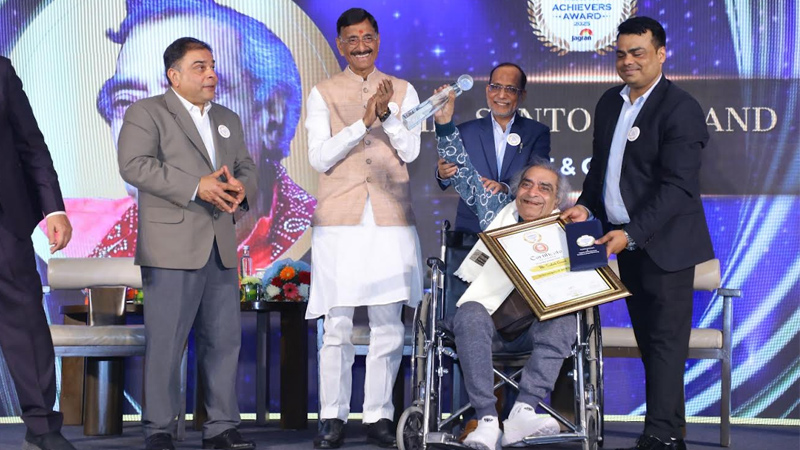
NEW DELHI: Hamdard Laboratories gathered a cross-section of India’s achievers in New Delhi on Friday, handing out the Hakeem Abdul Hameed Excellence Awards to figures who have left their mark across healthcare, education, sport, public service and the arts.
The ceremony, attended by minister of state for defence Sanjay Seth and senior officials from the ministry of Ayush, celebrated individuals whose work blends professional success with a sense of public purpose. It was as much a roll call of achievement as it was a reminder that influence is not measured only in profits or podiums, but in people reached and lives improved.
Among the headline awardees was Alakh Pandey, founder and chief executive of PhysicsWallah, recognised for turning affordable digital learning into a mass movement. On the sporting front, Arjuna Awardee and kabaddi player Sakshi Puniya was honoured for her contribution to the game and for pushing women’s participation onto bigger stages.
The cultural spotlight fell on veteran lyricist and poet Santosh Anand, whose songs have echoed across generations of Hindi cinema. At 97, Anand accepted the honour with characteristic humility, reflecting on a life shaped by perseverance and hope.
Healthcare honours spanned both modern and traditional systems. Manoj N. Nesari was recognised for strengthening Ayurveda’s place in national and global health frameworks. Padma shri Mohammed Abdul Waheed was honoured for his research-backed work in Unani medicine, while padma shri Mohsin Wali received recognition for his long-standing contribution to patient-centred care.
Education and social development also featured prominently. Padma shri Zahir Ishaq Kazi was honoured for decades of work in education, while former Meghalaya superintendent of Police T. C. Chacko was recognised for public service. Goonj founder Anshu Gupta received an award for his dignity-centred rural development initiatives, and the Hunar Shakti Foundation was honoured for empowering women and young girls through skill development.
The Lifetime Achievement Award went to former IAS officer Shailaja Chandra for her long career in public healthcare and governance, particularly in the traditional systems under Ayush.
Speaking at the event, Hamdard chairman Abdul Majeed said the awards were a tribute to those who combine excellence with empathy. “These awardees reflect Hakeem Sahib’s belief that healthcare, education and public service must ultimately serve humanity,” he said.
Minister Seth struck a forward-looking note, saying India’s young population gives the country a unique opportunity to become a global destination for learning, health and wellness by 2047.
The ceremony also featured the trailer launch of Unani Ki Kahaani, an upcoming documentary starring actor Jim Sarbh, set to premiere on Discovery on 11 February.
Instituted in memory of Unani scholar and educationist Hakeem Abdul Hameed, the awards have grown into a national platform that celebrates those building a more inclusive and resilient India. For one evening at least, the spotlight was not just on success, but on service with substance.






