News Headline
GUEST COLUMN: Advertising and marketing in 2025 learned to do less and mean more

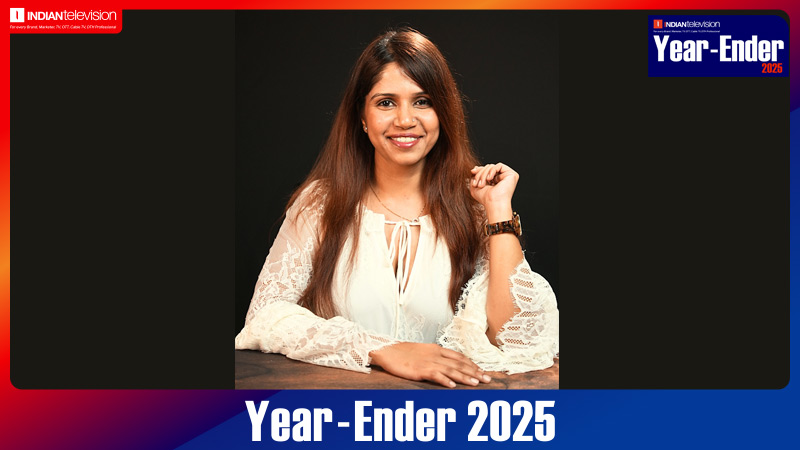
Masuma Siddique, founder and chief strategist of InkCraft Communications, looks back at 2025 as a reset year for advertising and marketing, one shaped by intention, restraint and a renewed respect for audience attention.
GOA: If there was one defining mood across advertising and marketing in 2025, it was intention.
This was not a year of big reinventions or dramatic platform shifts. Instead, it was a year where brands, agencies, and marketers paused often out of necessity and started asking harder questions about what truly works, what merely fills space, and what audiences quietly ignore.
As the year wraps up, the industry narrative is clear: the era of “always-on” has given way to “worth-showing-up.”
Advertising learned to pause in 2025
Advertising in 2025 slowed down, and that wasn’t a weakness, it was a correction.
Industry spend trackers and campaign audits showed that while overall advertising investments remained stable, the number of active campaigns per brand declined. On average, brands ran 20–25 per cent fewer campaigns, while allocating more thinking time and resources per idea.
Why the pause? Because data pointed to diminishing returns. Multiple creative effectiveness studies indicated that repetitive exposure led to a 30–40 per cent drop in attention after early impressions, pushing advertisers to rethink frequency-heavy strategies.
Instead of flooding feeds, brands began focusing on sharper narratives, better timing, and cultural relevance. Advertising stopped being about occupying space and started becoming about earning attention.
Marketing faced the performance plateau
For marketing teams, 2025 was the year performance metrics told an uncomfortable story.
Digital benchmarks showed rising acquisition costs often 15–25 per cent higher year-on-year with marginal improvements in conversion rates. The conclusion was unavoidable: performance marketing alone could not sustain growth.
This triggered a renewed focus on brand building. Marketing mix models published throughout the year revealed that campaigns with strong brand storytelling delivered 20–30 per cent higher long-term ROI, especially when supported by consistent messaging across platforms.
Marketing in 2025 became less about chasing the next click and more about creating familiarity, trust, and recall.
Digital storytelling got more human
One of the most noticeable shifts this year was how digital storytelling evolved.
High-production content still existed, but audience behaviour made one thing clear: polish did not equal engagement. Short-form, narrative-led content that felt real and specific saw up to 2x higher completion rates than scripted brand films.
Audiences leaned toward stories they could recognise themselves in content that felt conversational rather than performative. Social listening reports also highlighted that brands maintaining a consistent tone and worldview experienced 25–30 per cent higher positive sentiment over time. In 2025, digital storytelling wasn’t about impressing. It was about connecting.
The quiet fade of template-led marketing
Festive campaigns, trend-based reels, and familiar formats still dominated timelines but their impact weakened. Independent recall studies showed that fewer than one in three consumers could correctly associate seasonal campaigns with the right brand, unless the idea itself was distinctive. Visual similarity and message repetition blurred brand identities rather than strengthening them.
Brands that stood out didn’t necessarily shout louder. They chose clarity over clutter and consistency over constant reinvention. Safe marketing didn’t disappear but it stopped delivering results.
What the industry took away from 2025
Several themes emerged clearly this year.
First, attention became a privilege, not a given. Audiences rewarded relevance and punished redundancy.
Second, integration became the baseline. Advertising, content, digital, and media had to speak in one voice to create impact.
Third, creativity faced accountability. Ideas were expected to work, not just win appreciation.
The industry matured.
What 2026 signals
As the industry steps into 2026, the direction feels focused rather than frantic. Forward-looking outlooks suggest brands will invest more selectively, backing fewer ideas with greater conviction. Advertising will prioritise context and clarity. Marketing will demand stronger alignment between data and storytelling.
Digital communication will move further toward dialogue brands listening as much as they speak. Consistency, not constant novelty, will define trust. The next year will favour marketers who understand that attention is not bought in bulk, it’s earned through intent.
2025 quietly reset advertising and marketing expectations. It reminded the industry that visibility without meaning is fleeting, and storytelling without relevance is forgettable. As 2026 approaches, the opportunity lies in sharper thinking, clearer narratives, and communication that respects both the audience and the moment. In a world full of messages, the ones that last will be the ones that feel considered.
Note: The views expressed in this article are solely the author’s and do not necessarily reflect our own.