Event Coverage
“Grow sports first, before thinking of monetizing from it”

MUMBAI: Looking at its entertainment quotient, cricket is the sport that comes closest to Hindi movies. However, not just cricket but the entire gamut of sports and how to better monetise this ecosystem formed the subject of a panel discussion on day two of FICCI FRAMES 2014, the 15th edition of the annual convention.
The panel was constituted by NBA India MD Yannick Colaco, Star India president sports Nitin Kukreja, Dempo Group chairman Srinivas Dempo and cricket presenter Gautam Bhimani.

“If I had Rs 10 lakh, I would put nearly Rs 9.3 lakh in cricket and the remaining amount in other sports,” said Bhimani, at his quirkiest best. He began by drawing attention to two things – the fight for visibility between cricket and other sports and how to take the million dollar baby i.e. cricket, to an even higher level.
Colaco expressed the view that before monetizing any sport, it had to be built from the ground up. “There are a lot of opportunities but we need to build and grow a sport before actually thinking of monetizing from it,” he said. Once the sport was popularized, money would follow in time.
Echoing similar thoughts, Dempo said, “Football in India is an approximately Rs 150 crore market. Even the I-League, which has around 14 teams, is only about Rs 10 crore in size and these are all operating expenses without any returns.”
According to recent statistics by TAM, the reach of a Barclays Premiere League is nearly 27 million as compared to that of the I-League at 6.5 million. “There is a lot of cash burn that takes place and football is currently running in the nation only because the people running it are passionate about the game, but this needs to change,” said Dempo.
Kukreja brought in the business angle and said, “We also need to look at numbers and return of investment (ROI), which is the most important proposition for a sports broadcaster. The existence of the price cap regulation is a hurdle and with foreign exchange soaring by 50 per cent in recent history, there is only so much that a broadcaster can do.”
Not only is money not flowing to broadcasters and federations as it is supposed to but complete monetization is not possible due to the existence of the public broadcaster. “Earlier, the idea was to reach homes which were not lucky enough to have cable and satellite and only had terrestrial TV sets, but things have changed now, and yet, we have to continue sharing rights with the public broadcaster, which deters us from monetizing to the best of our ability,” said Kukreja.
While there are opportunities to invest in other sports, there is a need for proactive participation from sporting federations as well.
According to Colaco, “A regulatory framework needs to be put in place to make things work more smoothly. India is still developing as a sports market and there are limitless possibilities.” Citing the example of NBA, he said, “The kind of coverage and following that the sport there is incredible. There is a great following and coverage across school, college, and finally, the national teams.” Reason being the sport is promoted at the grassroots level and people are encouraged to inculcate the spirit of sportsmanship from a very young age.
“I really can’t understand the rat race to start various leagues in India, to the extent there is even a Kabbadi league that is on the cards. I have no problems with leagues, it’s only great for the game, but the problem is to sustain the noise and hype created for such events with ample amount of content to follow as well. That is something that the federations need to ponder upon,” said Colaco.
Adding to this, Kukrjea said, “IPL works because it’s an experience, it brings families together, it is packaged very slickly and this is how various leagues work around the globe. The point that Colaco made rightly is the number of days that a sport is on – there is 300 days of cricket, but there are only 70 days of hockey and maybe 100-odd days of badminton. So the real question is do we have the required content that can keep fans engaged like we have in cricket?”
Thanks to the kind of ad revenues that cricket generates, it ends up receiving a lot of flak. For instance, a mega cricket event like the World Cup earns anywhere close to Rs 8-9 lakh for a 10 second spot as compared to a big-ticket NBA event which sells for a meager Rs 2,500 for the same 10 second spot.
Elaborating on this, Kukreja said, “Sports is ideally a distribution revenue-driven market but cricket, for reasons best known to the stakeholders, is ad-driven. And a marquee event like the World Cup can’t be compared to any other event in India, where, if there are 10 channels to choose from, numbers one to nine will have live cricket and number ten will have highlights of some live match.”
Speaking of the lack of excitement around the U-17 football world cup coming to India in 2017, Dempo said, “I really can’t believe that there is no buzz around such a big event and that the buzz will start only a year prior to the live action. The media needs to come together and ensure this gets proper coverage. I am sure it will work as a catalyst for the sport of football in the nation, but the national side really needs to pull up its socks, because I have seen Mexico and Brazil play and I fear we stand nowhere unless we really push ourselves against the wall.”
In a similar vein, Kukreja spoke of the premature death of Formula One in India. “The sport has a lot of potential and is the pinnacle for the sport of driving, but the entire buzz that was created around the Buddh International Circuit died down after just one race,” he said.
Colaco pointed out that there was ample infrastructure available for sports like basketball and football but the problem was lack of participation in these sports.
On the subject of how the popularity of a certain sport is sometimes higher than that of the other simply because of the buzz around it, Colaco said, “Basketball is a hugely popular sport in the US but pales in comparison to NFL in terms of viewership. However, the social media buzz created by basketball is twice that of NFL.”
With nearly 3,000 basketball matches every season, they see a huge turnout with ticket sales higher than 90 per cent. “The most important thing for the game of basketball is the experience and the way the game is played; this sport is very fast and is played in small quarters with loads of action, along with mid-session performances and celebrities often seen at the matches,” said Colaco.
Speaking on behalf of the broadcasters, Kukreja said, “We will continue doing our bit to help promote and get the right exposure for other sports apart from just cricket, but it’s also important that the different federations along with the government come together to help push and cultivate a sporting culture in the country.”
Bhimani reiterated Kukreja’s views by drawing a parallel with cinema. Just like there are independent film makers and art house directors vying for screens, sports other than cricket too deserve the right push and visibility in the market.





Event Coverage
Anime India announces Amazon MX Player as co-presenting partner for Anime India Kolkata 2026
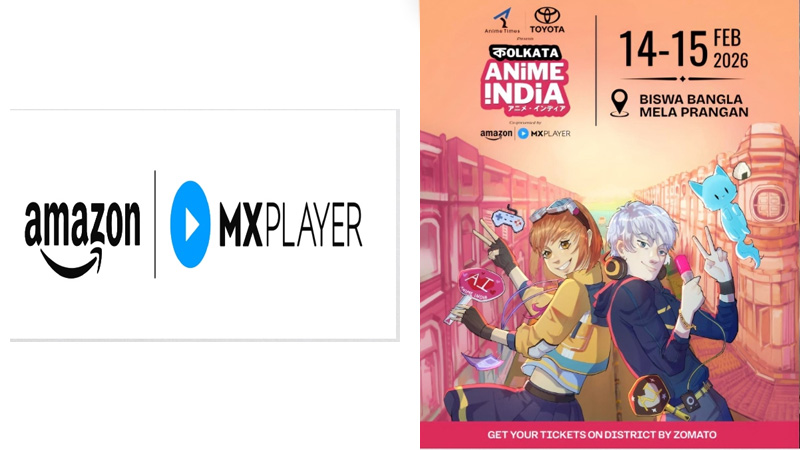
MUMBAI: Riding high on the success of its blockbuster Mumbai debut, Anime India is accelerating its nationwide expansion with the announcement of Amazon MX Player as the co-presenting partner for Anime India Kolkata. The partnership marks a significant step forward in the festival’s mission to deliver large-scale, accessible, and fan-first anime experiences across the country.
Scheduled for 14 and 15 February 2026 at the iconic Biswa Bangla Mela Prangan, Anime India Kolkata will launch the first regional chapter of what is set to be a year-long, multi-city tour. As the curtain-raiser for the 2026 circuit, the Kolkata edition aims to fuse the energy of global Japanese pop culture with India’s fast-growing community of anime, manga, and pop-culture fans.
A household name in digital entertainment, Amazon MX Player brings unmatched reach and cultural relevance to the Anime India platform. With its expanding focus on anime and youth-driven content, Amazon MX Player’s involvement as co-presenting partner reinforces Anime India’s vision of making anime culture more inclusive breaking barriers of language, geography, and accessibility to connect with fans nationwide.
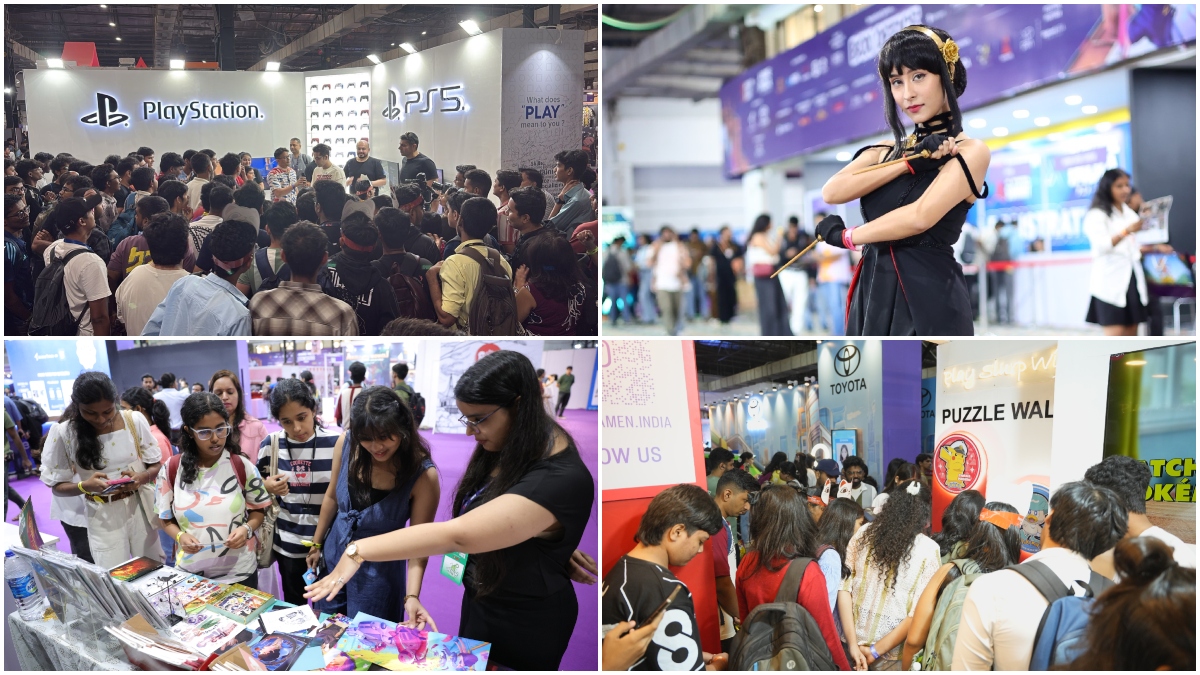
Anime India Kolkata 2026 will showcase cosplay competitions, interactive zones led by the Indian Gunpla Community, India-39 Vocaloid Community, The Japan Curry, and Adda-o-Otaku by The Otaku Guild. Fans can join tournaments across fighting games, Pokémon VGC, and more. Acclaimed Japanese director Susumu Mitsunaka (Haikyu!!) will attend as guest of honour, appearing in panels and live sessions. Positioned as an immersive celebration of fan culture and industry collaboration, the Kolkata edition marks the beginning of Anime India’s nationwide expansion.
Sharing their perspective on the partnership, Amazon MX Player director Aruna Daryanani expressed, “Anime in India has evolved from a niche interest into a mainstream cultural movement, driven by an increasingly engaged and passionate fanbase. At Amazon MX Player, our focus is on expanding access by bringing anime to audiences across the country for free and in multiple local languages. Our association with Anime India reflects our commitment to supporting the growth of anime in India and deepening connections with fans, while continuing to build Amazon MX Player as a trusted destination for free, high-quality entertainment.”
“Anime India Kolkata is a celebration of how anime has grown beyond entertainment into a powerful cultural and creative force. By bringing fans, creators, and industry leaders onto one shared platform, the festival is helping define the future of pop culture in India,” said Anime India co-founder and director Neha Mehta.
The debut edition of Anime India 2025 in Mumbai attracted over 29,000 fans, quickly cementing its status as a landmark celebration of anime and Japanese pop culture. Riding on this overwhelming response, the Kolkata chapter is projected to draw more than 40,000 visitors across two days, positioning it as one of the biggest anime conventions ever held in eastern India.
Anime India is focused on bringing together fans from across the country to create a truly pan-India celebration of anime, manga, cosplay, gaming, and Japanese culture. With plans to expand into four key metropolitan hubs in 2026—east (Kolkata), north (Delhi), west (Mumbai), and south (Hyderabad)—the festival seeks to deliver globally benchmarked experiences while supporting and uplifting creators, artists, and fan communities throughout India.






