DTH
Govt targets 20 million broadband subscribers by 2010

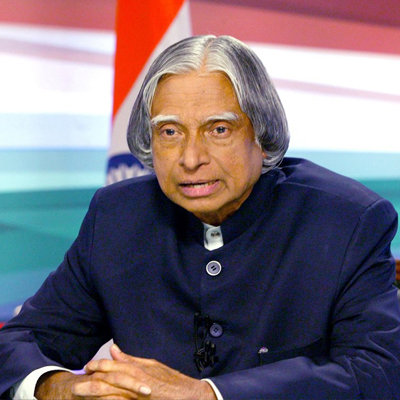
NEW DELHI: Even as President A P J Abdul Kalam declared that the year 2007 will be the ‘Year of Broadband’, there are plans to increase to more than two-fold the broadband and internet users in the country over the next three years.
In his address to the joint sitting of both Houses of Parliament on the opening day of the Budget session, Dr Kalam had said yesterday the government was committed to bridging the digital divide by providing broadband coverage throughout the country. ‘Our information technology sector continues to develop and remain globally competitive’.
According to the Broadband Policy 2004, there were approximately six million internet and three million broadband subscribers in 2005, and this figure is estimated to rise to 18 million and nine million respectively this year. By the year 2010, India hopes to have 40 million internet and 20 million broadband subscribers.

Plans are on the anvil to provide broadband services in 400 cities and service providers have plans to reach 1000 cities by the end of 2007. These cities include the 63 cities identified under the National Urban Renewal Mission. The real challenge is to connect the remote villages unconnected so far due to various reasons. One of the viable options for providing connectivity is through wireless mode.
According to the Sub-Group on ‘Going Digital’ set up by the Planning Commission and headed by Rajeeva Ratna Shah, Member Secretary in the Planning Commission and a former Prasar Bharati CEO, introduction of broadband connectivity opens up new market for providing value added services which can be derived from the digitization.
The Sub-Group noted that penetration of TV is much higher than PC in the industrialized countries, and provides interactive services including internet on TV and TV on internet. These services can potentially benefit especially the ‘information poor’ and thus reduce the information gap in the society, which is an important implication of the convergence.
Internet on TV can be provided using Out Of Band (OOB) and In Band (IB) structures. In the IB structure the internet is transmitted alongside with the broadcasting signal. Here the characteristics of the broadcasting infrastructures will have a decisive role on the available services.
It noted that TV on internet which is also known as WEB TV/Cyber TV will be the future of broadcasting. A precondition for the WEB TV to be able to replace digital TV is the transmission capacity at the end users site increases to such level that it can be possible to provide digital TV services. WEB TV needs to be co-evolved with digital TV and act as complementary for delivery of services.
The Sub-group has accordingly drawn up a roadmap of digitalization through a a phased approach should be taken for going digital covering all the seven mega cities by 2011 in the first phase and the rest of the country by 2013.
The Sub-Group comprising seventeen members was set up by the Committee on Information, Communication and Entertainment (ICE) that has been examining the larger issue of convergence and advent of modern technology. Members include the secretaries in Information and Broadcasting and Department of Telecommunications, the Prasar Bharati CEO, the Presidents of CETMA, MAIT, NASSCOM, and ISP Association of India, Co-chairman of the FICCI Entertainment Committee, Chairman of the CII Entertainment Committee, Chairman of the Film & Television Producers Guild of India, President of the Cable TV Operators Association, Mr Rajiv Mehrotra who is the Managing Trustee of the Public Service Broadcasting Trust, Mr Virat Bhatia from AT&T Communications Services, Zee Telefilms President Abhijit Saxena, Mr Sameer Rao who is Vice-President in charge of Strategy, Planning & Regulatory in STAR India, and a representative of the Prime Minister’s Office.
It was also agreed that a group chaired by Mr B S Lalli, the CEO of Prasar Bharati who is also Chairman of the Indian Broadcasting Foundation, and some private broadcasters like Star, Zee, Sony, Eenadu etc. and their major MSOs will examine an eleven-stage process and firm up their sequencing and put the entire process on a “digital upgrade timeline”.
The Sub-group has accepted a recommendation for an eleven-stage process for laying down the migration path for migration from analogue transmission to digital domain:
i. Testing, publication and adoption of technical standard for digital terrestrial transmission.
ii. Publication and adoption of national standards for digital cable television.
iii. Prasar Bharati’s roll out of transmission conversion from analogue terrestrial to digital terrestrial both for radio (AIR) and Doordarshan (DD).
iv. Introduction of addressability and conditional access system in cable and satellite TV environment.
v. Road map and commencement of indigenous production of STBs containing features such as (a) digital analogue convertors for delivery of digital signal at subscribers’ end and (b) conditional access and addressability features.
vi. Publication and adoption of national digital television standards for manufacture of digital receivers.
vii. Commencement of indigenous production of digital receivers.
viii. Commencement of digital terrestrial broadcast in selected cities by Prasar Bharati staring with Delhi by 2010 and covering all areas by 2013 in four steps.
ix. Commencement of HDTV broadcast for Commonwealth Games 2010 by Prasar Bharati.
x. Commencements of digital signal delivery at subscribers end in Cable and Satellite (C & S) homes.
xi. Nationwide switch off of analogue broadcast both for terrestrial and C & S homes (2015).






DTH Operator
JC Flowers withdraws NCLT plea against Dish TV over EGM demand
Move eases pressure on DTH firm as long-running shareholder dispute cools
MUMBAI: In a breather for Dish TV India, JC Flowers Asset Reconstruction has withdrawn its petition before the National Company Law Tribunal seeking directions to convene an extraordinary general meeting.
The development was disclosed by Dish TV in a regulatory filing, confirming that the petitioner chose to withdraw the case during a hearing at the Mumbai bench of the tribunal. A detailed order from the bench is still awaited.
The petition, originally filed under Sections 98 to 100 of the Companies Act, 2013, sought to push for an extraordinary general meeting to address governance issues at the company. The case had its roots in a prolonged shareholder tussle dating back to 2021, when Yes Bank, then the largest shareholder, was at odds with the promoter group led by Subhash Chandra over board reconstitution.
JC Flowers had stepped into the picture as an assignee of Yes Bank’s stressed assets, effectively continuing the legal push initiated earlier. The withdrawal now signals a pause, if not a closure, to that chapter of dispute.
While the reasons behind the withdrawal have not been formally detailed, the move reduces immediate legal pressure on Dish TV, which has been navigating both operational and regulatory challenges in recent years.
For now, the focus shifts back to the company’s business fundamentals, even as the legal dust settles, at least temporarily, on one of its more closely watched shareholder battles.







