I&B Ministry
Govt seeks professional help for DD revival

NEW DELHI: Fazed by private sector television channels’ stridency in terms of revenues and viewership in an increasingly digital India, the government is seeking outside professional help in “transformation of Doordarshan.”
A tender has been issued by an organisation under the Ministry of Information and Broadcasting (MIB) to look for a consultant to revamp Doordarshan into a leading public broadcaster that becomes a highly successful medium of mass communication.
Amongst the objectives listed in the tender documents by the Broadcast Engineering Consultants India Ltd. (BECIL) a stated aim is to engage a consulting firm to support Doordarshan in achieving this “transformation goal by undertaking a comprehensive view on the projects and initiatives to be executed” by the Indian pubcaster.

Pointing out that in the last couple of decades after introduction of cable television and technological changes in a country that’s now openly flirting with digital consumption of video and audio on multiple platforms, the government admitted DD’s monopoly days are over and it is not the target media for a large swathe of Indian population. “Given the potential television has, not just commercially but also as a means for socio-economic transformation, it’s critical to revitalize Doordarshan and develop it into a powerful and commercially successful organization of mass communication,” BECIL said in a note enumerating the objectives for the project.
The consultant would have to undertake a comprehensive view on the projects and initiatives to be executed by Doordarshan, engage all stakeholders to arrive at trouble-spots and prepare a solution map for addressing those difficulties. The government is hoping that the consultant will identify in medium term goals for “quick wins” and further help Doordarshan develop a long-term strategic roadmap.
The interested bidders are expected to send in their queries by 2 November 2016 and get responses in a pre-bid meeting on 4 November. The technical bids will be opened on 15 November at 1530 hours. Dates for presentations by bidders and opening of financial bids will be intimated later by BECIL.
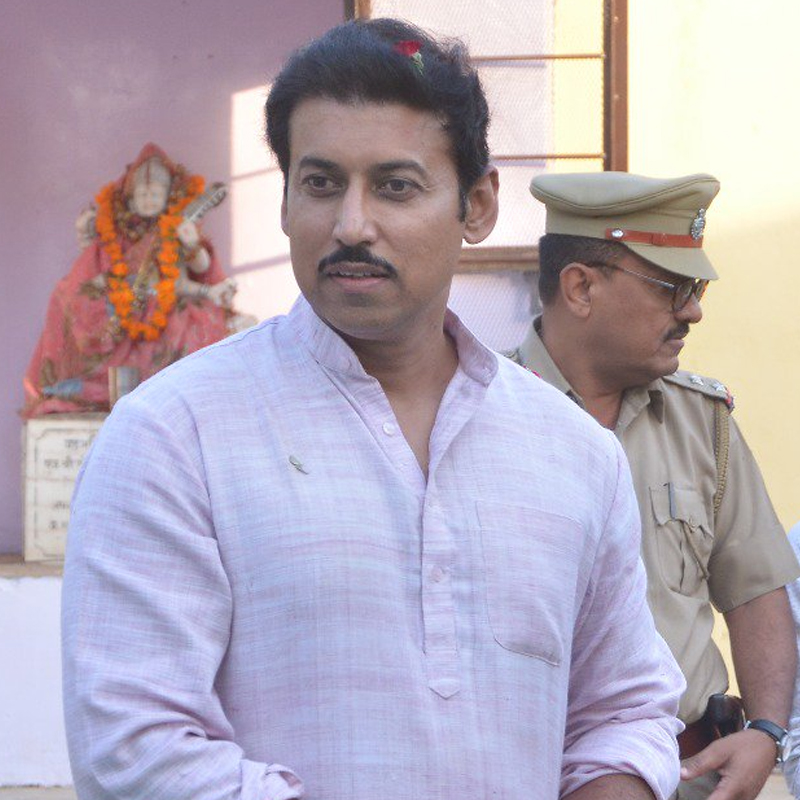
Interestingly, Minister of State for MIB Rajyavardhan Rathore few days back had admitted at a media conference that Prasar Bharati, DD’s parent, lacked adequate programming and marketing capabilities and was open to seeking help from private players.
Doordarshan is one of the largest broadcasting organizations in the world in terms of studios and infrastructure and claims to cover 90 per cent of the total Indian population — a claim that, however, doesn’t aptly reflect in audience measurement data. DD, which offers 23 TV channels in various Indian languages, provides television, radio, online and app-based mobile services throughout India and overseas.
ALSO READ:
Prasar Bharati lacks content & marketing; open to tie-ups: MIB Minister




I&B Ministry
Digital radio, D2M tech set to reshape broadcasting and public messaging
Govt pushes next-gen delivery while TRAI tightens grip on spam ecosystem
NEW DELHI: India’s broadcasting and telecom landscape is undergoing a quiet but significant upgrade, with digital radio and Direct-to-Mobile (D2M) technologies emerging as powerful tools for mass communication, while regulators step up efforts to tackle spam calls.
According to the Ministry of Information and Broadcasting, digital radio and D2M are poised to transform how content reaches audiences by making more efficient use of spectrum. In simple terms, multiple channels can now be delivered over a single frequency, opening the door to a wider range of free-to-air content.
D2M technology takes this a step further by enabling video, audio and data to be broadcast directly to mobile handsets without relying on SIM cards or mobile data. The result is a resilient and cost-effective data pipe that can deliver everything from entertainment and education to critical emergency alerts, even in low-connectivity scenarios.
At the same time, the Telecom Regulatory Authority of India is tightening its grip on unsolicited commercial communication, better known as spam calls. The regulator has deployed a distributed ledger technology platform to bring transparency and accountability into the system.
Through this blockchain-based setup, consumers can register their preferences on receiving promotional messages, while businesses and telemarketers must also sign up and operate within defined rules. The platform also includes a complaint mechanism that allows users to report spam, with complaints shared across telecom operators for coordinated action.
The government’s broader push is being supported by infrastructure upgrades under the Broadcasting Infrastructure and Network Development scheme. Implemented through Prasar Bharati, the initiative focuses on modernising networks such as Akashvani and Doordarshan, including digitisation and adoption of next-generation broadcast equipment.
In a written reply in the Lok Sabha, Ministry of Information and Broadcasting minister of state for information and broadcasting L. Murugan said these steps are part of a larger effort to promote emerging technologies and strengthen the country’s broadcasting backbone. The response came to a query raised by member of Parliament Rao Rajendra Singh.
Together, these developments point to a dual-track strategy: expanding access to reliable, low-cost content while cleaning up the communication ecosystem. As digital pipes get smarter and spam filters sharper, India’s airwaves may soon feel a lot less noisy and far more useful.






