Applications
Govt may mandate local sourcing of a percentage of STBs: I&B secretary

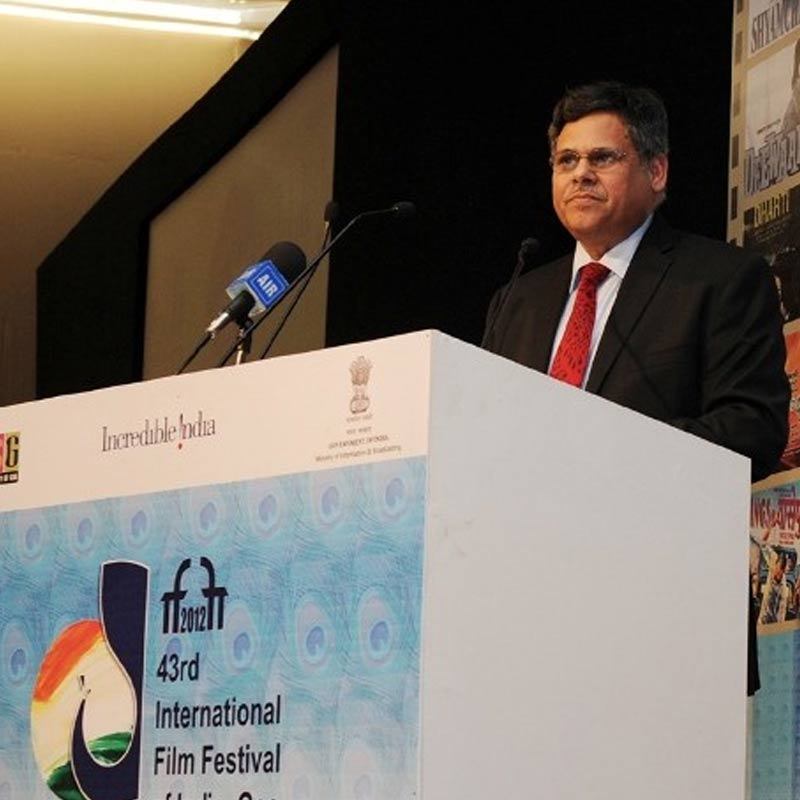
NEW DELHI: The government could consider making it mandatory for procurement of certain percentage of locally-made set-top boxes (STBs) if domestic manufacturers priced them competitively.
Information and Broadcasting (I&B) secretary Uday Kumar Varma said most of the STBs at present are being imported and the share of the domestic manufacturers is negligible, mainly on account of cost disadvantage.
He said with the government embarking upon a massive drive to switch over to digital delivery of television channels to households, there is a huge demand for STBs.

If domestic manufacturers are able to price their products competitively, I&B Ministry may even mandate a certain percentage of STBs to be procured domestically, he added.
Varma also said the I&B Ministry has written to the finance ministry over the issue of locally manufactured STBs attracting higher rate of value-added tax (VAT), while imported STBs are subjected to a lower rate of service tax as it is considered a service offered by cable operators.
The I&B Ministry has asked the finance ministry to remove the tax anomaly and create a level playing field for domestic STB manufacturers.
He said the government is confident of meeting the 31 March deadline for digitisation in 38 cities (with one million plus population) across the country in the second phase of digitisation.
Varma said, �It is estimated that 16 million STBs would be required to digitise the 38 cities, excluding the four metros. But a study conducted by the ministry has revealed that already six million TV sets in these cities are already digitised."
Cities like Ludhiana and Amritsar are already 90 per cent digital, according to Varma. The level of digitisation is high even in Bangalore and Hyderabad.
The four metros – Mumbai, Delhi, Kolkata and Chennai — were part of the first phase of digitisation effective 1 November.
Varma expressed satisfaction over the implementation of the first phase of digitisation. He said the exercise was "more or less completely successful" in Mumbai and Delhi. He added that even Kolkata, which initially had reservations about digital conversion, has come on board with a conversion rate nearing 90 per cent.
It is held up in Chennai because of a petition by cable operators in the Madras High Court challenging the digitisation notification itself.
Varma said the I&B Ministry has been reviewing the progress on a continuous basis and nodal officers have been appointed in every state to oversee the conversion process.
He said the first phase of digitisation was a learning and the government was working to refine the process in the second phase. The feedback from the newly-converted digital homes has been mostly favourable and added that the move is bringing in a more transparent cable TV regime in the country.







Applications
With 57 per cent single new users, Ashley Madison rebrands as discreet dating platform
Platform says majority of new members now identify as single

INDIA: Ashley Madison is shedding the “married-dating” label that defined it for two decades, repositioning itself as a platform for discreet dating in what it calls the post-social media age.
The rebrand, unveiled in India on 27 February, 2026, marks a structural shift in business model and identity. Once synonymous with married dating, the company now describes itself as the “premier destination for discreet dating” under a new tagline: Where Desire Meets Discretion.
The pivot is data-driven. Internal figures show that 57 per cent of global sign-ups between 1 January and 31 December, 2025 identified as single: a notable departure from the platform’s married core. The company argues that its community has already evolved beyond its original positioning.
“In an age where our lives have been constantly put on public display, privacy has become the new luxury,” said Ashley Madison chief strategy officer Paul Keable. He framed the platform’s offering as “ethical discretion” for singles, separated, divorced and non-monogamous users seeking private connections.
The shift also taps into wider digital fatigue. A global survey conducted by YouGov for Ashley Madison, covering 13,071 adults across Australia, Brazil, Canada, Germany, India, Italy, Mexico, Spain, Switzerland, the UK and the US, found mounting discomfort with hyper-public online lives.
Among dating app users, 30 per cent cited constant swiping and messaging as a source of fatigue, while 24 per cent pointed to pressure to curate public-facing profiles and early personal disclosure. Some 27 per cent said fears of screenshots or information being shared contributed to exhaustion; an equal share cited unwanted attention.
The retreat from oversharing appears broader. According to the survey, 46 per cent of adults actively try to keep most aspects of their life private online. Only 8 per cent feel comfortable sharing most aspects publicly, while 35 per cent say they are becoming more selective about what they disclose.
Ashley Madison is betting that this cultural recalibration towards controlled visibility can be monetised. By doubling down on privacy infrastructure and reframing itself around discretion rather than infidelity, the company is attempting to convert reputational baggage into a premium proposition.