News Broadcasting
Govt explores mechanism for rating TV programmes

NEW DELHI: The Indian government is exploring whether a mechanism could be set in place whereby television programmes too can be classified under different ratings as films give out advisory on viewing.
This move is being explored as part of a content regulatory framework that the government proposes to put up in place in deference to complaints received on indifferent and vulgar software being put out by TV channels and also with a view to bring in some sort of semblance in a chaotic industry where there are no laid down rules.
Though it’s early to say whether such a regime would lead to further liberalisation or not, the government, as part of an advisory sent out to various channels, has asked for feedback on the need to change the existing programming and advertising code also.

Next week, the information and broadcasting ministry is slated to hold a round of discussions with various stakeholders of the broadcast and cable industry, including non-governmental organisations and consumer bodies, on the issue of content regulation.
Amongst the topics for discussion that have been listed are norms of decency during coverage of events and incidents, to what level privacy of individuals should be maintained, whether programming and advertising codes need to be re-visited, whether TV programming likes serials too should be rated for viewing (U, UA or A).
In connection with ratings of TV programming, another topic for discussion is whether trailers for movies and music videos get censor certificates and ratings and should these be adhered to strictly or not.
A Delhi-based media critic, on being asked about the feasibility of rating TV programmes said, “If the film ratings are strictly enforced for TV, quite a few popular Hindi soaps are likely to end up getting ratings of UA (parental guidance needed for viewing) or A (strictly for adults). And, some programmes on English channels may permanently get an A certificate.”
Inconsistent policies and regulatory framework have hampered the Indian market’s potential development. According to a report prepared by the Hong Kong-based Media Partners Asia, “India’s broadband cable and satellite TV industry, a $2.7 billion revenue opportunity in 2004, is in a state of flux as uncertainties surrounding market regulation and competition in the delivery of video services cloud visibility over the potential of one of Asia’s most attractive consumer blocks.”






News Broadcasting
CNN-News18 to host Fury in the Gulf conclave on West Asia crisis
Three-hour summit to unpack geopolitical fallout and impact on India
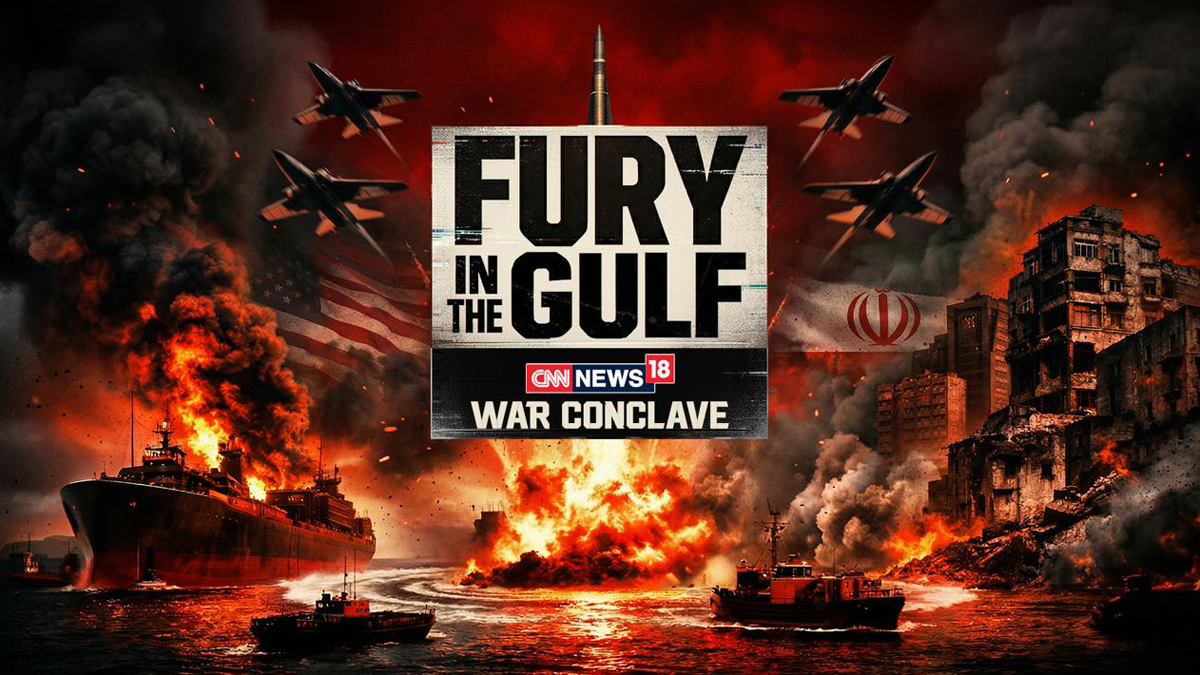
MUMBAI: CNN-News18 is set to host a special three-hour broadcast, Fury in the Gulf – War Conclave, on April 7, aiming to decode the escalating West Asia crisis and its far-reaching implications for India.
Scheduled from 4:00 PM to 7:00 PM, the conclave comes at a time when tensions between Iran and the United States are reshaping global geopolitics and triggering economic uncertainty. With India’s deep energy ties, trade links and large diaspora in the Gulf, the developments carry significant domestic relevance.
Built around the theme ‘Conflict, Consequences, and The Future,’ the programme will feature six curated sessions combining one-on-one interviews and panel discussions. The focus is to cut through the clutter and offer viewers a clearer understanding of the fast-evolving situation.
Key sessions include ‘Diplomacy in Times of War’ featuring Shashi Tharoor, and ‘World After the Iran Conflict’ with voices such as Ram Madhav, Reuven Azar, representatives from the European Union and the Iranian Deputy Envoy. Another session titled ‘Another Dunkirk?’ will bring together K. J. S. Dhillon and Jitin Prasada among others.
CNN-News18 editorial affairs director Rahul Shivshankar said, “In times of war, clarity becomes the most powerful tool. Fury in the Gulf – War Conclave brings together credible voices to address the questions and confusion that arise amid an overwhelming influx of information.”
He added that the initiative is aimed at delivering “facts, perspective, and insight” at a time when misinformation can easily cloud public understanding.
Echoing the sentiment, CNN-News18 CEO– English and business news Smriti Mehra said the conflict marks a defining global moment, with consequences that extend well beyond the region. She noted that the conclave seeks to present the crisis with “depth, nuance and responsibility” so audiences can better grasp its real-world impact.
As geopolitical tensions continue to dominate headlines, the conclave positions itself as an attempt to bring order to the noise, offering viewers a structured, insight-led look at a complex and rapidly shifting global situation.






