I&B Ministry
Govt. defends advisory to TV news channels on PM’s Independence Day Speech

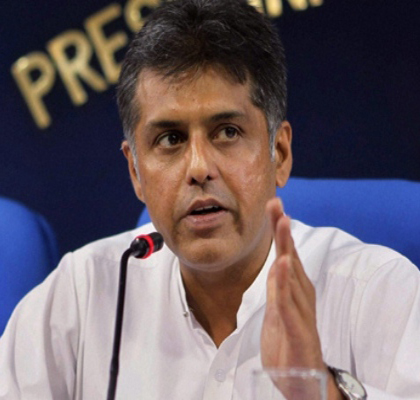
NEW DELHI: Information and Broadcasting Minister Manish Tewari today staunchly defended the advisory issued by his Ministry asking news television channels to make a distinction between a speech delivered by the Prime Minister from the ramparts of Red Fort on Independence Day and speeches made by different political leaders.
He said at a press meet here that the President’s address to the nation on the eve of Republic Day or the Prime Minister’s address on Independence Day were not speeches made as leaders of any party but as leaders of the nation. It was therefore wrong to draw parallels between these speeches and those made by leaders of different political parties.
 |
At the same time, he drew attention to the word ‘advisory’ and said the Ministry’s viewpoint was meant to be just that and not any dictat to the media.
He said the present government had always stood for freedom of the media and would continue to do so.

Referring to a question about a film on Sardar Patel, he said that the National Film Development Corporation would consider such a proposal if any filmmaker plans to do so.
He reiterated that while the United Progressive Alliance had always given newspaper advertisements on the birth and death anniversaries of eminent leaders, but it was the previous National Democratic Alliance which had failed to do so, according to figures given by the Directorate of Advertising and Visual Publicity.
Referring to the government’s view on opinion polls conducted by different media publications before the elections, he said that his party was not opposed to them but it could not be denied that such polls could be manipulated. He said the Congress party’s stand on this had been consistent. He said that the Central Election Commission had in fact sought the opinion of all political parties on this issue. While the stand of his party was consistent, the Bharatiya Janata Party had been opposed to opinion polls in 2004 but had supported these in its present view given to the Commission.



I&B Ministry
Devinder Kumar appointed Prasar Bharati chief vigilance officer
Senior IOFS officer to serve three-year term with Level-13 pay scale
MUMBAI: The Centre has appointed Devinder Kumar as the chief vigilance officer of Prasar Bharati, formalising a key oversight role within India’s public broadcasting network.
The appointment was cleared through an official order issued by the Department of Personnel and Training under the Ministry of Information and Broadcasting. Kumar, a senior Indian Ordnance Factory Service officer, will initially serve a tenure of three years or until further government orders, whichever comes earlier.
As chief vigilance officer, Kumar will be responsible for overseeing vigilance and compliance functions within Prasar Bharati, ensuring transparency and accountability across the organisation’s operations.
The role carries a Level-13 pay scale under the central government structure, translating to a salary range between Rs 1,23,100 and Rs 2,15,900. The compensation aligns the position with other senior administrative roles across government departments.
Kumar’s appointment follows due process, including a recommendation from the Central Vigilance Commission, which vets candidates for such critical oversight positions.
Currently serving under the Department of Defence Production, Kumar has been directed to be relieved of his existing duties with immediate effect to assume his new role.
The move comes as Prasar Bharati continues to strengthen its governance framework, with the CVO position playing a central role in maintaining institutional integrity. Kumar’s appointment is expected to bolster internal oversight at a time when accountability remains firmly in focus across public sector organisations.







