iWorld
Gods Reign reveals its Battlegrounds Mobile India roster

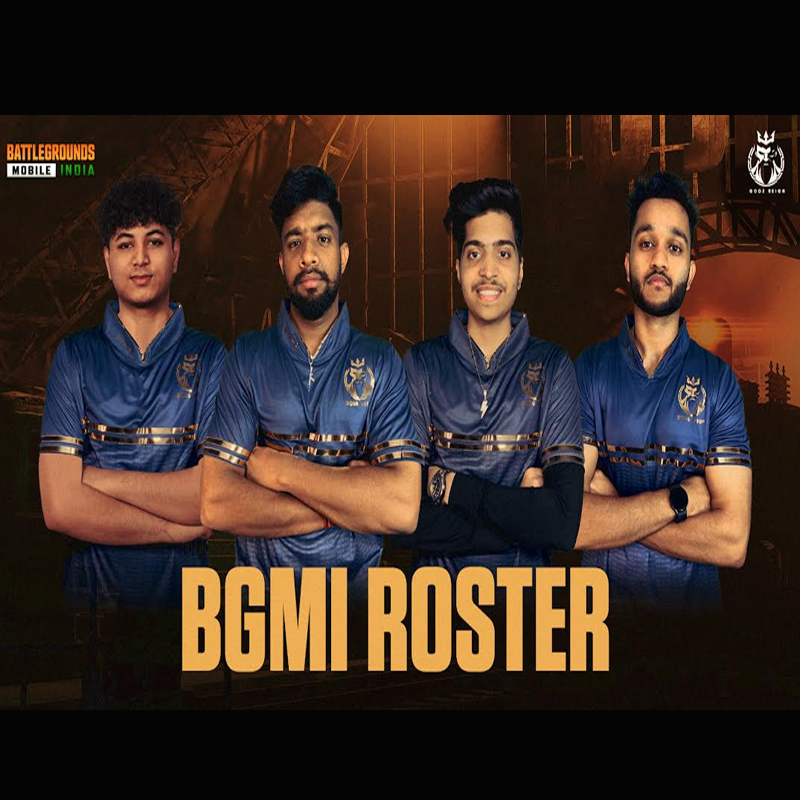
Mumbai: Gods Reign, India’s professional gaming and entertainment company headquartered in Bangalore, has unveiled its elite Battlegrounds Mobile India (BGMI) roster that has been signed from esteemed American Esports organization TSM (Team Solo Mid). The team is gearing up to make an instant impact as it goes head-to-head against the BGMI teams of the country at the Skyesports Champions Series.
Comprising some of the most prominent athletes from India, the roster is led by in-game leader (IGL) Robin Singh Shekhawat (Robin) and includes well-renowned assaulters Shubham Sahoo (NinjaJOD) and Harsh Rao (Aquanox) as well as prominent filter Hamza Hyderabadwala (Blaze).
Commenting on the unveiling of the roster, Gods Reign CEO K.R.Rohith said, “It is with great pleasure and excitement that we unveil our latest BGMI roster which consists of some of the most incredibly talented individuals from the country. Having been one of India’s most dominant Battle Royale teams, Gods Reign is looking to maintain that reputation and is confident that this roster will help us cement our prominence in the ecosystem. The organization is thrilled to have them on board and we are eagerly looking forward to their world-class performances in upcoming tournaments.”
As the IGL of the team, Robin’s proven expertise and experience will be instrumental in helping the team grow and improve with each game. While NinjaJOD is a rising star in the world of competitive gaming who is known for his quick reflexes and his ability to outmaneuver his opponents, Aquanox is a highly skilled player with a reputation for being one of the best in the game.
Blaze is another top player who has a deep understanding of the game and is known for his strategic thinking as well as for his ability to come up with creative solutions to complex problems. As a unit, NinjaJOD, Aquanox, and Blaze have emerged victorious in numerous high-profile tournaments previously including the distinguished Loco x Nodwin All-Stars Invitational last year.
“Gods Reign is one of the most notable Esports organizations in the country and it is a feeling of immense pride to be playing for them. We as a team have always been united and had continued our grind in BGMI with utmost dedication even when the game was not available. This not only helped us to stay in competitive shape but also improved our strategic approach, gameplay, and communication. Now that the game has returned, we can successfully execute our plans in the tournaments and elevate Gods Reign to the champion’s status in the BGMI ecosystem,” said Gods Reign’s BGMI roster in-game leader Robin Shekhawat.
With a strong reputation in the Esports community, Gods Reign has a rich history of triumphing in Battle Royale titles in the past. The organization has consistently been a part of the LAN tournaments and has contributed significantly toward fostering an ecosystem that enables Battle Royale titles including BGMI to thrive.
The team will now have its sights set on reigning supreme against the top teams of the country and securing a share of the Rs 25 lakh prize pool at the Skyesports Champions Series.






