International
Ghost Protocol grosses $26.5 million in X’mas weekend
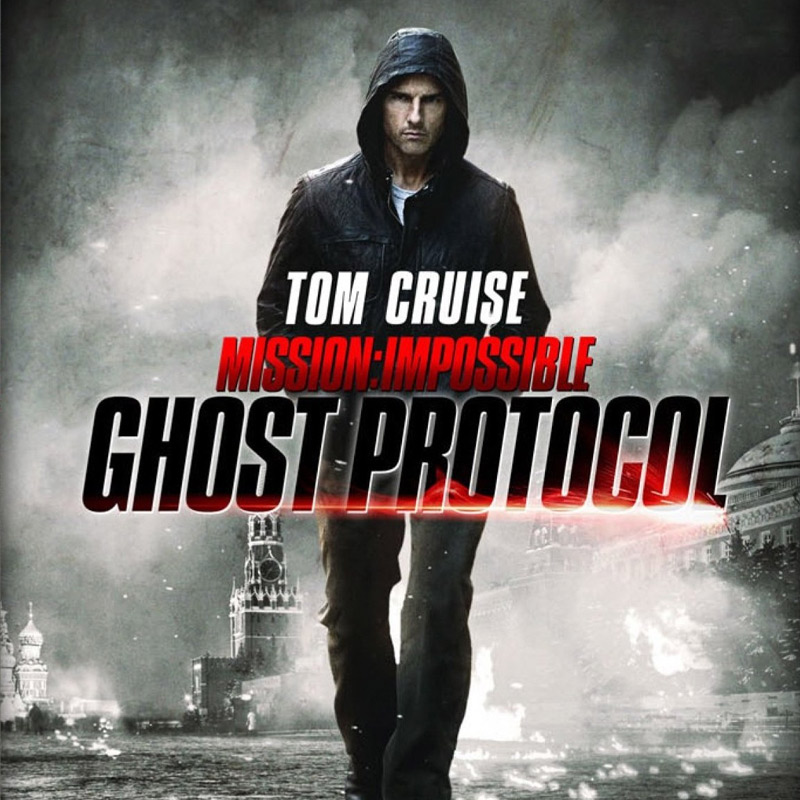
MUMBAI: By grossing $26.5 million over the three-day Christmas weekend for a cume of $59 million, Paramount Studios’ Mission Impossible: Ghost Protocol stood out in the crowded holiday race.
According to Paramount, Ghost Protocol will earn another $13.7 million on Monday (a national holiday) for a domestic total of $72.7 million, not far behind the $76.4 million earned by Knight and Day in its entire earned $76.4 domestic run, or the $83.1 million grossed by Valkyrie in 2008.
Ghost Protocol has already jumped the $100 million at the international box office, although figures for Christmas weekend won‘t be announced until Monday (many theaters in Europe and Latin America closed for Christmas eve and Christmas day).
The production house now predicts that the film will cross the $200 million mark internationally by the year-end.
Holding at No. 2 over the weekend was Warner Bros.‘ Sherlock Holmes: A Game of Shadows, grossing $17.8 million for a 10-day domestic cume of $76.6 million. The film grossed $22.3 million from 25 markets at the foreign box office over the weekend, bringing its international total to $46.1 million and worldwide cume to $122.7 million.
Fox‘s Alvin and the Chipmunks: Chipwrecked continued to pick up steam as well, grossing $13.3 million over the weekend for a 10-day domestic total of $50.3 million. The film had opened well below expectations last weekend.
Sony‘s The Girl With the Dragon Tattoo came in No. 4, grossing $13 million over Christmas weekend for a five-day domestic cume of $21.4 million. Directed by David Fincher, the English-language adaptation of the blockbuster Swedish novel stars Daniel Craig, Rooney Mara and Christopher Plummer.
Dragon Tattoo opened in five Scandavian countries over the weekend, collecting $1.6 million.
Steven Spielberg‘s 3D family film The Adventures of Tintin grossed $9 million over Christmas weekend for a five-day domestic cume of $17.1 million.
The other big headline of Christmas weekend was the tepid debut of On the other hand, Cameron Crowe‘s We Bought a Zoo opened to a tepid debut. Starring Matt Damon and Scarlett Johansson, the film‘s cume through Sunday a mere $7.8 million that put it at No. 6.
With 2012 fast approaching, Hollywood is now resigned to the fact that it probably won‘t be able to close the gap in domestic box office revenues, even as international grosses surge.

International
Utopai Studios unveils 4K three-minute video generation for PAI platform
New Story Agent and editing tools aim to streamline AI-led filmmaking workflows
MUMBAI: Utopai Studios has announced a major upgrade to its PAI storytelling AI platform, introducing what it claims is an industry-first capability to generate three-minute videos in 4K resolution, alongside enhancements to its Story Agent feature.
The update, rolling out from April 15, expands the platform’s capabilities across the filmmaking process, from early concept development to post-production. The company said the new features are designed to help filmmakers maintain continuity across characters, scenes and visual styles, a key challenge in AI-driven storytelling.
At the heart of the release is a next-generation model that enables more structured narrative development, allowing creators to move more seamlessly from idea to execution. With tools such as multi-shot sequencing and multi-turn editing, the platform aims to give both studios and independent creators greater control over complex storytelling workflows.
Commenting on the launch, Utopai Studios co-founder and CTO Jie Yang said, “The next phase of AI in media will not be defined by isolated tools, but by systems that can carry story, continuity and collaboration across the full creative process.” He added that the update is a step towards enabling more practical, end-to-end narrative development at a professional level.
Echoing this, Utopai Studios co-founder and chief scientific officer Zijian He said, “Generative video is opening the door to a new production model, where creative ambition is less constrained by traditional cost and complexity.” He noted that the platform combines multimodal models with iterative editing to give creators more speed, control and consistency.
The company said PAI is already being used in professional film and television productions, particularly in Hollywood, for tasks such as pre-visualisation, scene design and post-production refinements. The latest update adds features including improved voice options, character consistency, unlimited editing and more flexible asset management.
Utopai also emphasised that its models are not trained on copyrighted material, positioning the platform as a cleaner alternative for creators and rights holders navigating the evolving AI landscape.
As AI continues to reshape content creation, Utopai’s latest push signals a shift from standalone tools to integrated systems, aiming to make high-quality filmmaking faster, more flexible and increasingly accessible.