News Broadcasting
Future of FTA TV looking dim: A study


MUMBAI: Worldwide free-to air (FTA) TV can easily survive for another ten years, but its future after that is not bright. This information was included in a report published by the organisation Research and Markets.
The report titled 2004 Digital and Interactive TV Industry Market report noted that FTA TV was so far behind in technology that in all probability it would not catch up with the other providers of entertainment and information. PCs, game computers, DVDs and even mobile phones will reach TV quality within this decade
In an increasingly digital and interactive media landscape, customer relations are essential. In most situations, FTA broadcasters don’t have any direct relationships with their customers. This means that the computer industry would slowly take over the TV momentum from the broadcasting industry.

Should video streaming on the net take off, advertisers would not hesitate to jump ship and the programming sources for the broadcasters will slowly start to dry up. Content for the next generation will be vastly different from that of the current generation of traditional TV viewers the report has predicted.
Of the three methods of delivery, cable, satellite and terrestrial broadcasting the report stated that while satellite is still the most widely used, cable is quickly catching up. During this decade cable is expected to play a far more significant role, and should become another access technology in the converging markets of telecommunications, broadcasting, Internet and e-commerce. On the other hand satellite will be restricted to TV where its strength lies.
The report stated that terrestrial TV was still floundering in outdated infrastructure and business models. There is no global standard, and developments especially in the US are not too promising. New technologies such as MHP are still several years away from large scale commercial deployment.
As far as the US is concerned, the advent of digital technology has not proved to be a saviour. This is because broadcasters are protecting their existing investments, and the high cost of HDTV is not seen by consumers as being worth the cost. As prices fall and people need to replace their sets digital TV will progressively replace analogue up to the mandated change-over dates.
Interactive TV initiatives date back to the late 1970s. However nothing much has happened since, despite a short revival of the idea around 1995 when the US industry was looking at video-on-demand services. The major problem was the inadequate capacity of their cable TV networks. However with the development of broadband around the globe the scenario has been changing. In India, Reliance is leading the charge in this arena with its promise of a Broadband Bharat.



News Broadcasting
TV9 to host What India Thinks Today Summit 2026 in Delhi
PM Narendra Modi to keynote two day forum on India and the world
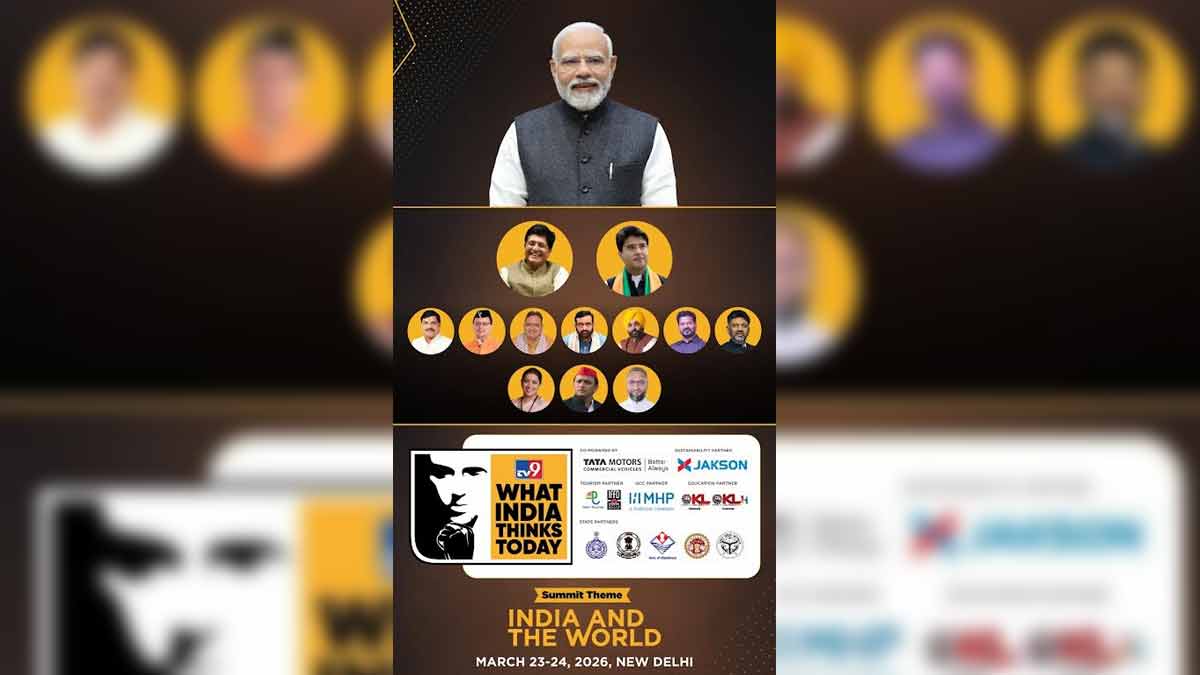
NEW DELHI: TV9 Network is gearing up to host the fourth edition of its flagship What India Thinks Today Summit 2026 on March 23 and 24 in the national capital, bringing together a wide spectrum of voices to debate India’s place in a shifting global order.
The summit will open with a keynote address by Narendra Modi, setting the tone for this year’s theme, “India and the world”, as the country positions itself at the crossroads of economic growth, geopolitical shifts and technological change.
From cabinet ministers to chief ministers, business leaders to cultural figures, the event promises a crowded stage and a lively exchange of ideas. Union ministers such as Piyush Goyal and Jyotiraditya Scindia are expected to attend, alongside state leaders including Mohan Yadav, Pushkar Singh Dhami, Bhajan Lal Sharma, Nayab Singh Saini and Bhagwant Mann.
Political voices from across the aisle, including Smriti Irani, Akhilesh Yadav and Asaduddin Owaisi, will also join the conversation, ensuring that the debates are as diverse as they are dynamic.
Adding a cultural and sporting touch, personalities such as yoga guru Swami Ramdev, poet Kumar Vishwas and cricketing names like Sourav Ganguly, Axar Patel and Arshdeep Singh are set to share the stage. Global business leaders and diplomats will further widen the lens, reflecting the summit’s international outlook.
Speaking ahead of the event, TV9 Network managing director and chief executive officer Barun Das, said India stands at a unique moment in history, combining demographic strength, technological capability and entrepreneurial energy. He noted that in uncertain times, honest conversations and bold ideas will shape the country’s trajectory.
The summit will explore themes ranging from economic growth and governance to innovation, sustainability and culture, positioning itself as a platform for dialogue at a time when the world is in flux.
With a packed agenda and a high-profile guest list, What India Thinks Today Summit 2026 aims to do more than just talk. It seeks to capture a moment where India is not only part of the global conversation, but increasingly helping lead it.