News Headline
FIFA World Cup coverage promises to be a game-changer


NEW DELHI: Unlike the 3D that dominated the best viewing of the last FIFA World Cup, the second biggest tournament on the global sporting calendar after the Olympics, the entire media is concentrating on 4K and even more superior technologies.
Bedeviled by significant infrastructure problems that have reached all the way from the airports that will receive the international arrivals to the stadia of the 12 host cities that will stage the games, hamstrung by the communications problems caused by an overloaded telecoms system and marred by protest and unrest, broadcasters the world over have learnt the painful lessons that modern Brazil is at best an awkward place to operate in.

With the tournament just around the corner (12 June- 13 July in Brazil), the consensus is that host broadcaster HBS has done its best in ensuring diversity connections and implementing an impressively redundant form of production that has seen 12 identical, containerised production centres built in Germany and shipped over to Brazil.
Moving equipment around the country, especially after the group stages are over, was always going to be a major problem, and it is one that HBS has decided it does not want to be involved with. All of which is part of the reason why EVS loaded 234 servers on a container ship bound for Rio sometime in March. But it is what some of those servers are doing when they are installed that is probably the real story from Brazil 2014.
Apart from the Ultra HD effort, it is remote production that this year’s World Cup really moves the goalposts. Not just simply an add-on, remote production lies at the heart of the HBS production workflow in Brazil, according to a report by the National Association of Broadcasters in the United States.
16 EVS XT3 servers are to be installed at each venue and, alongside them, two of the company’s C-Cast Agents which represent the sharp end of its connected content production architecture.
C-Cast Contribution will be used to link the IBC and the 12 venues across the country together, live streams passing through the two C-Cast Agents at each venue where they will then be transcoded and transferred into an Amazon Cloud-based infrastructure. About 45 seconds later at the most they will then hit the C-Cast Central servers, which will then govern the material’s distribution on the network. This means passing the footage on to the Adobe Premier-based HBS production teams (there are 36 Premier suites in the IBC) and other rights holders at the IBC and further afield too. The servers automatically generate proxy files, allowing the various remote teams to access content at low resolutions, create clips and then import a high bandwidth version.
“I think in total there are 75 media rights licenses distributed for the IBC in Rio, and in addition there are offsite production teams that have web browse access from their own home cities, and there are 83 licenses distributed so far for that,” comments EVS SVP Marketing Nicolas Bourdon.
There have probably been more distributed, as this is far more than just a plain vanilla distribution of the nine feeds from each venue round the world. Mirroring the way the C-Cast second screen app works, the remote teams can add content — including camera angles and highlights — that have not been made part of the world feed into their coverage, switching it from a gallery as if they were in a truck outside the stadium.
With this new solution, the number of broadcasters deciding to ‘dial-in’ from their home territories into the FIFA MAX server in Rio makes it feel like a genuine game-changer.
FIFA’s estimates are that around 50 million people will be downloading its official application, which is being white labelled and has been picked up by more than 100 rights holders so far.
“Broadcasters can have a white label app that they can put their own logo on,” explains Bourdon. “Viewers can then access different types of content, up to six live camera angles, clips and key actions from a game, statistics, and a full language translation of all the logs and captions.”
C-Cast Central manages availability of material via APIs, and while the white label smartphone and tablet apps, not to mention a customisable web player (based around deltatre’s Diva system), are proving popular, many of the major broadcasters around the world are folding the multiple C-Cast streams into their own fully-featured apps. Add these figures to FIFA’s 50 million and you undoubtedly have the biggest outing yet for the technology.
Content will reside on an Amazon server farm controlled by EVS from where it will be passed to deltatre’s platform (deltatre is also the main data provider from the tournament). From there it will be either be encoded for delivery using Elemental technology over the Akamai CDN or, if the stream is to be integrated into a broadcaster’s own efforts and a third-party CDN, via the Microsoft Azure cloud platform.
Expect to see some interesting new features crop up too. HBS will be using the as yet unreleased C-Cast 3.0 out in Brazil, with the idea that this will then be productised into C-Cast v3.1 in time for IBC.
Four years ago, Sony was limbering up to broadcast 25 matches from South Africa in stereo 3D. Measured against that, the 4K effort for Brazil 2014 seems relatively minor: a mere three matches being captured in the format, all from Rio’s Maracan? Stadium.
However, the significance is the same: the company is using the World Cup to seed demand for the format that it hopes will break through to the mass market by the time of the following Olympics. Maybe this time it will work.
4K trials — indeed trials of pretty much all of the World Cup workflow — were held at the Confederations Cup last summer and though the Telegenic truck that was shipped from the UK for them isn’t available this summer, the crew will still be sourced from the British OB provider, albeit working in a 4K-capable Globocast truck.
The matches will probably represent the most comprehensive coverage afforded a 4K production yet, with 12 Sony F55 cameras slated for each game and a number of the speciality cameras from the standard HD broadcast also being upconverted for the occasion.
It seems that the final will now be actually broadcast in 4K format as opposed to being simply beamed into cinemas or destined for a souvenir film for online distribution. Names are not being discussed as yet, but it seems that there is a queue of interested broadcasters and, according to Sony, “More than one will broadcast the feed.”







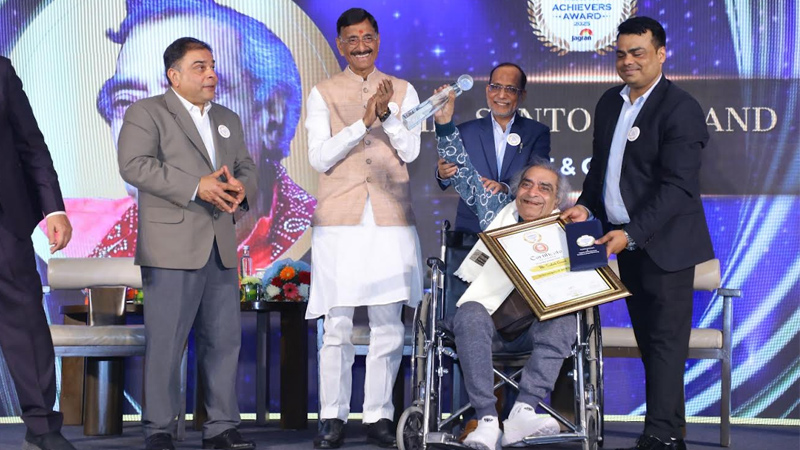
NEW DELHI: Hamdard Laboratories gathered a cross-section of India’s achievers in New Delhi on Friday, handing out the Hakeem Abdul Hameed Excellence Awards to figures who have left their mark across healthcare, education, sport, public service and the arts.
The ceremony, attended by minister of state for defence Sanjay Seth and senior officials from the ministry of Ayush, celebrated individuals whose work blends professional success with a sense of public purpose. It was as much a roll call of achievement as it was a reminder that influence is not measured only in profits or podiums, but in people reached and lives improved.
Among the headline awardees was Alakh Pandey, founder and chief executive of PhysicsWallah, recognised for turning affordable digital learning into a mass movement. On the sporting front, Arjuna Awardee and kabaddi player Sakshi Puniya was honoured for her contribution to the game and for pushing women’s participation onto bigger stages.
The cultural spotlight fell on veteran lyricist and poet Santosh Anand, whose songs have echoed across generations of Hindi cinema. At 97, Anand accepted the honour with characteristic humility, reflecting on a life shaped by perseverance and hope.
Healthcare honours spanned both modern and traditional systems. Manoj N. Nesari was recognised for strengthening Ayurveda’s place in national and global health frameworks. Padma shri Mohammed Abdul Waheed was honoured for his research-backed work in Unani medicine, while padma shri Mohsin Wali received recognition for his long-standing contribution to patient-centred care.
Education and social development also featured prominently. Padma shri Zahir Ishaq Kazi was honoured for decades of work in education, while former Meghalaya superintendent of Police T. C. Chacko was recognised for public service. Goonj founder Anshu Gupta received an award for his dignity-centred rural development initiatives, and the Hunar Shakti Foundation was honoured for empowering women and young girls through skill development.
The Lifetime Achievement Award went to former IAS officer Shailaja Chandra for her long career in public healthcare and governance, particularly in the traditional systems under Ayush.
Speaking at the event, Hamdard chairman Abdul Majeed said the awards were a tribute to those who combine excellence with empathy. “These awardees reflect Hakeem Sahib’s belief that healthcare, education and public service must ultimately serve humanity,” he said.
Minister Seth struck a forward-looking note, saying India’s young population gives the country a unique opportunity to become a global destination for learning, health and wellness by 2047.
The ceremony also featured the trailer launch of Unani Ki Kahaani, an upcoming documentary starring actor Jim Sarbh, set to premiere on Discovery on 11 February.
Instituted in memory of Unani scholar and educationist Hakeem Abdul Hameed, the awards have grown into a national platform that celebrates those building a more inclusive and resilient India. For one evening at least, the spotlight was not just on success, but on service with substance.








