iWorld
Facebook data fiasco gets murkier

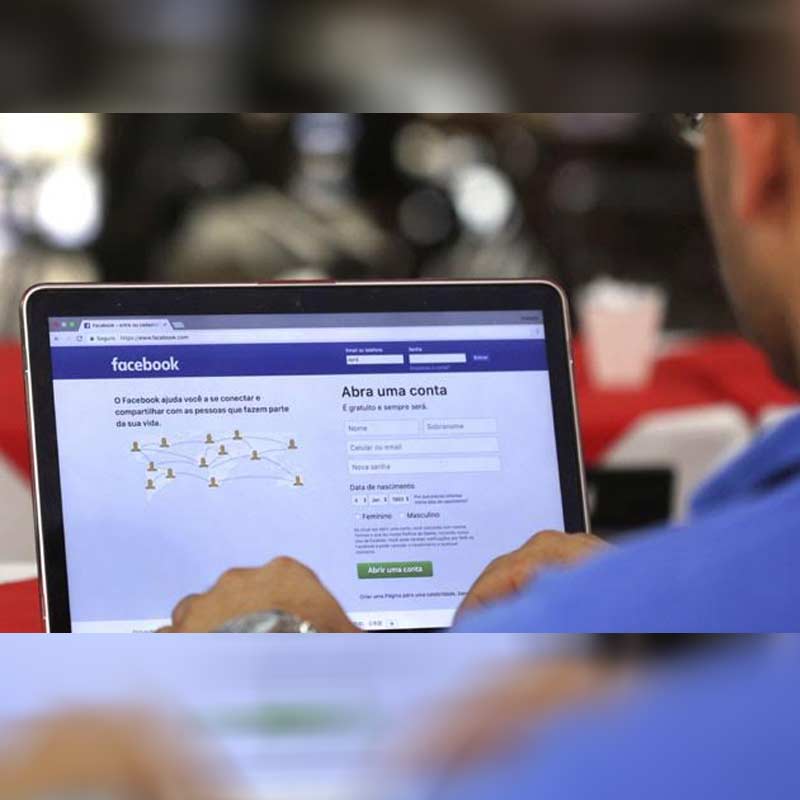
MUMBAI: Data has been touted as costlier than oil in the new digital era. While it may not be the case, the Cambridge Analytica (CA) data scandal has at least indicated that it is partially true. Raising questions on users’ data security on social media platforms, the controversy has dented Facebook’s credibility enormously. Now, the hullabaloo is not only limited to the US, from where it started but is also becoming a subject of debate in other parts of the world.
Over the last few days, British data analysis firm CA has been at the centre of attention worldwide because of its alleged leak of more than 50 million Facebook users. The firm illegally obtained data to target US voters during the 2016 presidential election, which witnessed Donald Trump’s landslide victory.
Russian-American psychology professor at Cambridge University Aleksandr Kogan built an app in June to harvest data for the scandal-hit British firm. Under the guise of academics, Kogan accessed data of users who used the ‘This is Your Digital Life’ app to participate in a survey. Facebook grossly denied terming it a “data breach” because it routinely allows researchers to have access to user data. It does not, however, allow sale or transfer of such information.
In the wake of the entire controversy, Facebook CEO Mark Zuckerberg has apologised in full-page ads in seven British newspapers and three American dailies on Sunday. “This was a breach of trust and I’m sorry we didn’t do more at the time,” wrote Zuckerberg. “I promise to do better for you.” He has also pledged that the company would restrict third-party apps from acquiring such data.
This time, though, a mere apology won’t help Facebook to mend its reputation. From Russian interference in the US presidential elections to Brexit, Facebook has been constantly been in the spotlight in failing to protect users from fake news. This CA controversy has wiped out nearly $75 billion of the company’s market capitalisation in one week.
This single incident acts as an eye-opener for a far more deep-rooted problem at hand. The entire tech industry views user data as a commodity, which can be mined any time without permission. While users give permissions to several apps, allowing the access of personal data, including location or credit scores or anything linked to the device, organisations trade with data by circumventing regulation.
Companies other than Facebook have also been hit by data breaches, weakening public confidence in them. Facebook’s connection to people’s social and personal lives has brought to light the magnanimity of the issue. It is time to bring such platforms under a regulation to plug the problem of data misuse.
While both sides of the Atlantic were shaken up, India has also started taking the problem seriously. The country with Facebook’s largest user base of over 241 million is obviously concerned thanks to the whole fiasco. Minister for law and IT Ravi Shankar Prasad on 21 March sent out a warning to Zuckerberg that any kind of “data theft” would not be tolerated and he could even be “summoned”.
Later, the Ministry of Electronics and Information Technology sought a response from CA on whether it was involved in the misuse of data to profile Indians and influence their voting behaviour.
The ministry wants to know by 31 March 2018 the methodology used by the firm for possession of data as well as whether it took consent from the users or not. It has also asked for information on entities that have engaged the firm for the data breach.
Though it is not sure till now whether the Indian election suffered any problem from the entire scam which started in 2015, Ovleno Business Intelligence (OBI), an Indian affiliate of CA’s parent firm Strategic Communications Laboratories (SCL), listed both the BJP and the Congress as its clients. Even the company website says “CA was contracted to undertake an in-depth electorate analysis for the Bihar Assembly Election in 2010.”
The Congress and the BJP both accused each other of alleged connections with OBI. A report in The Print states that CA CEO Alexandar Nix came down to India and worked with several others from its parent firm SCL to create an electoral database in India and to hunt clients.
Before the 2019 legislative election, the entire revelation may help regulators to protect constitutional sanity and look into the loopholes. Facebook is now widely used by political parties and politicians. Fake news or any data breach could be dangerous for a large democracy like India. In an interview with CNN, Zuckerberg himself mentioned the “big election in India”. The data disaster demands regulators to take a call, consumers to be more aware of being used and the whole tech industry to reinvent security to gain the faith of users.
Also Read: