Applications
Enhancing customer experience through AI-driven chatbots & virtual assistants
Several businesses are adopting AI-driven chatbots and virtual assistants as there are proven benefits of their use in customer service. These services function 24×7 and are highly cost-effective. Since they are AI-driven, they offer personalisation options as well and can thus prove to be more effective and engaging. There are reports of certain customers who find AI chatbots highly frustrating to use for complex problems and prefer human customer service. Yet, for a majority of businesses, the plethora of benefits outweigh the few negatives. The various benefits are as follows:
1. Scalable and cost-effective – AI chatbots can handle multiple queries simultaneously, reducing wait time and managing spikes in customer demand. This efficiency and scalability reduce customer frustration while dealing with certain predefined, routine tasks.
2. Enhanced customer service and experience – unlike legacy chatbot, AI assistants and chatbots provide customised support in real-time 24×7. This prompt query resolution can lead to higher customer satisfaction.
3. Reduction in human error and enhanced accuracy – chatbots integrated with CRMs and knowledge bases, providing accurate information about their customers and business products and services. Making them an excellent choice for routine queries and FAQs.
4. Multilingual support – AI chatbots and assistants are trained on a vast dataset of multiple languages. NLP (natural language processing) algorithms can convert text from one language to another enabling them to assist a broad base of customers.
5. Flexibility – These bots can be integrated into multiple platforms such as websites, apps, social media enabling them to assist customers any and everywhere.
As mentioned above, most businesses deploy AI chatbots for personalization. However, at times they fail to deliver the level of personalization they were deployed for. This can lead to customer frustration and customer loss. Therefore, businesses maintain a good balance between AI chatbots for routine assistance and human customer service for more complex tasks. Many businesses integrate these chatbots with CRMs (customer relationship management), which serve as the centralised repository for customer engagement. This integration raises issues regarding data privacy and responsible use of customer information. Thus, AI-driven chatbots and virtual assistants emphasise the need for not just tech-driven solutions for businesses but also its collaboration with human support.
The article has been authored by Tagglabs founder Hariom Seth.

Applications
Inshorts Group chief Deepit Purkayastha joins IAB video council for Southeast Asia and India
The co-founder and chief executive of the short-form content platform has been inducted into the IAB SEA+India Video Council, giving India a stronger voice in shaping digital video frameworks
NOIDA: India has long been the world’s most chaotic, multilingual and mobile-first digital market. Now, one of its most prominent short-video executives is getting a seat at the table where the rules are written.
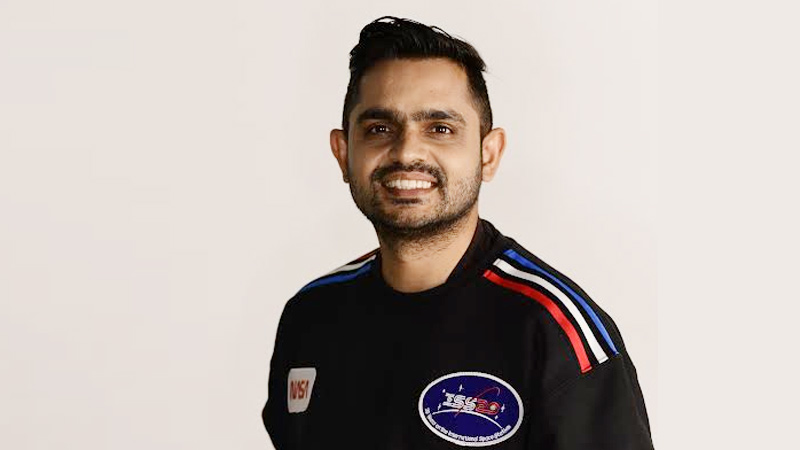
Deepit Purkayastha, co-founder and chief executive of Inshorts Group, has been selected as a member of the IAB SEA+India Video Council for 2026. Run by the Interactive Advertising Bureau, the council brings together senior leaders from Southeast Asia and India to shape standards, best practices and measurement frameworks for the fast-evolving video and digital advertising ecosystem.
The timing is pointed. According to the IAMAI-Kantar Internet in India Report 2025, over 588 million Indians are now consuming short-video content, with growth increasingly driven by rural and non-metro audiences. India’s active internet user base has crossed 950 million, with 57 per cent of users now coming from rural markets. Yet the frameworks that govern how video consumption is measured and monetised were largely designed for single-language, Western markets and have struggled to keep pace with the scale, diversity and complexity of India’s digital landscape.
Purkayastha is no stranger to these debates. He already serves on the AI Council at Marketing and Media Alliance India and as co-chair of the Digital Entertainment Committee at the Internet and Mobile Association of India. His induction into the IAB SEA+India Video Council extends that influence into the global video standards arena.
Inshorts Group sits squarely at the intersection of these forces. Its flagship product, Inshorts, India’s highest-rated short news app, reaches 12 million active users with 60-word news summaries. Its sister platform, Public App, reaches 80 million monthly active users across more than 700 districts and 12 languages, serving communities that most global platforms barely register.
Purkayastha said the opportunity was about building something more representative. “India today sits at the centre of the global video ecosystem, but the frameworks that define how value is created and measured have not always kept pace with the realities of our market,” he said. “Being part of the IAB SEA+India Video Council is an opportunity to contribute to a more representative and future-ready approach, one that accounts for diversity in language, context, and user intent.”
As a council member, Purkayastha will contribute to shaping regional standards across video advertising, measurement and platform governance, with a focus on frameworks that are native to India’s multilingual, mobile-first ecosystem rather than imported from global benchmarks designed elsewhere.
For years, India has been content to play by rules written for other markets. Purkayastha’s induction is a signal that it is done waiting to be consulted and ready to start writing them.